



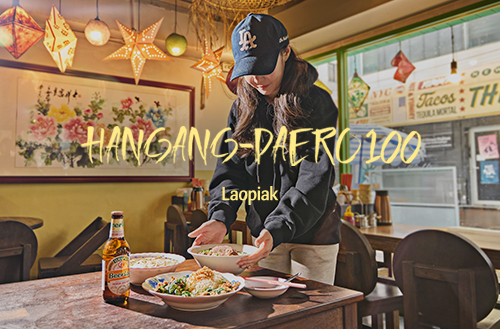
#Hangang-daero 100

Meeting Hyoyeol Jeong, the owner of LAO PIAK, a Laotian restaurant
Turning everyday life into travel with humble flavors from afar
Two colleagues, as close as sisters, chose Laos for a vacation together. They fell completely in love with the place—both the people and nature felt so pure and unspoiled. What they loved most was the food. Everywhere they went, they found meals that tasted like home cooking, prepared with the kind of care you’d put into feeding family. They wanted to bring that taste and that spirit back to Korea. So they quit their jobs, learned the secrets of Laotian cooking on-site, and opened LAO PIAK in Mangwon-dong in 2017. Three years later, they opened a second location on Hangang-daero, hoping to introduce Laotian rice noodles not just to weekend tourists but to office workers during the week. Thanks to them, professionals along Hangang-daero can now take a mini escape from their busy workdays with a warm, humble bowl of Laotian noodles.
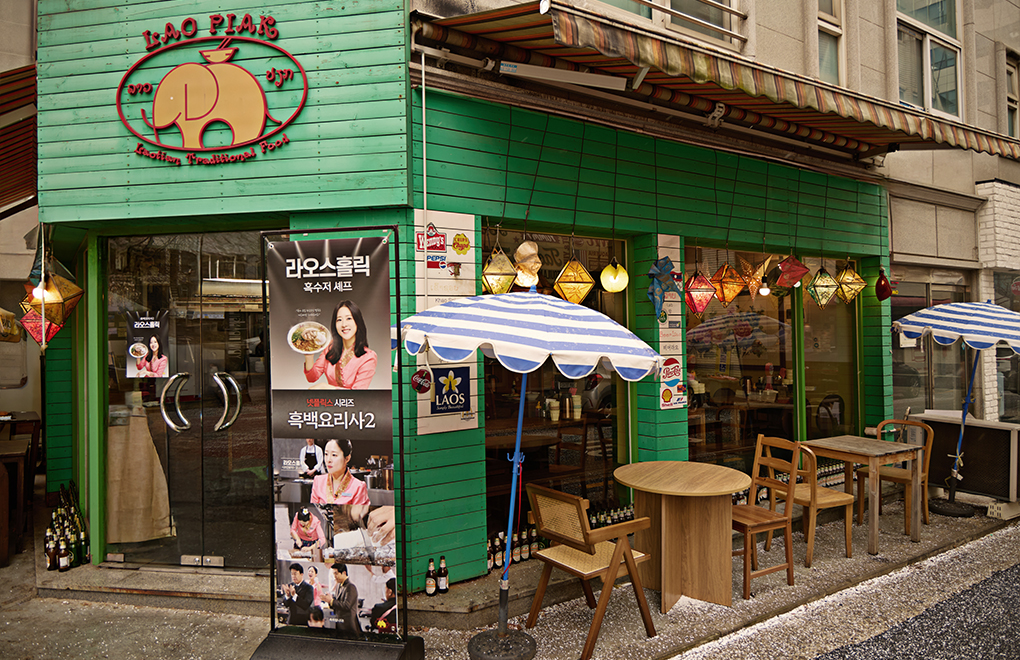
You appeared on Culinary Class Wars 2 as ‘Laos Holic.’ As part of the Hangang-daero community, we were thrilled to see you.
Hello. We currently operate two LAO PIAK locations—one in Mangwon and one in Sinyongsan. The person who participated in Culinary Class Wars 2 as ‘Laos Holic’ is Seonghun Won, who runs the Mangwon location. I’m Hyoyeol Jeong, managing the Sinyongsan branch. We initially ran Mangwon restaurant together, but when we opened our second location in Sinyongsan in April 2020, we divided responsibilities.
I understand neither of you initially worked in food.
That’s right. I was an announcer, and Seonghun was preparing to become a producer. We’d both been living hectic lives when we decided to take a vacation together, and people around us kept recommending Laos. When you think of Southeast Asia, Vietnam or Thailand usually come to mind, so Laos felt a bit unfamiliar. Still, we wanted to experience something new, so we went to Laos—and we fell head over heels for this whole new world. The nature, the historical sites, everything had this unspoiled, authentic beauty. We also fell for the food. Even the rice noodles from street-corner vendors had this clean, subtle broth that just hit the spot. We were both interested in content creation and production, so we talked about developing Laos into a content project as we finished the trip. That’s how it all started.
It’s impressive that you actually followed through on something you discussed during a trip.
It kept coming back to us. Seonghun felt the same way. So we quit our broadcasting jobs and spent six months going back and forth to Laos, taking cooking classes, and just showing up unannounced at famous restaurants and local noodle shops that locals frequented. The cooking classes weren’t about learning dishes we could sell commercially, but they were incredibly helpful for understanding Laotian ingredients and food. Not every owner welcomed us, but most were happy to teach us. Some told us to come at 4 a.m. when they started making their broth, so we’d show up at dawn. I think they taught us with such goodwill because we genuinely enjoyed their food and wanted to learn.
Which regions of Laos did you study in?
We started with the basics in Vientiane, the capital, since that’s where the culinary scene is most developed. Then we learned a lot in Luang Prabang, which is an absolutely gorgeous city famous for tourism. Luang Prabang is a UNESCO World Heritage site, and everything there is beautiful. We went through all the cooking classes there while doing market tours and studying ingredients extensively.
Why did you open the Sinyongsan location after Mangwon?
We opened in Mangwon in 2017, right when the area was taking off as Mangridan-gil. Weekends were absolutely packed with customers. But weekdays were comparatively quieter. Seonghun and I put our heads together, trying to figure out where our weekday customers might be. We realized—near their offices. As we looked around, we discovered the area near Sinyongsan Station on Hangang-daero, and it was exactly what we’d been looking for—lots of office workers nearby, plus people who’d make a memorable trip on weekends. Having a major company like Amorepacific was the deciding factor in choosing this location.
What attracted you to Laotian food?
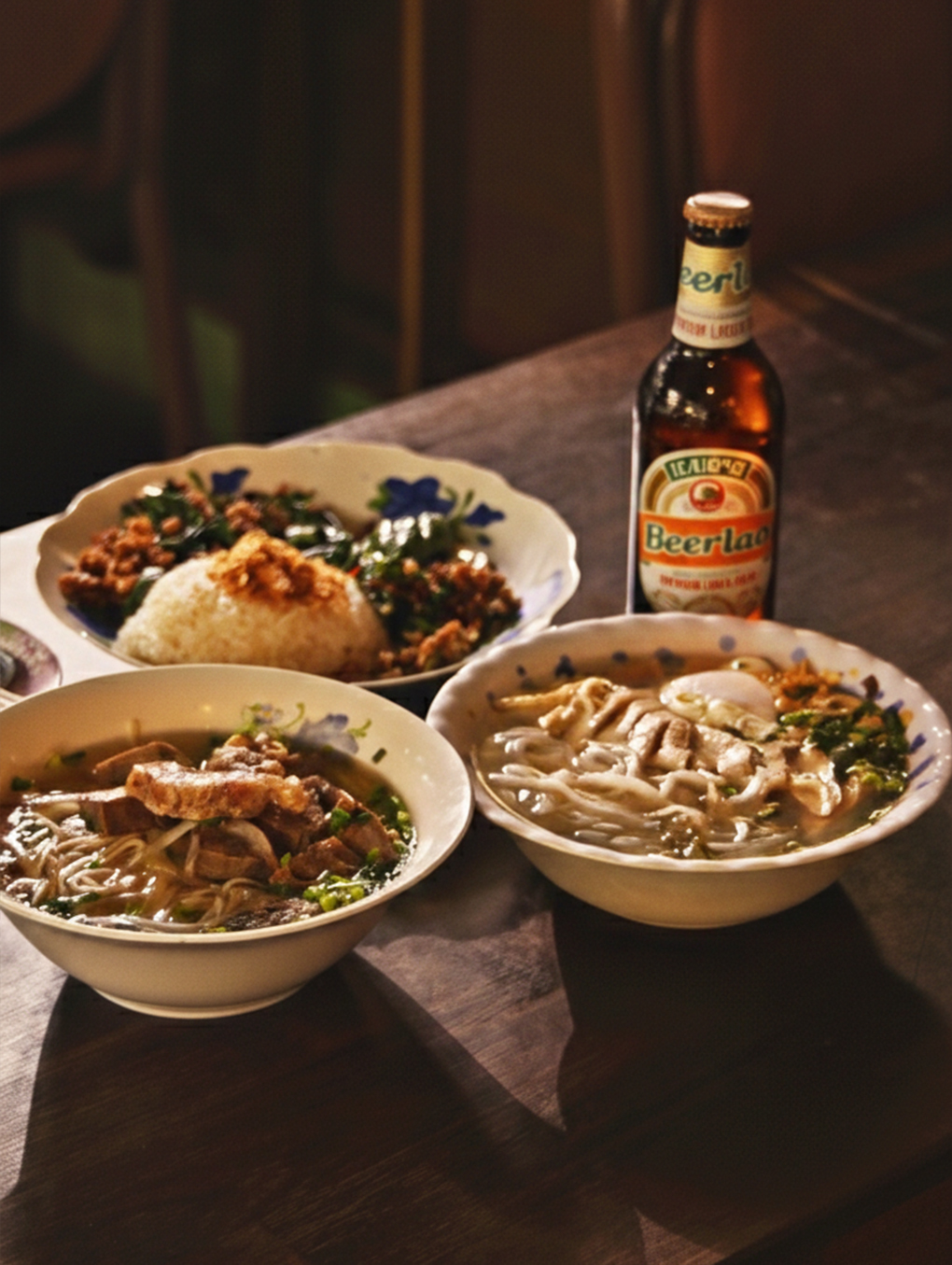
Seonghun and I both really loved Southeast Asian cuisine. But Laos tasted different. Thai and Vietnamese rice noodle dishes are typically beef-based, but Laotian khao piak, in which khao means rice and piak means noodles, uses chicken and pork as the foundation. It’s quite different from Vietnamese and Thai dishes. Also, they hand-knead the noodles and cut them for immediate use, without aging, so they’re thicker than rice noodles from other countries and have an amazing texture. You can taste the hand-made quality. That’s what I think makes Laotian food so appealing—that homemade touch. It’s comforting, like home cooking.
Do your customers react the same way you two did to the Laotian rice noodles, khao piak?
Yes, most people say it doesn’t feel foreign at all compared to Korean food. From the start, we were confident we could serve it exactly as is without adapting it to Korean tastes. People seem comfortable with the chicken-and-pork broth base. Since Koreans don’t shy away from soup dishes, they enjoy them even more. And because the spices are milder compared to Thai or Vietnamese cuisine, they can eat it more comfortably. What we make is authentically local—that humble, straightforward taste. People really appreciate that.
You must have felt both excited and nervous opening the restaurant. After all, you were introducing an unfamiliar cuisine and making a complete career change.
The excitement was definitely stronger. We were eager to share these flavors. When we first opened in Mangwon, people from the Laotian Embassy graciously came to visit. I was so happy—it felt like our genuine passion for Laos had come through. While there were fusion-style Laotian restaurants with localized menus, we were apparently the first authentic Laotian noodle shop. The ambassador, his wife, and the embassy staff all ate with us and thanked us for recreating the taste of home.
You gave someone back a taste they’d been missing. That must have been so rewarding.
The connection continued from there. As it turned out, the ambassador’s wife was an expert in Laotian cooking, and she generously shared recipes with us at no charge. We learned from this excellent teacher, kept refining the recipes, and eventually developed our own versions.
That’s like learning from a master, in Korean terms.
Exactly. She even had hard-to-find ingredients, so it was an invaluable opportunity to learn authentic Laotian flavors. It’s like if a Korean kimchi master gave a foreigner premium salted seafood and highland cabbage to teach them how to make kimchi. We filmed everything from ingredients and preparation methods to seasonings and the order of making the broth, and reviewed those videos over and over. I think Seonghun’s appearance on Culinary Class Wars 2 was made possible by those Laotian friends. Khop chai lai lai—we send our gratitude. That’s Laotian for ‘thank you very much.’
What characterizes LAO PIAK’s menu?
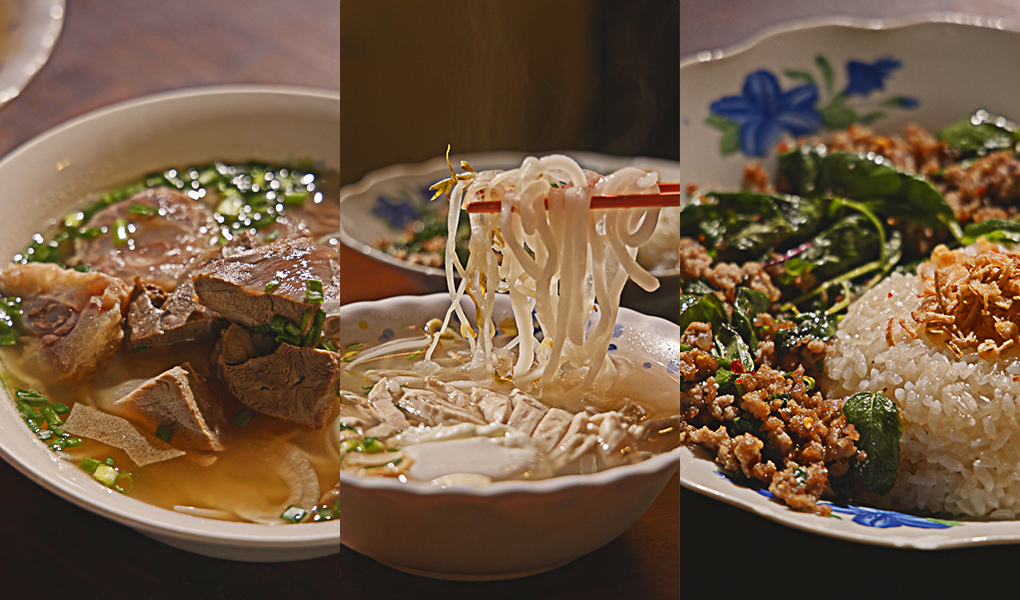
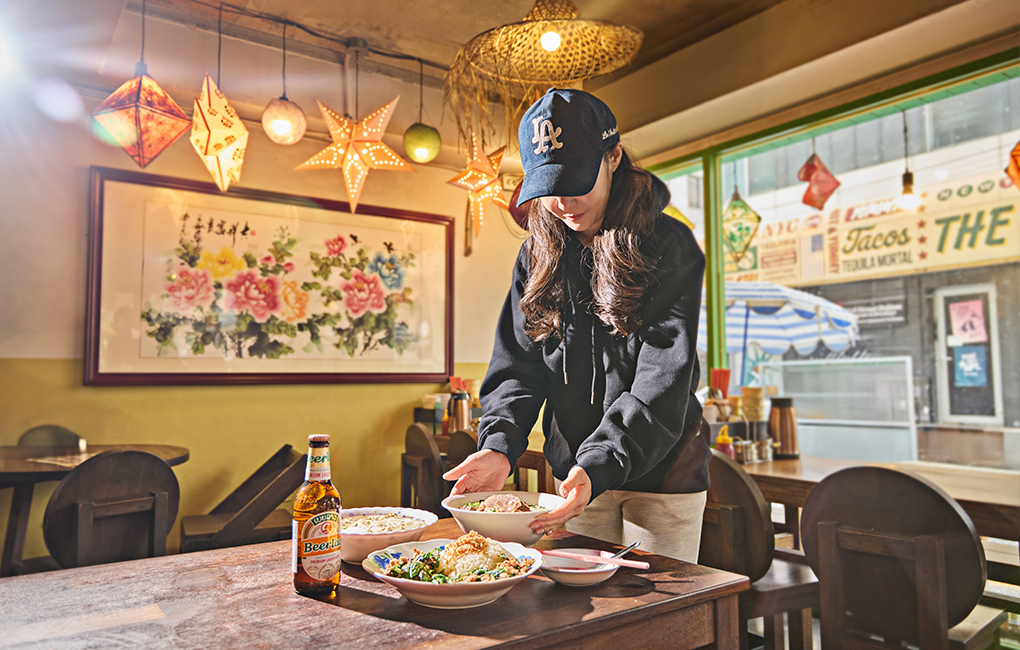
Our menu features everyday Laotian home cooking that anyone can enjoy from morning to evening—dishes that work as meals, hangover relief, or drinking snacks. Khao piak, our signature dish, is a staple that Laotian people eat daily. We also have beef tendon noodles, which recreate the flavor of a famous tendon noodle shop in Vientiane. It’s a place many Koreans visit, so it brings back travel memories. Beyond that, our menu features everyday dishes you’d find anywhere in Laos. Oh, and we have Laotian beer too. Some people come specifically for it because it’s hard to find elsewhere—Laotian food and Laotian beer pair beautifully together.
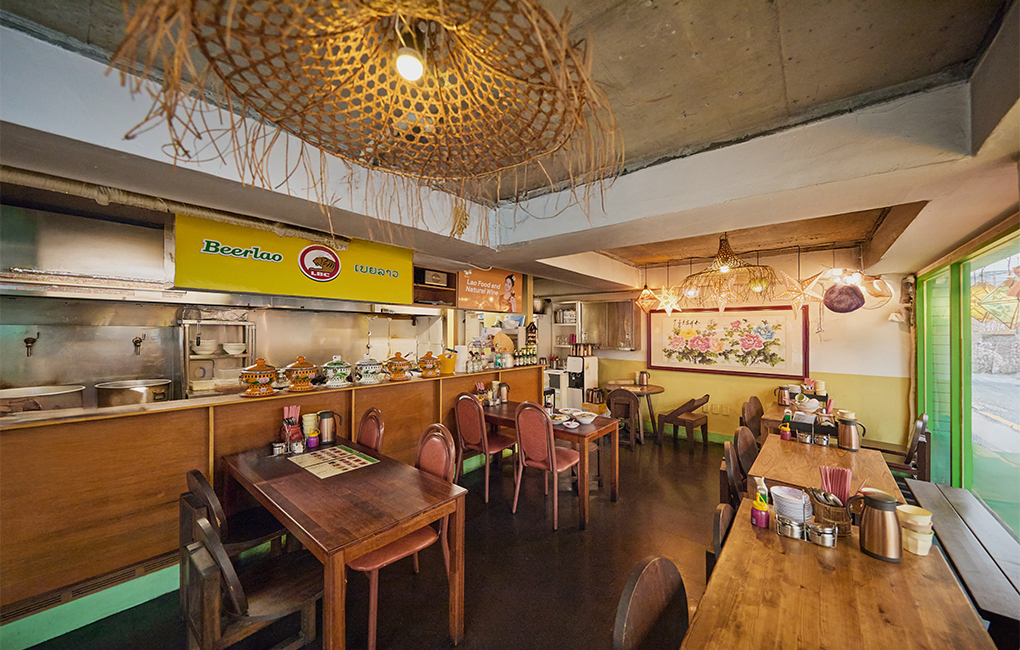
The interior has an exotic feel, too.
We tried to recreate the local atmosphere. In Laos, things hang everywhere, so we incorporated that into our design. We made our posters a bit kitschy, with a slightly tacky vibe, and used vibrant colors that evoke a tropical country. People who’ve never been to Laos come for curiosity, and those who’ve traveled there come back for nostalgia. We want to give them all a little escape in their everyday lives.
So Hangang-daero office workers can take a trip during their lunch break.
That’s our hope. Please visit more often. Honestly, Amorepacific was a big reason we chose this location. We believed that a place full of trend-forward people would be open to different flavors. We opened in 2020, weathered COVID well, and we’re still here—so we’d love your continued support. (laughs)
Is there a regular customer you’d like to tell us about?
More than wanting to introduce anyone specific, I’d say we get a lot of young women from Amorepacific, and we’ve gotten to know the familiar faces—we greet them and adjust portion sizes accordingly. Smaller portions for lighter eaters, larger ones for those with bigger appetites. Rice noodles are such casual, everyday food in Laos, and our neighborhood regulars now come with that same relaxed attitude. If I had to mention someone special, there’s one man who’s been coming in frequently lately—he orders every single item on the menu and takes about three hours to eat slowly. I’d love to ask whether he finds it delicious or if there’s a story behind it, but he seems to want to savor the time thoroughly on his own, so I just serve the food. I’d really like to ask him what makes Laotian food so appealing to someone who loves our entire menu so thoroughly.
What do you consider most important?
The broth, made according to LAO PIAK’s own recipe, is the most crucial element. I come in early every morning and always make it myself. I teach the staff other things like sauces, but the broth—I handle that personally. You know how they say good restaurants never share their secret broth recipes, not even with daughters-in-law? That’s exactly how I feel. (laughs)
What’s been your happiest moment running LAO PIAK?
When we’re packed with customers—that’s the best. When we first opened, the line stretched to the end of the alley. Even on rainy summer days, people waited, so even when we wanted to close early, we stayed open as long as we could to accommodate everyone. I believe moments like that will come again. Laotian food is incredibly delicious. It’s an entirely different flavor from Thai or Vietnamese cuisine. I strongly recommend experiencing it at least once.
It’s 2026 now. Do you have any plans for the new year?
This year, we introduced Laotian cuisine through Culinary Class Wars 2, a globally recognized program. Moving forward, Seonghun and I plan to continue protecting what we’ve built at LAO PIAK while spreading awareness of Laotian food even further. Among our menu items, we have larp—stir-fried pork served with sticky rice. Larp means good fortune, so it’s a dish people always make for celebrations or special occasions, like the new year, hoping for good luck. Wishing you abundant blessings this new year—enjoy larp at LAO PIAK and welcome the year’s good fortune.

Information
LAO PIAK
- Address: 1F, 16 Hangang-daero 46-gil, Yongsan-gu, Seoul
- Hours: 11:30–22:00 (Break time 15:00–17:00, Last order 21:00)
- Menu: Khao piak (rice noodles), khua mi (stir-fried noodles), larp, and more
‘100 Hangang-daero’ brings you interviews with business owners around Amorepacific,
exploring the value and meaning of work through stories of passion, perseverance,
and overcoming adversity.
Content Production KAYA MEDIA
Planning Amorepacific Communication Team
-
Like
1 -
Recommend
2 -
Thumbs up
1 -
Supporting
1 -
Want follow-up article
1