




Columnist Younghee (Pseudonym)
Editor’s note
Have you ever compared a film with its original novel or stage production? Looking into the source material of ‘films with originals’ and examining the differences in adaptation doubles the enjoyment. Since each medium has its own form of expression, this experience deepens your appreciation of the work. That’s why, for the final installment of the Series on ‘Diverse Beauty Stories in Films,’ I chose a film that offers a triple treat—one you can enjoy alongside both the original novel and stage production.
Over the past six months, the time I’ve spent not just watching films but contemplating which stories to share has been truly meaningful to me as well. In this final piece, I’d like to continue that flow and carefully unfold the stories I want to share with you.
※ As this review discusses key scenes essential to the film’s development and structure, readers sensitive to spoilers are advised not to read thoroughly before viewing.
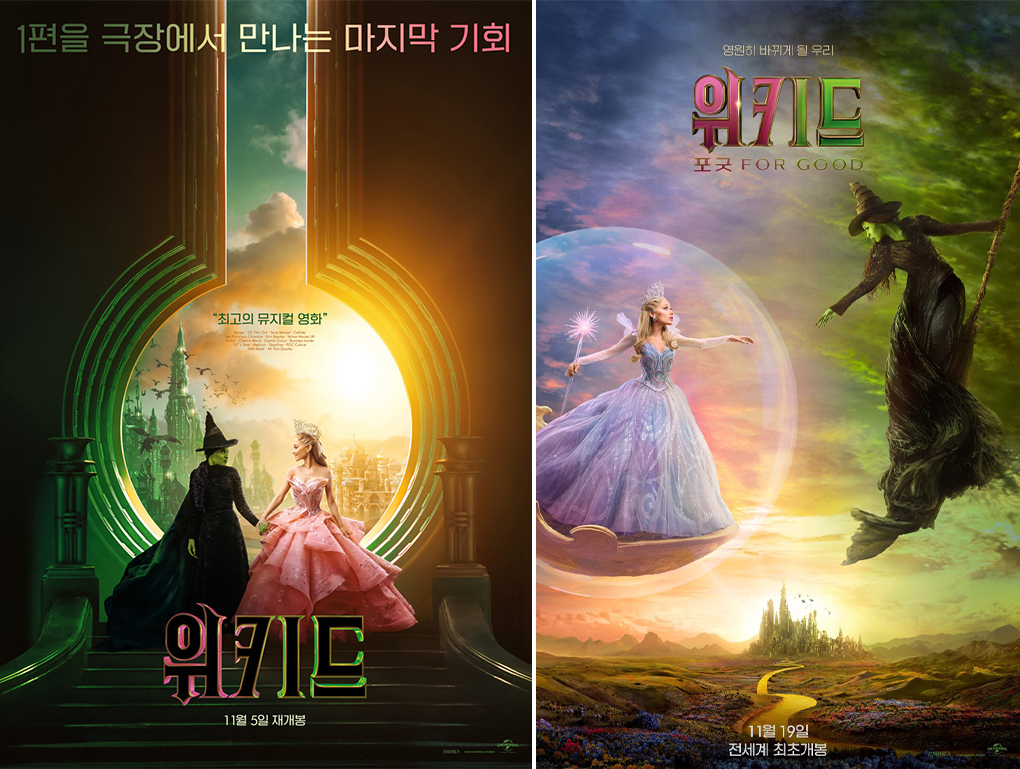
(Left)Wicked Poster (Right)Wicked: For Good Poster
/ Source: Universal Pictures Korea Co., Ltd.
#INTRO
I’d like to introduce two films: ‘Wicked’, which won Academy Awards for Best Art Direction and Best Costume Design last year, and its sequel, ‘Wicked: For Good’, currently in theaters. While this work is commonly remembered as a Broadway musical, it’s actually based on the 1995 novel ‘Wicked’. The novel is itself a spin-off of the well-known fairy tale ‘The Wizard of Oz’. Interestingly, the musical and films cover only the content from the first two of the novel’s six volumes.
Learning this made me curious about the rest of the story, so I found myself revisiting not only the original Wicked but also The Wizard of Oz to explore the whole universe. At an age when I’m rarely curious about anything (?), I was grateful for a work that sparked childlike wonder in me after such a long time.
1 The ‘Wicked’ Series: Elphaba and Glinda, Who Is Wicked?
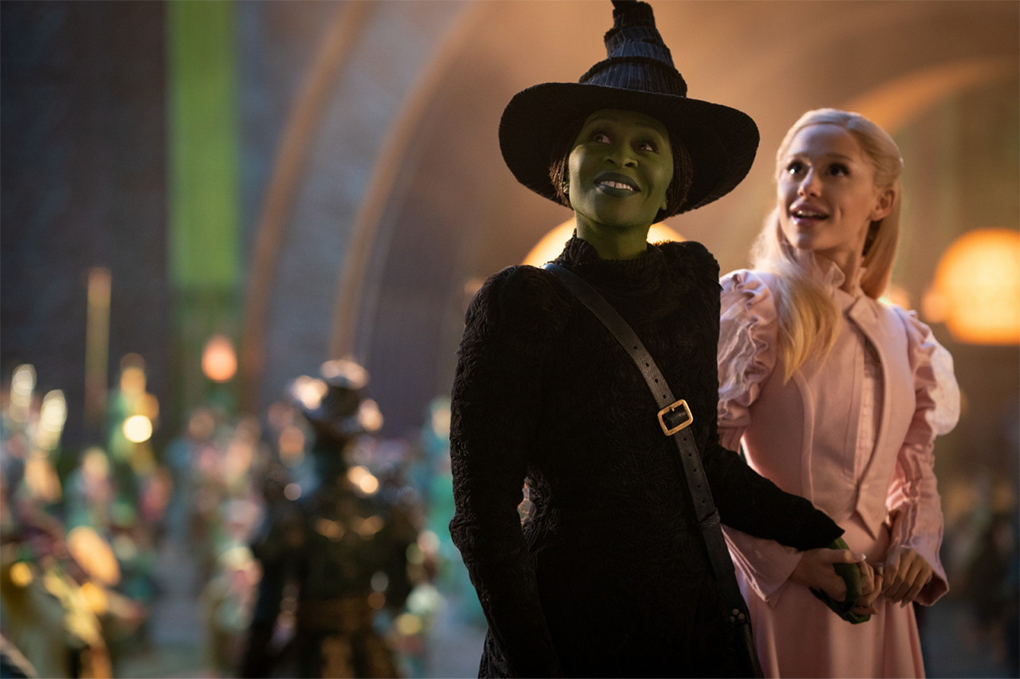
Wicked Still / Source - Universal Pictures Korea Co., Ltd.
The two films ‘Wicked’ and ‘Wicked: For Good’ directly overturn the familiar ‘witch’ imagery from The Wizard of Oz. The first film, ‘Wicked’, opens with Glinda announcing to the people that ‘the Wicked Witch of the West, Elphaba, is dead’. While everyone cheers, the film soon reveals that Elphaba and Glinda were best friends during their school days, taking the story in a completely different direction. The narrative traces who Elphaba—whom the world called the ‘bad witch’—really was and why she came to be branded that way.
When they first meet at Shiz University, the two have different personalities and values, but they grow closer after the ‘hat incident’ as they learn to understand each other. However, as Oz’s power and manipulated truths are revealed, the two friends make different choices. Elphaba stands up against injustice, while Glinda chooses the path of stabilizing a chaotic Oz.
The sequel ‘Wicked: For Good’ shows this divergence of choices even more clearly. The contrast between Elphaba, pushed outside the system to preserve truth, and Glinda, who tries to bear responsibility within the system, reveals that their decisions cannot be reduced to good and evil. Ultimately, both films make us reconsider the ‘witch’ image we’ve known. I believe the crucial turning point that sets this apart from previous stories is that Elphaba and Glinda aren’t positioned in a good-versus-evil dynamic, but rather as two people who responded to the world in different ways.
2 Beauty That Begins in Deficiency
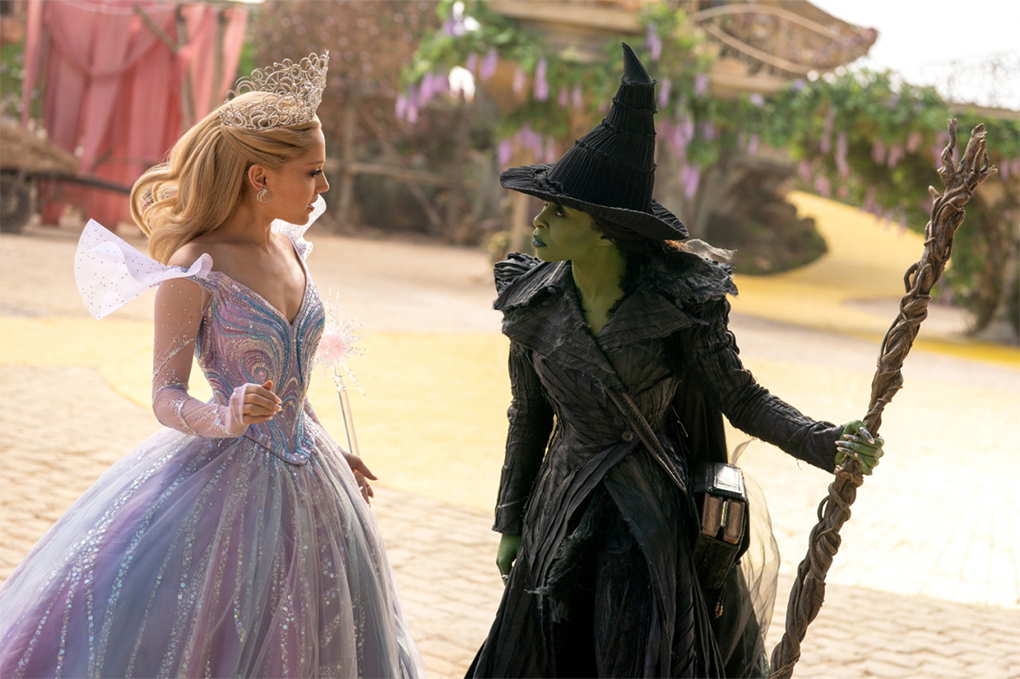
Wicked Still / Source - Universal Pictures Korea Co., Ltd.
The protagonists, Elphaba and Glinda, start from different places. Elphaba is an outsider who has lived excluded, even by her own family, due to her green skin, while Glinda is someone beloved for her beauty and popularity, closer to the privileged class.
Elphaba’s deficiency diminishes her even as it becomes the driving force that makes her more acutely aware of the world, unable to tolerate injustice, and protective of the vulnerable. In the world of Oz, animals possess intelligence equal to humans, yet they’re forbidden to speak, subjected to labor exploitation, and subjected to unjust treatment. In response, Elphaba takes the lead in the animal rights movement, acting to protect beings marginalized and exploited in a human-centered society.
In contrast, Glinda appears to lack nothing externally, thanks to her glamorous appearance and popularity, but she harbors internal deficiencies. She constantly relies on recognition and praise from those around her to confirm her self-worth, living in anxiety over others’ perceptions. She even experiences competition and jealousy in her relationship with Elphaba, who possesses superior magical abilities. However, through her friendship with Elphaba, she gains the courage to face her inner fears, and they come to understand each other on a human level.
Deficiency can weaken people, but it also gives them the ability to see the world more deeply. Elphaba and Glinda grow most beautifully precisely when they don’t hide their deficiencies but reveal what choices they make based on them.
3 Growth Completed Through Courage
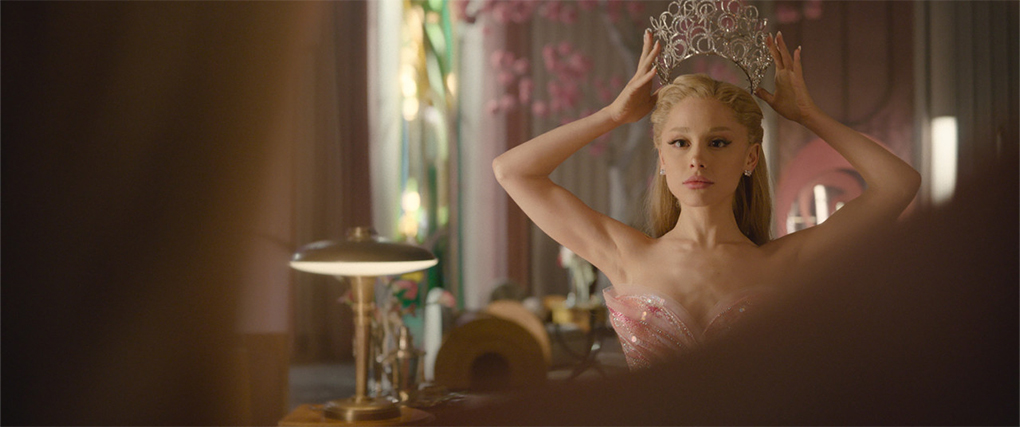
Wicked Still
/ Source - Universal Pictures Korea Co., Ltd.
Their friendship expands from a ‘relationship that understands deficiency’ to a ‘relationship that chooses courage’.
After confronting the truth about animal rights oppression, Elphaba risks danger and stands up to the system. It’s a conviction that would have been difficult to sustain alone, but through her relationship with Glinda, it becomes more solid. Conversely, while Glinda initially valued courage and status, watching Elphaba’s courage makes her confront her own fears.
Ultimately, Elphaba accepts that she no longer has the power to change the world and entrusts the future to Glinda, who can fulfill that role. Glinda understands this and grows into a responsible leader rather than merely a symbolic figure people adore. The two were strongest when together, but for the sake of the world, they had to be apart.
In ‘Wicked: For Good,’ the confession the two share reveals how each other’s courage transformed them. Elphaba accepts social danger and misunderstanding, choosing the ‘courage to leave’ to protect her friends and others, while Glinda stays within the system to correct its distorted structures, demonstrating the ‘courage to remain’. Their friendship transcends individual growth and leads to choices that move the world.
#OUTRO
Beauty Is Not Perfection but Growth.
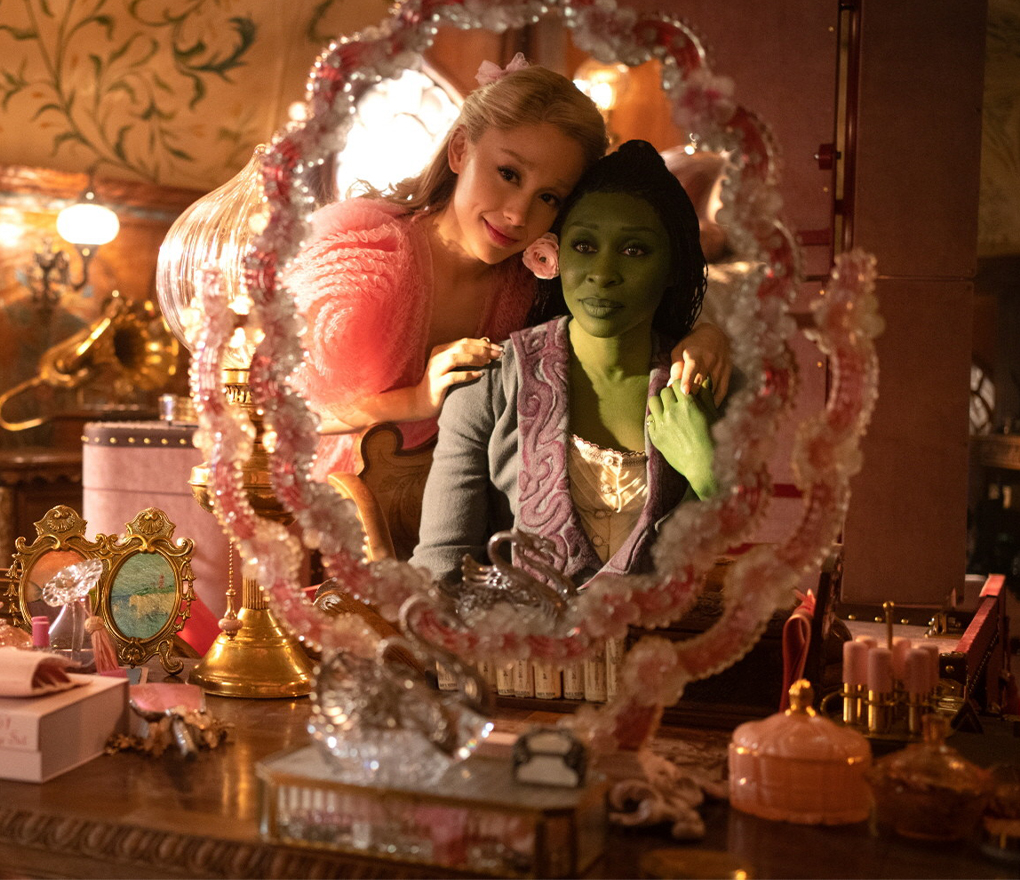
Wicked Still / Source - Universal Pictures Korea Co., Ltd.
Wicked makes us reconsider the standard of beauty we’ve often equated with ‘perfection’. A line that appears several times in the film illustrates this message well.
Elphaba: You’re still beautiful.
Fiyero: You don’t have to lie.
Elphaba: I’m not lying. I’m just seeing from a different perspective.
Beauty doesn’t stem from fixed standards but from eyes that understand and truly see each other. Watching Elphaba and Glinda’s relationship, I realized that true strength and growth are forged through confronting deficiency and within friendships that protect each other.
Are you perhaps facing inadequacy or conflict right now? If there’s a desire to understand and protect each other even within that, if there’s small courage and care, it can become an asset for genuine strength and growth.
✍ Wicked One-Line Review: A three-piece set that changes how you see: deficiency, courage, and friendship
 |
Younghee (pseudonym) |
|
|
Amorepacific
 |
|
-
Like
2 -
Recommend
0 -
Thumbs up
0 -
Supporting
0 -
Want follow-up article
0