


Columnist
Yerin Kang CSR Team
Editor's note
DEI stands for Diversity, Equity, and Inclusion, which means ensuring that members with diverse characteristics such as race, gender, age, sexual orientation, disability, religion, and cultural background are equally respected and can participate in the community without discrimination.
You might be tempted to skip ahead, thinking this sounds complex or unfamiliar. But DEI is closer to our everyday lives than it may seem—shaping everything from the economy and politics to society, corporate marketing, and communications. As a DEI professional, I’ll be sharing multiple stories I’ve encountered in this column, so please feel free to give it a quick read.
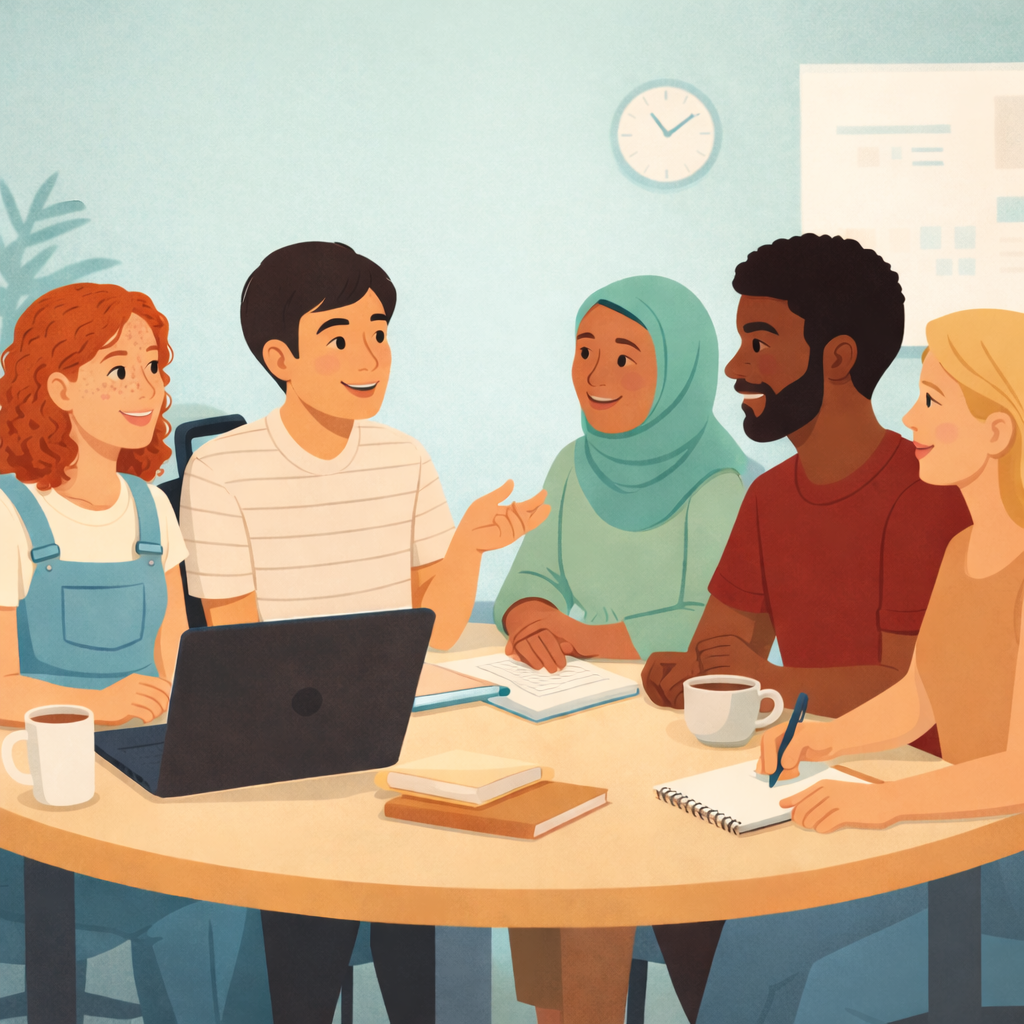
Source: OpenAI (ChatGPT) generated image
#INTRO
Have you ever looked at a sibling, friend, partner, or spouse and thought, “Wow, how can we be so different?” My older sister and I have such contrasting personalities that my mom used to say, “You were born to the same parents—how can you be so different? I wish I could’ve mixed you half and half!” Growing up, I couldn’t understand why my sister acted the way she did. But over time, I realized it wasn’t that she was ‘strange’—she was just ‘different.’ I also learned that living together harmoniously requires fully accepting each other’s perspectives, sometimes stepping back to be considerate, and putting in effort, big and small, along the way.
The workplace isn’t all that different. In organizations where diverse people come together, everything from personalities to working styles to decision-making criteria will naturally vary. If we can understand these ‘differences’ and actively incorporate diverse perspectives into our work, organizations can achieve far greater synergy. That’s why today’s column explores diverse workforce composition and inclusive organizational culture.
1 Organizations Where Diverse Members Work Together
Before taking on my CSR role, I worked in organizational culture development. One of the methods I used most frequently when facilitating culture workshops was personality assessments. We conducted various tests, including LCSI and the Birkman Method, and I found the Birkman particularly striking because it visualizes individual traits in different colors.

Source: Birkman Korea website, Basic Report sample
This assessment represents each person’s interests, needs, stress responses, and working styles in various colors. Within a single result, you might see blue (interests), yellow (needs), green (organizational orientation), and other colors appearing together. When comparing results with colleagues, it was natural to find people with color combinations completely different from my own.
During one workshop, a participant shared:
“I couldn’t understand why my team leader always spoke to me in that particular way, and I even wondered if they didn’t like me. But after taking this assessment today, I realized they just had a completely different way of thinking than I did. Maybe I’d been misunderstanding all along.”
I’ve also had moments at work when I thought, “Why are they like that?” But as I encountered various diagnostic tools that examine individual characteristics, I came to realize that even I sometimes behave in ways that are hard to understand, and just how difficult it truly is to fully understand another person. What I was seeing was probably just one facet of who they were. Since then, rather than trying to ‘understand,’ I’ve worked on ‘accepting’ and thinking, “That’s okay—they’re different from me, so there’s probably something I can learn.”
Another important realization was that organizations made up of only similar people may feel comfortable, but often struggle to achieve strong performance.
Research analyzing the relationship between corporate diversity and inclusion (D&I)1) and financial performance has shown that the more diverse the workforce composition, the higher the Tobin’s Q ratio (a measure of market value relative to asset replacement cost) and the better the ROA (return on assets, indicating overall profitability).
In this context, companies both overseas and in Korea are continuing efforts to expand workforce diversity across various dimensions, including race, gender, and disability.
1) Impact of Diversity and Inclusion on Firm Performance (2024, MDPI)

Source: Google Diversity Annual Report 2024
Google, for instance—though this practice has since been suspended due to the current political climate—had been transparently sharing its workforce composition in the Google Diversity Annual Report through 2024. The report provides detailed data on ‘race.’ Comparing U.S. data from 2014 and 2024 shows:
- Black+ employees: increased from approximately 2.4% → 5.7%
- Hispanic/Latinx+: increased from approximately 4.5% → 7.5%
- Asian+ employees: increased from approximately 31.5% → 45.7%
- White+ employees: decreased from approximately 64.5% → 45.3%
This confirms that organizational diversity expanded significantly over the decade. Korean companies, by contrast, tend to focus more on ‘gender,’ particularly gender equality and women’s leadership issues, rather than race. At the UNGC DEI meetings I participate in, attending companies cite ‘gender equality’ and ‘percentage of women executives’ as their biggest concerns, and government and public-sector-led events and seminars on these topics have noticeably increased. While the areas of focus differ by country and company, efforts to expand workforce diversity continue steadily across the board.
2 An Inclusive Culture That Makes Diversity Valuable
Of course, securing a diverse workforce alone isn’t enough. Diversity delivers its true value only when it works hand in hand with inclusion. Equality, Diversity and Inclusion: An International Journal (2025) emphasizes that for DEI interventions within organizations to actually translate into results, they must go beyond simple policies or headcount targets to include leadership-driven initiatives, institutional practices, and cultural acceptance systems working together.
Microsoft exemplifies this transformation. After Satya Nadella became CEO, the organization shifted its core ethos from ‘know-it-all’ to ‘learn-it-all,’ emphasizing learning, questioning, and listening over knowing the correct answers or appearing perfect. This created a foundation where employees from diverse backgrounds could actively participate without fear of making mistakes or voicing opposing views, and the psychological safety that emerged positively influenced collaboration methods and innovation capabilities across the board.
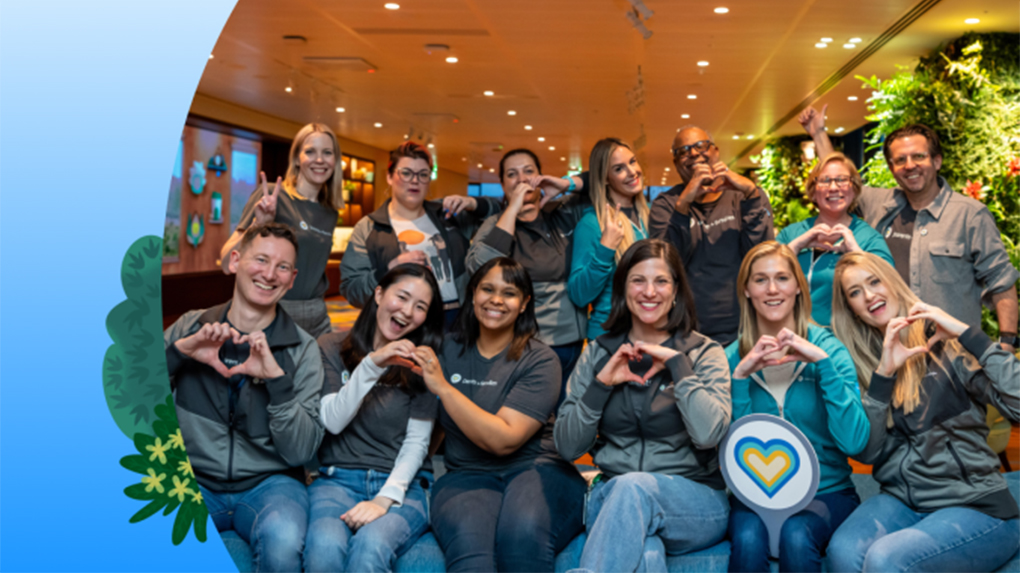
Source: Salesforce official website ‘Equality Group Leader’
Salesforce is frequently cited as another example—a company that doesn’t stop at cultural declarations but concretely embeds inclusion into its organizational structure. The company operates employee-led communities called ‘Equality Groups,’ organized around diverse identities and experiences, including race, gender, sexual orientation, disability, generation, and neurodiversity. Examples include BOLDforce, centered on the Black community; Outforce for LGBTQ+ members; Abilityforce, which addresses disability and accessibility issues; and Women’s Network, which supports women’s leadership.
These groups aren’t simply social gatherings—they serve as channels that connect members’ experiences to organizational improvement initiatives. What’s particularly striking is that these groups are designed with an ally structure that anyone can join. Through this approach, Salesforce uses difference as a resource for ‘connection’ rather than ‘separation.’
These two companies reinforce that inclusion is built through culture, structure, and everyday actions. When I worked in organizational culture development and monitored engagement survey results, I frequently saw keywords like ‘honest communication with leaders,’ ‘open discussions with colleagues,’ and ‘fair evaluation and compensation.’ This shows just how many employees want an inclusive culture where people aren’t excluded simply for being different, where everyone can communicate freely, and where they can receive fair evaluations without bias. While it’s essential to open the doors wide so diverse people can enter the organization, it’s equally important to create a culture where they feel safe, can speak up, and have opportunities to grow.
#OUTRO
Whether in the workplace or in personal relationships, I believe positive change only begins when we work alongside diverse people and embrace ‘each other’s differences.’ Through writing these five columns, I’ve come to truly appreciate that DEI isn’t someone else’s distant issue but a topic that touches all of our daily lives. I’ve also resolved to see others as they are and become someone who can embrace those differences. I hope you’ve gained insights from this series, and I’m deeply grateful to everyone who has joined me on this ‘DEI Insights’ journey.
 |
Yerin Kang |
|
|
Amorepacific
 |
|
-
Like
0 -
Recommend
0 -
Thumbs up
0 -
Supporting
0 -
Want follow-up article
0