




Columnist
Hyun Hee Jessie Jo Sustainability Management Center
Editors' Note
Full disclosure: we are absolute ESG enthusiasts. We're the kind of people whose eyes light up the moment someone mentions carbon footprints in a meeting, and who have 'aha' moments reading sustainability reports. After hearing "okay, but what does that actually mean?" one too many times, we decided to write it all down. From the life and death of a cosmetics product to the survival story of a reindeer, we've put together a collection of ESG stories that might catch you off guard. By the time you're done reading, you might find yourself one of us. "ESG, Here and Now" comes out every other month. Welcome to the club!
#INTRO
Let's start with a pop quiz.
Q. Which of the following is worse for the environment?
A) Glass-bottle cosmetics B) Plastic-container cosmetics
A) Domestically sourced ingredients B) Ingredients imported from the Amazon
A) Natural and organic products B) Products made with synthetic ingredients
A) One large-sized cosmetics product B) Several small-sized cosmetics products
Made your choices?
Here's the thing: none of these questions has a clear-cut answer.
More to the point, there's a good chance the answers you just chose are wrong.
That might feel a little unfair. After all, your choices were perfectly reasonable.
But when you look at the data, the common-sense eco-friendly assumptions we've all taken for granted start to unravel, one by one, the moment LCA enters the picture.
In this column, we'll dig into those uncomfortable — and, for that very reason, fascinating — truths.
Oh, and what exactly is LCA? LCA stands for Life Cycle Assessment.
Simply put, it's a method for quantifying the environmental impact of a product across its entire journey: from raw material extraction and manufacturing through transportation and consumer use to disposal.
Think of it as reading a product's résumé from an environmental perspective, from the very first page to the very last.
So, shall we put our eco-friendly assumptions to the test, one by one, through the lens of LCA?
[Case 1] Glass is more eco-friendly than plastic. Is it really?
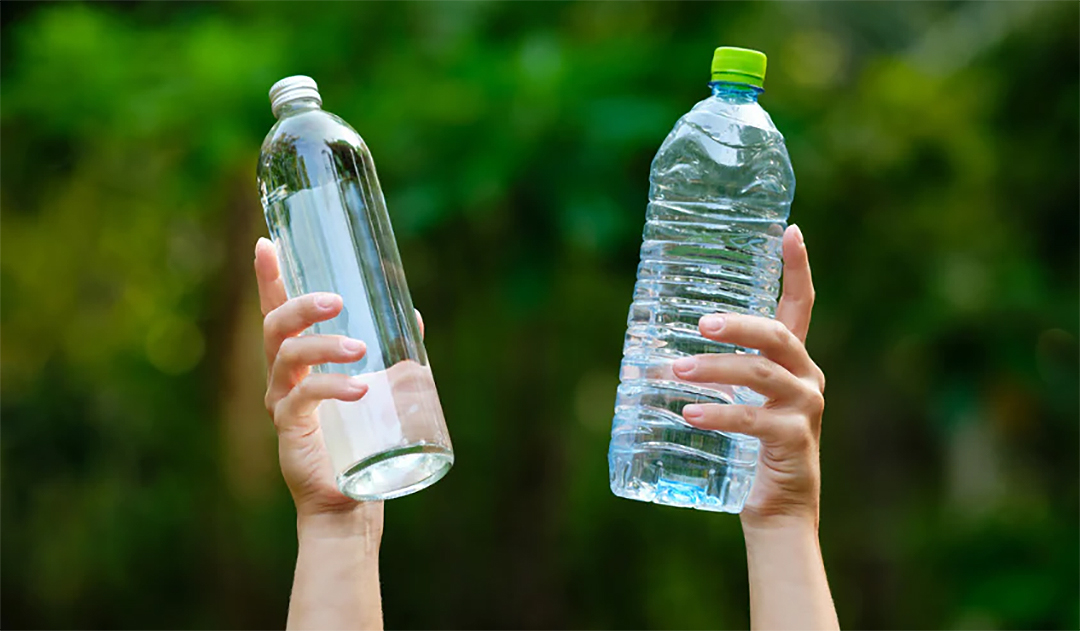
At the store, if the same product is available in both a glass bottle and a plastic container, which one do you reach for?
Most people go for the glass. It feels more premium somehow, it comes with less guilt than plastic, and it just seems like the healthier, better choice.
But follow the journey glass takes before it ever reaches your hands, and the story changes.
Manufacturing glass requires heating sand and limestone to somewhere between 1,500 and 1,700°C.
Consider that a standard home oven maxes out at around 250°C, and you start to get a sense of just how much energy is involved — six to seven times as much heat.
On top of that, glass is generally several times heavier than plastic.
When you're shipping containers filled with the same product to stores across the country, that weight difference translates directly into significantly higher fuel consumption.
Looking purely at the carbon footprint, glass can emit up to three times as much carbon as plastic during manufacturing.
So does that mean we should stop using glass?
Not at all. Glass does have real strengths, though. It comes down to how many times and how often it gets reused.
If the same container is refilled dozens of times, glass is clearly the better choice.
But a glass bottle used once and thrown away can, despite the best of intentions, become a greater burden on the environment.
When we look at "material," LCA looks at "the entire journey."
[Case 2] Paper packaging = responsible packaging? Not necessarily.
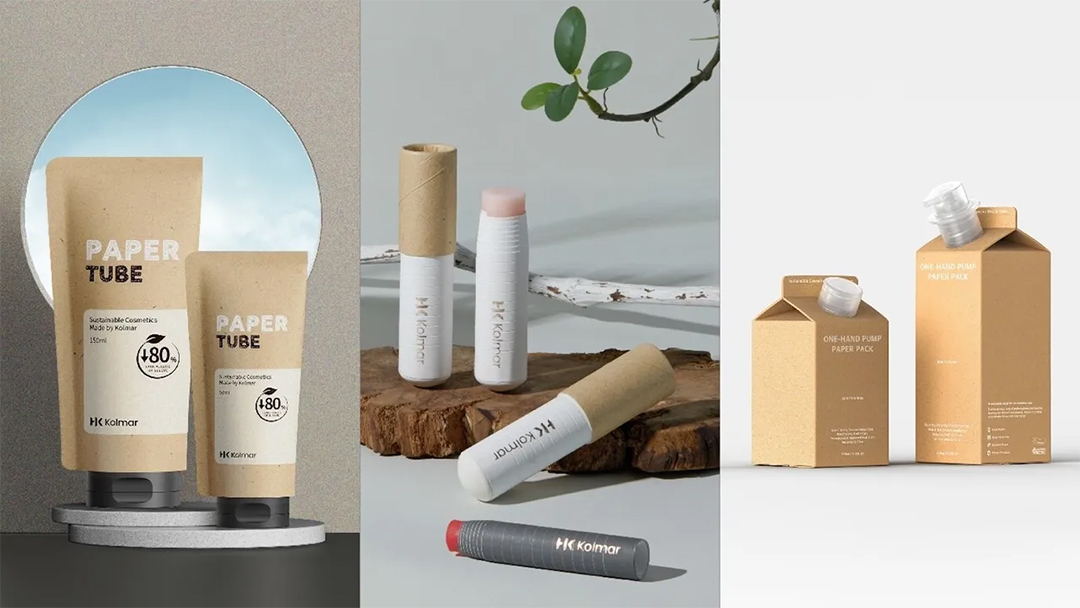
These days, many brands are switching from plastic to paper. Consumer response has been positive, and the direction seems right.
But when you put paper through the LCA lens, some surprising numbers emerge.
Making paper requires cutting down trees, and the pulping process consumes large quantities of water and chemicals.
It may also take more paper by volume than plastic to protect the same amount of product.
As a result, paper can carry a surprisingly heavy environmental footprint in terms of freshwater consumption and land use.
When deforestation is involved, the impact can extend to biodiversity as well.
At the same time, plastic has a fatal flaw that paper does not — ocean pollution, microplastics, and the fact that it can persist in the ground for hundreds of years without breaking down.
In the end, paper has its own set of challenges, and plastic has its own.
The right answer depends on what you consider most important.
There is no perfect material that solves every environmental problem all at once.
[Case 3] Solid shampoo vs. liquid shampoo: Is bar format always better?
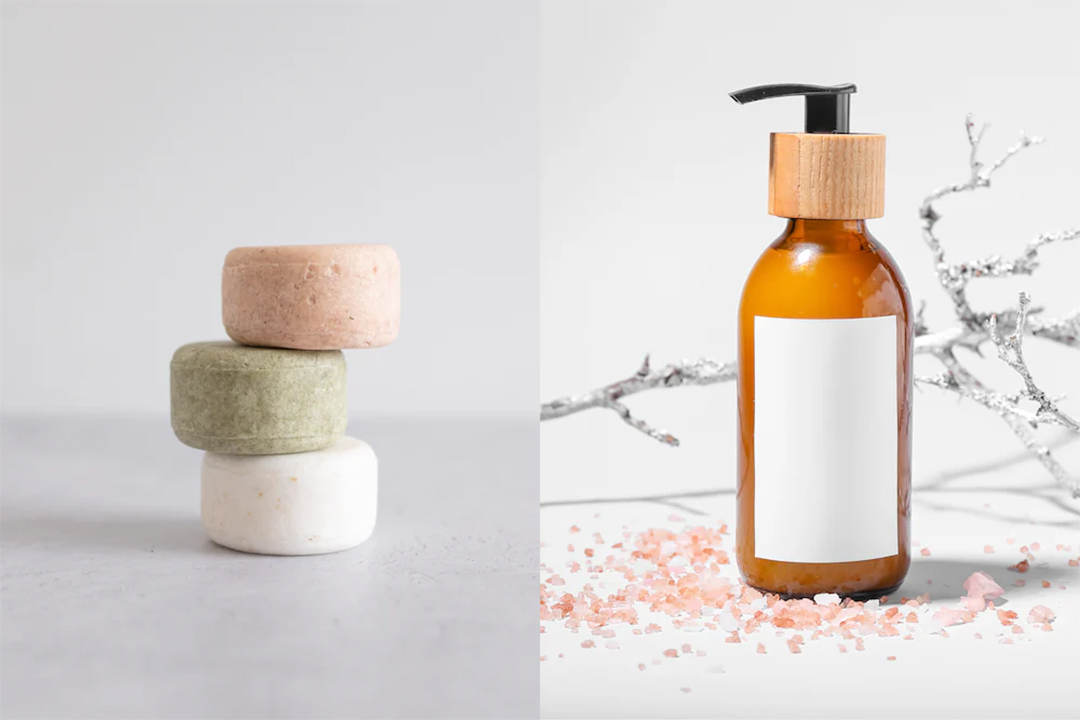
Shampoo bars come without plastic packaging. They're lightweight and concentrated. On the surface, they look like the perfect eco-friendly product.
And in fact, when it comes to packaging and transportation, the carbon footprint of a shampoo bar is considerably lower than that of liquid shampoo.
That part is true.
But LCA doesn't stop there. It follows the product all the way into the customer's bathroom and puts a number on the environmental impact of what happens next.
What is it about how customers use this seemingly impeccable, eco-friendly product that can actually raise its environmental impact?
First, shampoo bars can be more energy-intensive to manufacture because producing the solid form requires additional surfactant synthesis processes.
Second, at the consumer-use stage, shampoo bars tend to require more lathering effort than liquid shampoos, which can lead to higher per-use consumption.
Third, consumer usage data also shows that shampoo bars dissolve quickly in humid bathroom environments, resulting in higher rates of waste.
None of this means shampoo bars are a bad choice. The reduction in packaging is real and meaningful.
But before concluding that solid is always better, the ingredients and real-world usage patterns are both worth a closer look.
Developing a truly eco-friendly product requires attention to detail.
[Case 4] "Natural" and "organic" = good for the environment?
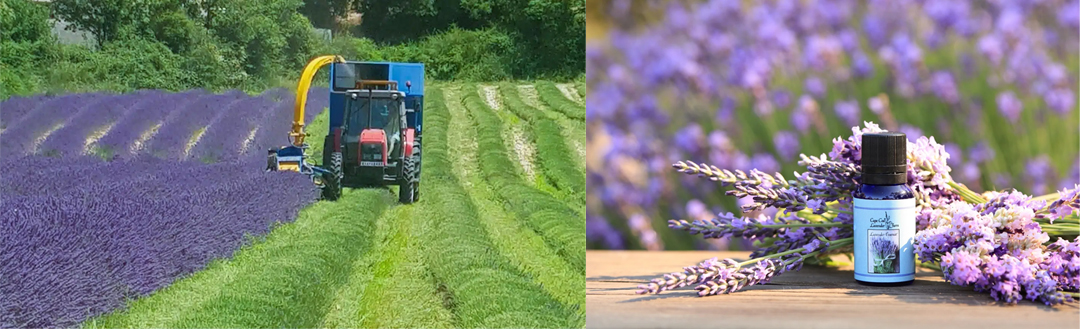
Standing in front of the cosmetics shelf, we find phrases like "98% naturally derived," "made with organic ingredients," and "natural formula" put our minds at ease.
But when LCA is applied to these ingredients, the results are more complicated than expected.
Producing just one kilogram of lavender essential oil requires harvesting hundreds of kilograms of lavender flowers.
That process demands extensive agricultural land and water, and energy is consumed during both harvesting and distillation.
Palm oil, meanwhile, has an extremely high environmental impact score in LCA's land-use category due to tropical deforestation driven by the expansion of palm plantations.
Certain synthetic ingredients, on the other hand, can deliver the same efficacy using far less energy and water.
Synthetic vitamin C, for example, shows a considerably lower environmental impact than vitamin C derived from natural sources, thanks to a much more efficient production process.
What about organic ingredients? Organic farming avoids synthetic pesticides and fertilizers, which is good for soil health and water quality.
However, it yields approximately 20-25% less per unit of land than conventional farming.
Getting the same volume of raw materials requires more land and water, which raises the environmental impact scores for land use and water consumption.
Of course, there are also social and economic values that LCA's numbers cannot capture, such as contributions to ecosystem health and support for smallholder farmers.
LCA is not saying that synthetic is always better, or that organic should be avoided.
LCA is making one point, and one point only.
The words "natural" and "organic" alone do not guarantee environmental sustainability.
[Case 5] Domestic sourcing means lower carbon than imports? Actually, ships beat trucks.

"Domestically sourced ingredients," "local sourcing" — produced nearby, so the carbon from transportation should be lower, right?
Intuitively, it makes perfect sense.
But the answer changes completely depending on the mode of transport.
Cargo ships emit only a fraction of the carbon per unit of weight that trucks do, because ships move enormous quantities in a single voyage.
An imported ingredient that travels thousands of kilometers by sea can actually generate less carbon than a domestically sourced ingredient grown in a heated greenhouse.
Domestic ingredients, of course, carry other kinds of value: support for local economies, freshness, and supply chain stability.
But if carbon alone is the measure,
'How it was produced' may matter more than 'where it came from.'
[Case 6] Large-sized products have a lower environmental impact than small-sized ones — if you actually use them up.
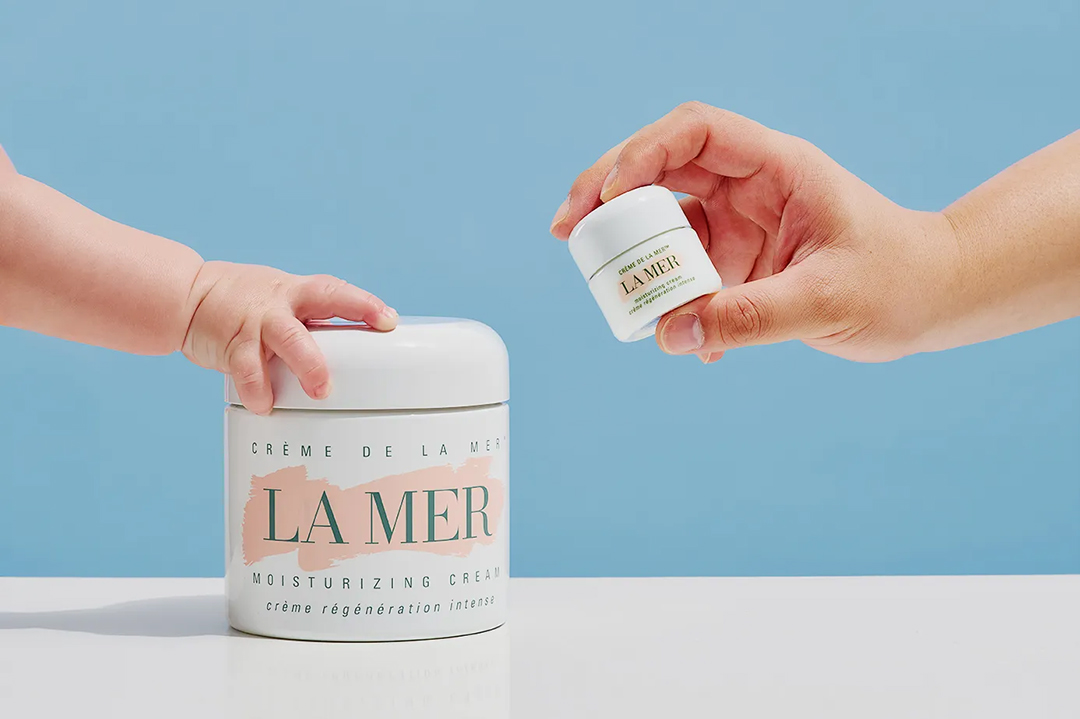
Smaller products require more packaging per unit of product, need to be purchased more frequently, and generate more delivery trips.
So it seems like large sizes should always be the more environmentally responsible choice.
Generally speaking, that's true. Improving the product-to-packaging ratio is, in practice, one of the more effective ways to reduce environmental impact.
LCA assessments also rate large-sized products favorably, given their higher product-to-packaging ratio.
That said, real-world considerations need to be factored in as well.
Is there a half-used product sitting on your vanity or bathroom shelf right now?
A cream you never finished, an essence past its expiry date, a foundation that didn't suit you and was left behind.
When a product is thrown away with contents still inside, every bit of environmental impact that went into making it is wasted.
No matter how low the environmental impact per gram, using only half before tossing it effectively doubles the real-world impact.
The advantage of the large size only holds when it comes with one condition: you actually use it all the way to the end.
If a small-sized product makes it easier to try new things and reduces waste, it may, in some cases, prove better for the environment than its larger counterpart.
Something LCA would be happy to verify.
#OUTRO
Feeling a little overwhelmed?
Good. That means you read this column exactly the way it was meant to be read.
"So what's the right answer? Glass or plastic? Natural or synthetic? Just make sure you use everything up? What on earth are we supposed to do?"
That sense of confusion is, in fact, the most honest message LCA has to offer.
There is no perfect material, no perfect ingredient, no perfect packaging that solves every environmental problem at once.
And the challenges facing our planet are far too complex to be resolved by a single word like "glass" or "natural."
LCA doesn't simplify that complexity. It shows it to you as it is.
And standing before all that complex data, it compels you to ask one question:
"Does our brand, do our products, actually know what environmental impact we need to reduce most right now?"
Only when you can answer that question with data does truly sustainable practice begin.
 |
Hyun Hee Jessie Jo |
|
|
Amorepacific
Sustainability translator — making the complex make sense
 |
|
-
Like
0 -
Recommend
0 -
Thumbs up
0 -
Supporting
0 -
Want follow-up article
0