



2026.11.27
0 LIKE
25 VIEW
-
-
- 메일 공유
-
https://stories.amorepacific.com/en/amorepacific-plans-at-seven-what-time-do-you-leave
Plans at Seven: What Time Do You Leave?
Everyday DEI Insights #5
Columnist
Jiwon Do CSR Team
Editor's Note
I tend to put a question mark on just about everything. Once I start thinking, I can’t even let a single advertising slogan pass by without a second look. Because of this, people around me often tell me I think too much — but I find this curiosity of mine quite fun.
In this column, I’d like to follow those small question marks I keep discovering in everyday life. Looking at various examples across language and expression, products and services, and brands and society, I’ll try turning familiar standards upside down, just once. I’ll share stories about DEI (Diversity, Equity, Inclusion) that aren’t too difficult or heavy — the kind that leave you seeing the world around you through slightly different eyes once you’ve finished reading.
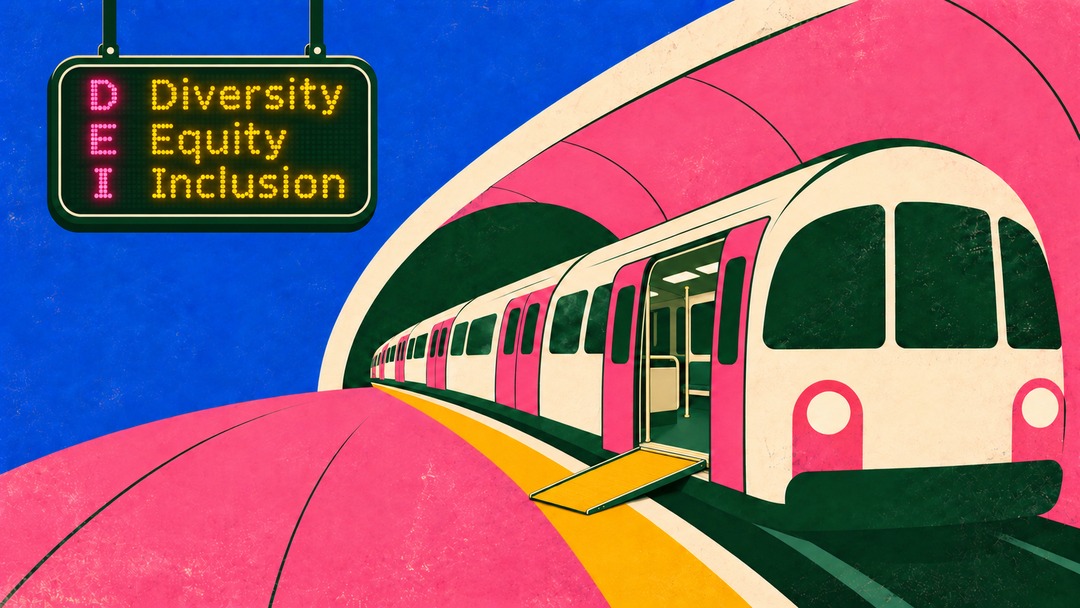
<Source: AI-generated image>
#INTRO
See You There at Seven.
We send a friend the restaurant’s address and check the map to see how long it will take. Thirty minutes should get us there. But some people get the same address and still have one more thing to check before they decide when to leave.
This fifth and final DEI (Diversity, Equity, and Inclusion) column begins with the story of a person in the U.S. who called for a car.
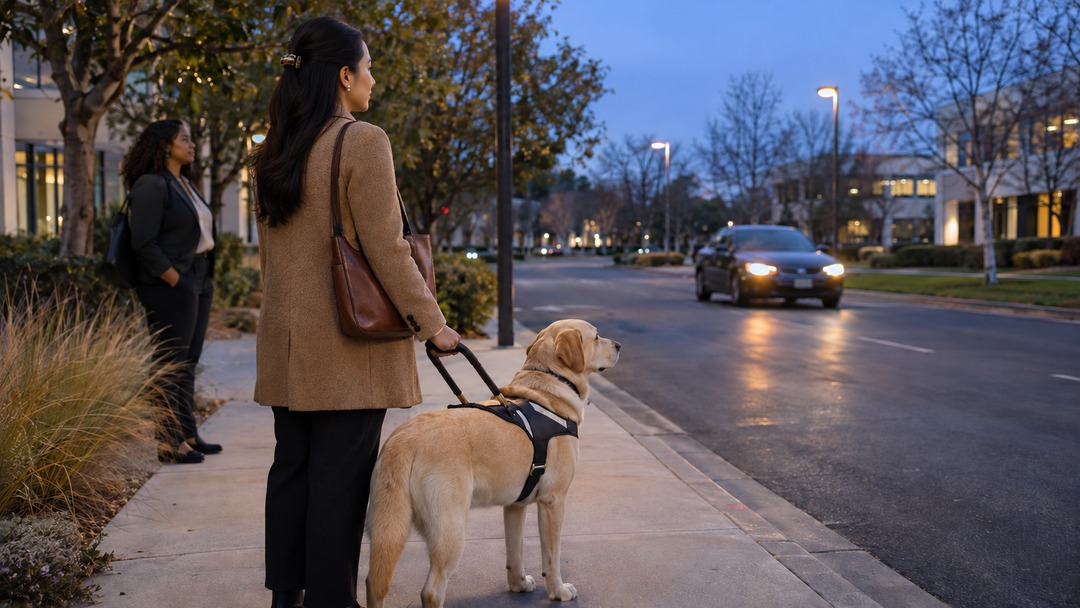
<A woman and her guide dog waiting for a taxi> Source: AI-generated image
Even After Three Cars Came
When you call a car, you watch its icon on the map. Has it turned the corner? How many minutes are left? If it looks like you’ll be late, you find yourself staring at that little icon for a long time.
Something like this happened in the U.S. On her way home from work, a passenger booked a car through the ride-hailing app Lyft. She and her guide dog waited for it beside a colleague. When the first car arrived, her colleague told the driver who it was there to pick up. The driver kept saying the dog couldn’t ride, then rolled up the window and left. The drivers of the next two cars also saw the guide dog and left without her. Not long after, Lyft charged her a cancellation fee, saying she hadn’t shown up.
This story comes from the complaint the U.S. Department of Justice filed against Lyft on November 9. The Justice Department alleges that passengers with guide dogs or folding wheelchairs were repeatedly refused rides, and that some even paid cancellation fees. Lyft has said it disagrees with these allegations. The company explained that it requires drivers to accommodate passengers traveling with guide dogs or using folding mobility aids, and that drivers who break this rule can have their accounts permanently deactivated.
The complaint also describes a day when the same passenger booked a car to get to a conference. Once again, a driver refused the ride because of her guide dog, and she was unable to give her scheduled presentation. According to the complaint, she sometimes asked her husband to drive her so she would get to meetings on time, but she wanted to get around on her own whenever she could.
In this case, inclusion is about whether a passenger who calls a car with her guide dog can actually get in and reach her destination like anyone else. Equity is about whether Lyft takes her circumstances into account in handling the fare and in its customer service when she is refused. Every time, this passenger had to bear the uncertainty between being able to call a car and being able to trust it enough to plan around a presentation.

<A man stopped at the steps in front of a restaurant> Source: AI-generated image
What You Want to See on the Map When Choosing a Restaurant
In Korea, one team is working to reduce the effort people have to put in before they set out. It’s called the Stair Crusher Club, a name that sticks the first time you hear it.
Say you’re looking for a restaurant for dinner with a friend. You check the menu and opening hours on the map and swipe through a few photos. Someone who uses a wheelchair may want to see one more photo at this point: a photo of the entrance. People who use wheelchairs or strollers may need to know how many steps there are at the entrance, whether there’s a ramp, and whether there’s an elevator before they can choose a place.
To gather this information, the nonprofit Stair Crusher Club organizes “conquest activities” with members of the public. Participants visit neighborhood restaurants and cafés in person and photograph the entrances. They also record details such as the number of steps, whether there’s a ramp, and whether the building has an elevator. Anyone can look up the information collected this way in the Stair Conquest Map app. Once you’ve decided on a neighborhood to meet in, you can also look first for nearby restaurants with no steps at the entrance.
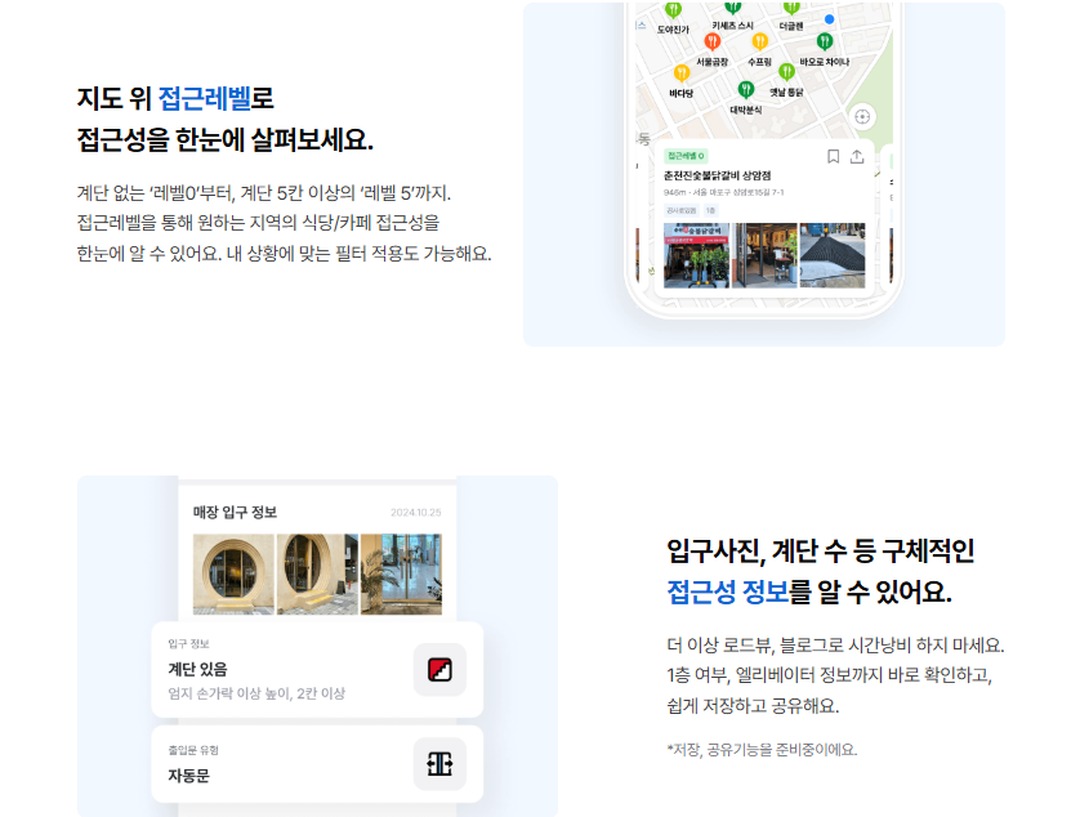
<Source: Stair Crusher Club website, Stair Conquest Map introduction image>
From a “Has stairs” label alone, it’s hard to tell what an entrance looks like. With a photo, you can check whether the step is right at the door, and even whether there’s a ramp beside it. Faced with the same single step, one person may get in and another may not, depending on the wheelchair they use and whether anyone is with them. That’s why having both the number of steps and a photo matters. It lets people choose a place they can reach that suits their situation and be the first to text a friend, “Should we meet here?”
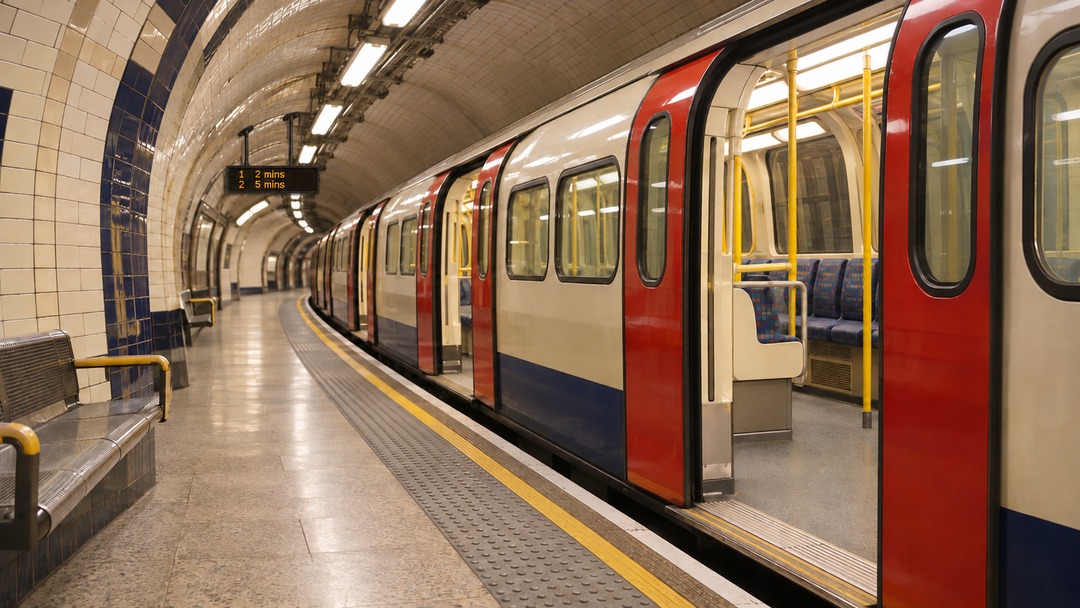
<A subway scene in the UK> Source: AI-generated image
Why London’s Tube Map Has Two Wheelchair Symbols
Some transit services have also made this kind of accessibility information part of how they operate. London’s Tube map shows wheelchair symbols in blue and white. Blue means you can get from the street onto the train step-free. White means you can get from the street to the platform step-free, but because of a step or gap between the train and the platform, you may need a boarding ramp to get on and off. On a separate guide map from Transport for London (TfL), you can also check the height difference and gap between the platform and the train.
For example, even if the platform and the train floor are level at your departure station and you can board directly, you may need a boarding ramp at your destination station. According to TfL, when staff use a ramp to help a passenger board, they also contact the destination station and, where needed, interchange stations. They let those stations know which train the passenger is on, so staff there are ready to help them off the train.
The next time you say “See you there at seven” to someone, I hope you’ll also think about what each person needs for that short plan, so that anyone can reply a little more easily, “Sounds good, see you there.”
#OUTRO
This column brings the five installments of “Everyday DEI Insights” to a close. From familiar expressions we’ve long used to AI technology and the ways we get around and decide where to meet, each of the five installments told a different story. But in hindsight, they all started from the idea that someone else can experience the things we take for granted differently.
While writing this installment, I also thought about what I look at on the map when choosing a restaurant. I carefully check the menu and opening hours, but I’ve hardly ever looked for entrance photos, even though some people need to see one before they can decide where to meet.
Perhaps DEI begins less with knowing some grand answer than with taking one more look at whether the everyday life I take for granted is the same for someone else. It could start with occasionally remembering the questions I’ve put to you in this series when you choose a place to go together, build a new technology or service, or explain to someone how to use something.
Thank you for reading all five stories with me.
As the year draws to a close this December, I hope you have a warm holiday season and look on one another with a little more kindness.
-
Like
0 -
Recommend
0 -
Thumbs up
0 -
Supporting
0 -
Want follow-up article
0