



#Amorepacific:log
2026.04.30
0 LIKE
6 VIEW
-
-
- 메일 공유
-
https://stories.amorepacific.com/en/amorepacific-hyaluronic-acid-the-research-behind-a-single-drop-of-moisture
Hyaluronic Acid: The Research Behind a Single Drop of Moisture
Amorepacific Research Stories Through the Lens of an Ingredient #1
Columnist
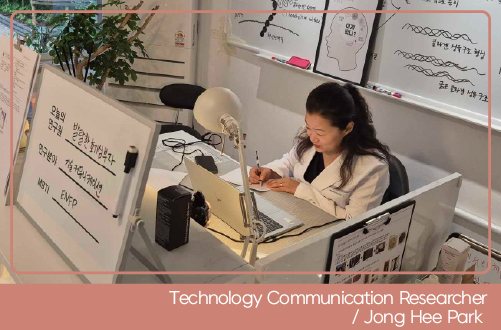
Jong Hee ParkResearch Infrastructure Operations Lab
Editor's Note
When I was a new researcher, my mentor would tell me to try applying ingredients directly to my skin whenever I had a spare moment. Even an ingredient used in small amounts can be fully felt in a finished product, my mentor would say — and building up that sensory memory by testing ingredients firsthand goes a long way toward making great products. It’s much like how, when we eat, we can taste every ingredient in a dish, whether its contribution is bold or subtle. So, I’d like to share the story of my favorite ingredients from those days: the ones I looked forward to applying every single day whenever I got a free moment.
#INTRO
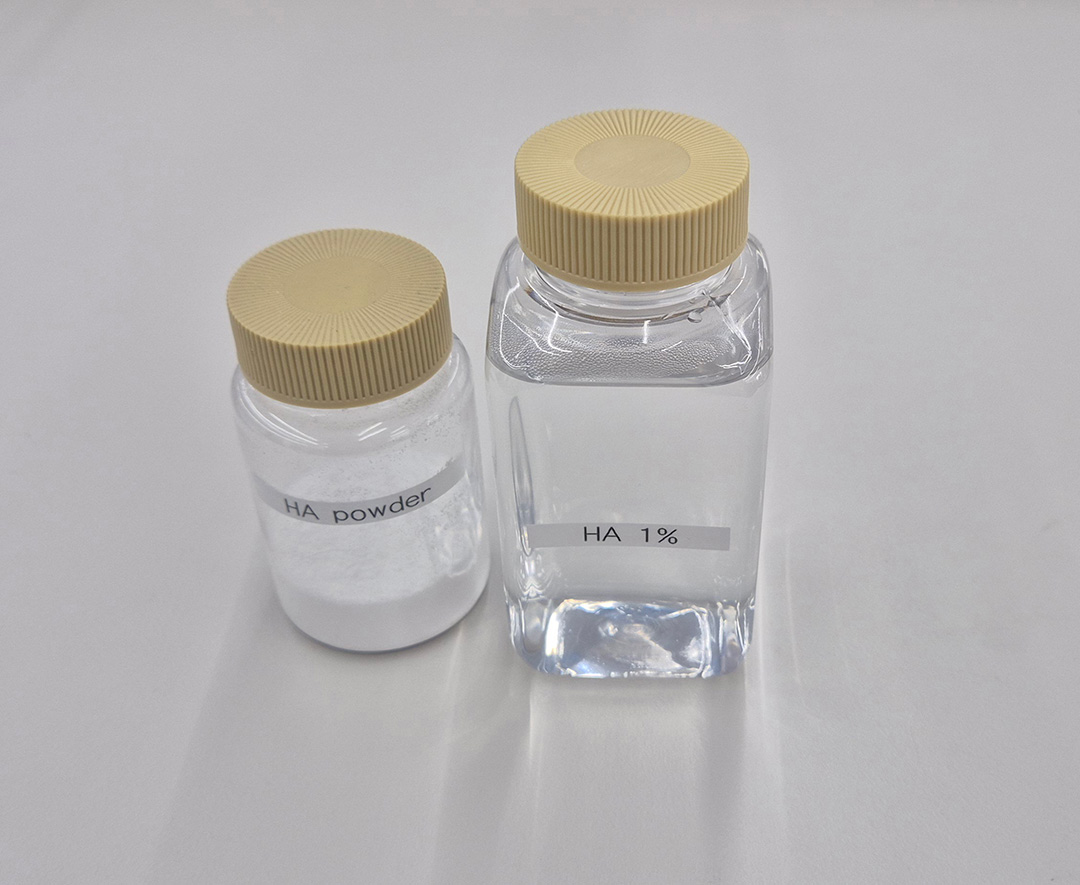
The subject of my first column is hyaluronic acid, my personal favorite ingredient, which even in its diluted form felt as good as a complete finished product on its own.
Hyaluronic acid (HA) is a substance capable of attracting 300 to 1,000 times its own weight in moisture, and its exceptional hydrating power has made it a staple ingredient across the beauty and health industries. Most of us are already familiar with it — it turns up in artificial tears, skincare products, and aesthetic filler treatments alike.
What’s interesting is that hyaluronic acid occurs naturally in our bodies, found in the skin, joints, and eyes. Because it is a substance native to the human body, it offers high biocompatibility and a strong safety profile, which is why it is used in applications ranging from medical materials to cosmetic ingredients.
Amorepacific Meets Hyaluronic Acid
Amorepacific’s history with hyaluronic acid research runs remarkably deep. From early on, the company moved well beyond simply purchasing and using the ingredient, committing instead to in-house production and ongoing research to advance the technology.
Amorepacific’s journey into hyaluronic acid research dates back to the 1980s.
As biotechnology for producing and processing materials using living organisms began to take hold in that decade, large-scale production of natural substances became possible. Amorepacific R&I Center, always quick to adapt to the currents of the times, soon launched its own full-scale research into hyaluronic acid.
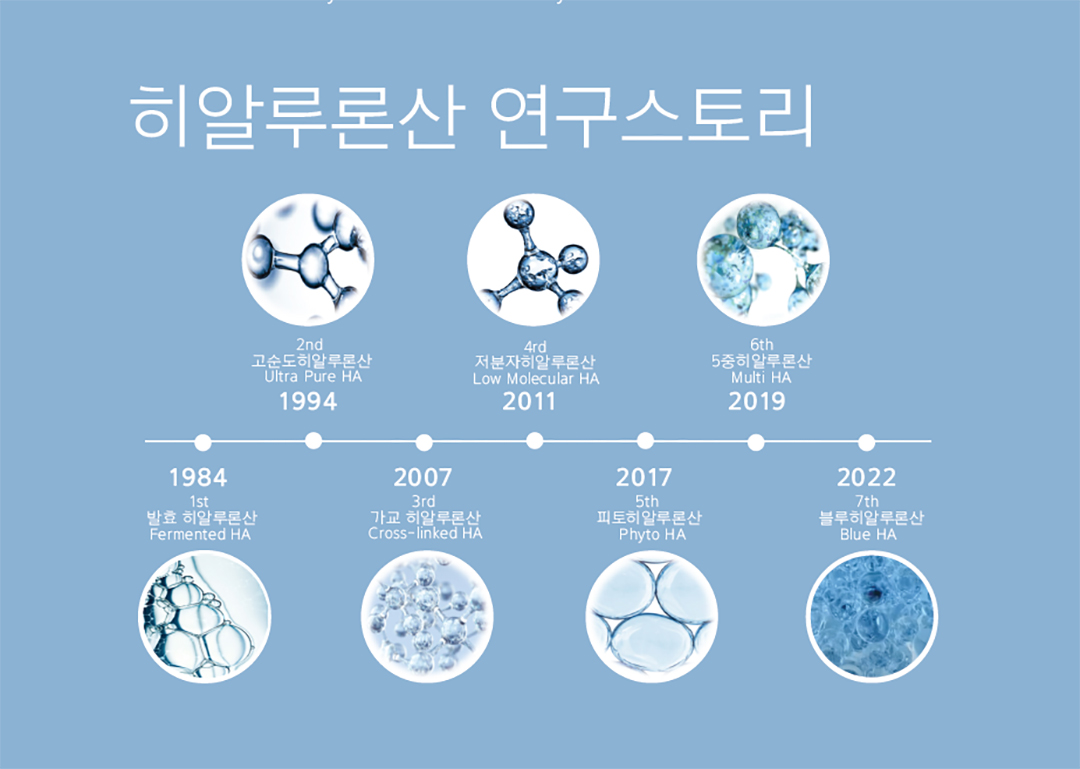
Through the late 1980s, hyaluronic acid was sourced almost entirely through imports and commanded a staggering price of hundreds of thousands of won per gram. Extracted primarily from rooster combs, it was difficult to produce at scale, and there were growing concerns around animal welfare as well. In response, Amorepacific established microbial fermentation facilities at its Ansan plant and devoted itself fully to developing in-house production capabilities.
Using advanced fermentation tanks at the Ansan plant, Amorepacific became the first company in Korea to successfully mass-produce hyaluronic acid through microbial cultivation. It was a bold gauntlet thrown down in a market that had long been the exclusive domain of Japanese and European companies.
By cultivating specific microbial strains, including Streptococcus, in place of rooster combs, Amorepacific developed a process widely recognized as elevating Korea’s biotechnology capabilities to a new level at the time.
With in-house production bringing down costs and enabling mass production, hyaluronic acid could now be incorporated in generous amounts into mainstream products, rather than being reserved in small amounts for premium cosmetics. The ingredient developed through this work went on to serve as a key moisturizer in Revital Bio, Amorepacific’s first biocosmetic line, and subsequently in products from brands including Mamonde and LANEIGE.
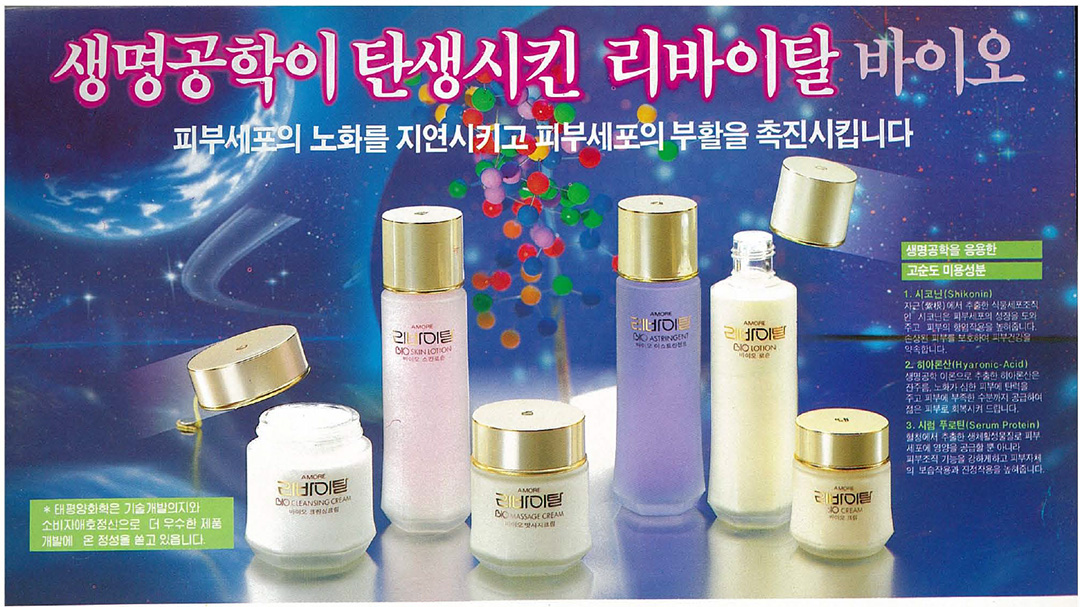
Dong-A Ilbo, August 2, 1984 / Naver News Library
The fermentation expertise developed at the Ansan plant was later carried forward by Amorepacific’s affiliate, Bioland (now Hyundai Bioland), where it was further refined and specialized.
Among the researchers at the Ansan plant at the time, there was reportedly a robust sense of pride, captured in the saying: “The hyaluronic acid our own strains produce is far cleaner than anything we ever imported.” The stories of those researchers who monitored the temperature and humidity of the fermentation tanks around the clock to overcome supply instability still circulate as cherished research lore at Amorepacific R&I Center today.
Hyaluronic Acid in Filler Treatments?
Most people know that hyaluronic acid is used in fillers for minimally invasive cosmetic procedures. But how exactly does the HA in cosmetics differ from the HA used in filler treatments?
Even though it is the same substance, its structure is engineered differently depending on the intended purpose. In cosmetics, hyaluronic acid has a linear structure that draws in and retains moisture to hydrate the skin, and it breaks down relatively quickly in the skin. Filler-grade HA, on the other hand, needs to create volume beneath the skin and maintain its shape over an extended period. To achieve this, it undergoes a process called cross-linking, which forms a three-dimensional mesh structure engineered to migrate and break down as slowly as possible within the body. This structure allows a filler to maintain its shape from several months to over a year.
In 2014, Amorepacific received NET (New Excellent Technology) certification for its technology for manufacturing a highly purified hyaluronic acid ‘filler’ for facial volumizing. CLEVIEL is a high-density HA filler containing more than twice as much hyaluronic acid as conventional fillers. Through its proprietary ‘4L Cross-Linking Process Technology,’ it achieves material properties that maximize longevity beyond what had previously been possible with standard HA fillers.
The high-density, high-elasticity CLEVIEL Contour product made facial contouring procedures possible, while the subsequent development of CLEVIEL Volume, specially formulated for natural yet firm volumizing effects through optimized viscosity and cohesivity, extended treatment possibilities to all areas of the face, including the anterior cheeks.
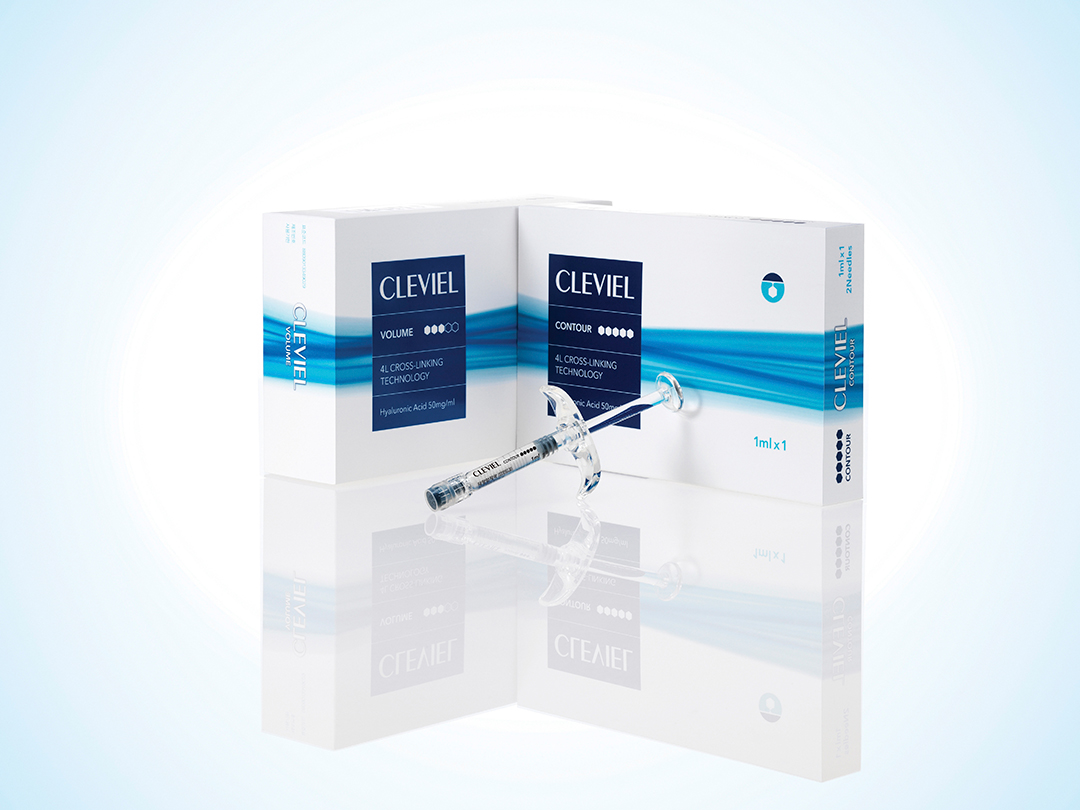
Hyaluronic Acid You Can Take
Did you know that Amorepacific’s work with hyaluronic acid spans everything from cosmetics to prescription pharmaceuticals for clinical procedures, making it a company with both a remarkably broad range and exceptional depth of expertise in this ingredient? Its capabilities cover the entire process, from raw material production and molecular weight control to cross-linking, all handled with considerable precision.
Beyond that, Amorepacific has ventured into a wide range of hyaluronic acid applications. Already well known for its inner beauty products, the company expanded beyond cosmetics to develop hyaluronic acid for health functional foods as well. At the same time, products were developed to deliver synergistic skin-hydrating benefits through both ingestion and topical application, aligning with what we now call holistic longevity.
<Video of the HA ingredient developed by Amorepacific absorbing water on a laboratory table>
Hyaluronic acid present within the skin plays a key role in locking in moisture. As we age, however, the amount of hyaluronic acid in the skin gradually diminishes. The result is a weakening of the skin’s ability to retain moisture, leading to dryness and a more frequent appearance of fine lines. This is why hyaluronic acid has been studied not merely as a moisturizing ingredient but as a substance that plays a vital role in maintaining the skin’s overall hydration environment.
What happens when hyaluronic acid used in cosmetics has a large molecular weight? Rather than penetrating the skin, it remains on the surface and retains moisture within the stratum corneum. For HA to lock in moisture from within the skin, the molecule needs to be small enough to pass through the stratum corneum.
By precisely controlling molecular weight throughout the manufacturing process, using double fermentation followed by a ten-step concentration and purification sequence, Amorepacific created a form of hyaluronic acid approximately 2,000 times smaller than conventional HA and named it ‘Blue Hyaluronic Acid.’ This is the ingredient that works in LANEIGE products to lock in moisture from deep within the skin to the surface.
In this way, hyaluronic acid is far more than a moisturizing ingredient; it is a material that has evolved hand in hand with Amorepacific’s own research history. My mentor’s advice to apply ingredients firsthand and commit their sensory qualities to memory is what shaped me into the curious, ingredient-focused researcher I became. If my mentor ever gets the chance to read this, it would mean the world to me.
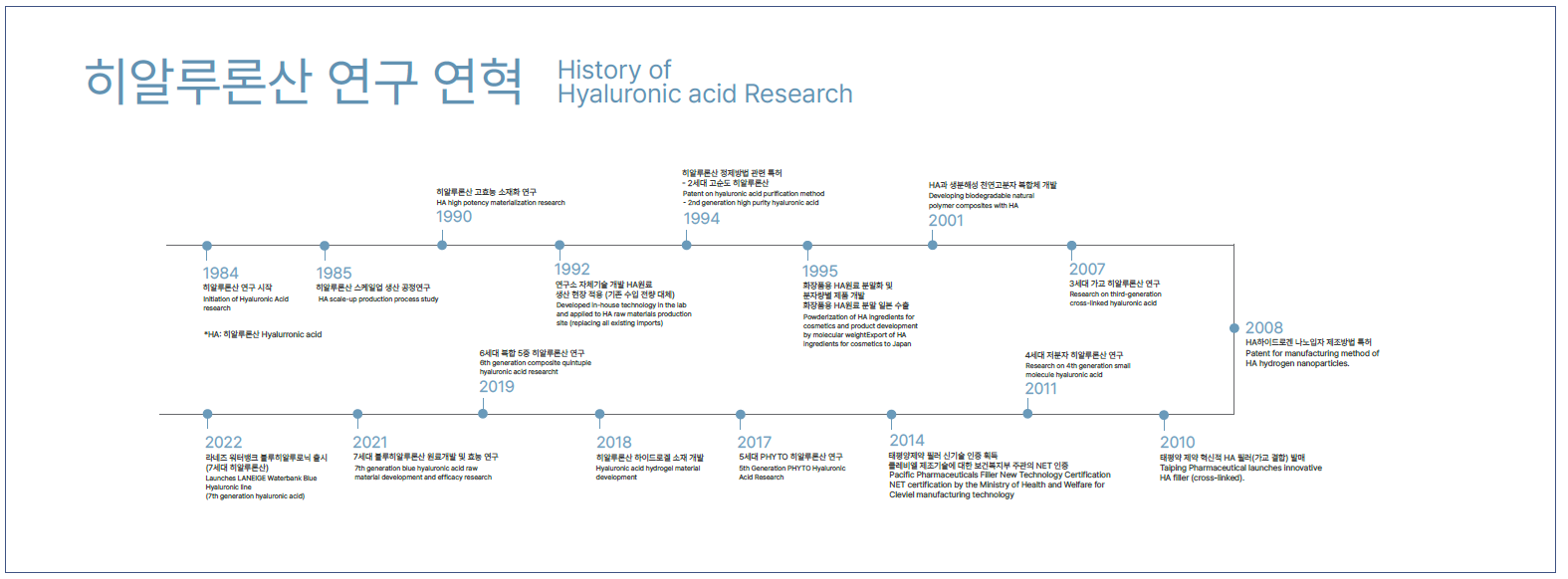
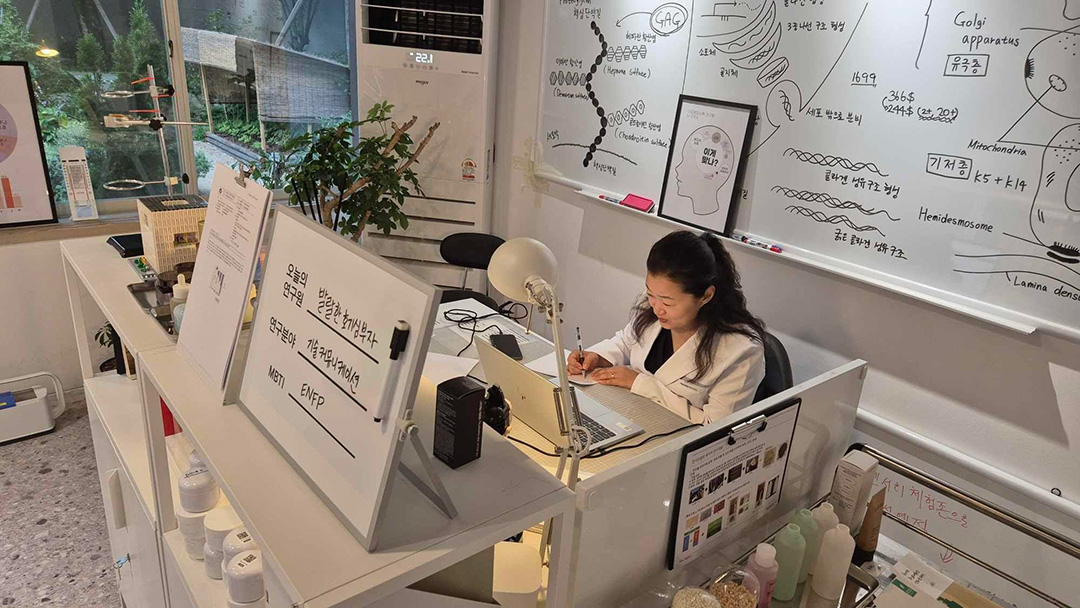
<POP display created in-house for the exhibition ‘The House of Beauty Scientist’>
#OUTRO
The products we use every day contain far more research than most of us ever imagine. I hope this column has given you a richer and more interesting way to look at that story.
Hyaluronic acid was the ingredient I was most attached to as a new employee. I’d bet each of you has at least one ingredient you love or have always been curious about. Next time, I’ll be back with another fascinating ingredient story from the world of Amorepacific. I hope it turns out to be one you’ve been wondering about, too.
 |
Jong Hee Park |
|
|
Amorepacific
 |
|
-
Like
0 -
Recommend
0 -
Thumbs up
0 -
Supporting
0 -
Want follow-up article
0