




Written by
Jaehoon Jeong (Pharmacist and Food Writer)
We’re living longer, but has the time we spend in good health grown by as much? Muscle and metabolism, sleep and the mind, and even the skin all influence one another, and that fact is leading us to rethink what it means to ‘age in good health.’ This is also why Amorepacific is turning its attention to longevity now, and why that interest is reaching beyond the skin to ‘holistic longevity.’ In this report, together with pharmacist Jaehoon Jeong, we trace how the perspective has broadened from anti-aging to holistic longevity, drawing on research findings and data.
In This Article
· How is longevity different from anti-aging?
· Why is living long different from living in good health?
· Why are people turning back to diet, sleep, and recovery?
· What do skin longevity and hair longevity mean?
· Why is Amorepacific focusing on ‘holistic longevity’ now?
#Why ‘Longevity’ Now — From Anti-Aging to Longevity
Q1. We’ve been seeing the word ‘longevity’ a lot lately. How is it different from anti-aging?
It’s a change I can feel when I give lectures. People used to ask about going against the aging clock, with questions like ‘Which ingredients are good for wrinkles?’ Now I hear more and more questions like ‘What should I do to stay the way I am now for a long time?’ From anti-aging to longevity, the very direction of the questions has shifted, and I notice it often at my talks.
Anti-aging and longevity are in the same category in that it’s both about ‘growing old,’ but they look in different directions. While anti-aging focuses on delaying or preventing the signs of aging, longevity goes a step further and asks how long a healthy state can be sustained. Not ‘How young do I look right now?’ but ‘How long will I keep it that way?’ That is where longevity’s question begins. This shift in attention is tied to how long we live. The central question used to be on one’s lifespan(‘How long can I live?’), but now, the focus is moving to healthspan (‘How long can I live in good health?’). In the same vein, terms such as well-aging and slow-aging have started to take the place of anti-aging. Not slowing or stopping aging, but aging in good health. Longevity is another name for this view, too.
Global average life expectancy rose from 46.45 years in 1950 to 72.6 years in 2022. Some even say we need to look past 100 and prepare for an era of living to 120. Medicine has already done enough to extend lifespan itself. That leaves one question. How healthily will we fill those added years?
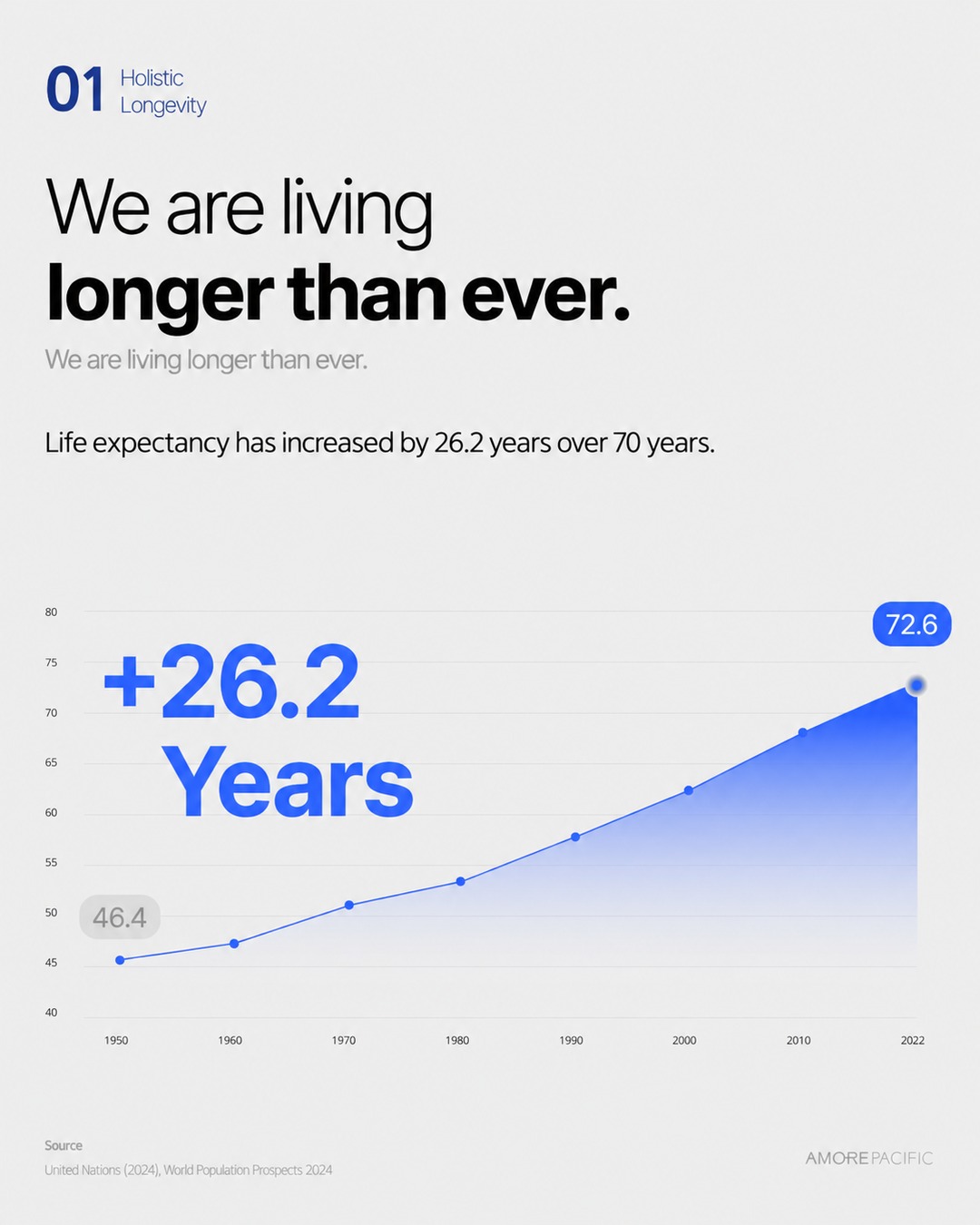
<Figure 1. Global average life expectancy has risen steadily over the past 70-plus years>
Q2. Then how are ‘living long’ and ‘living in good health’ different?
Lifespans have grown, but the years lived in good health haven’t grown by as much. According to WHO global data, life expectancy rose by 6.3 years between 2000 and 2019, from 66.8 to 73.1 years, while healthy life expectancy rose by only 5.4 years, from 58.1 to 63.5 years. As a result, the gap between life expectancy and healthy life expectancy actually widened, from 8.5 years in 2000 to 9.6 years in 2019. Korean statistics show a similar pattern. In 2014, healthy life expectancy was 65.2 years out of a life expectancy of 81.8 (16.6 years in poor health). In 2024, it was 65.5 years out of 83.7 (18.2 years in poor health). Life expectancy rose, but years spent in poor health, if anything, grew longer.
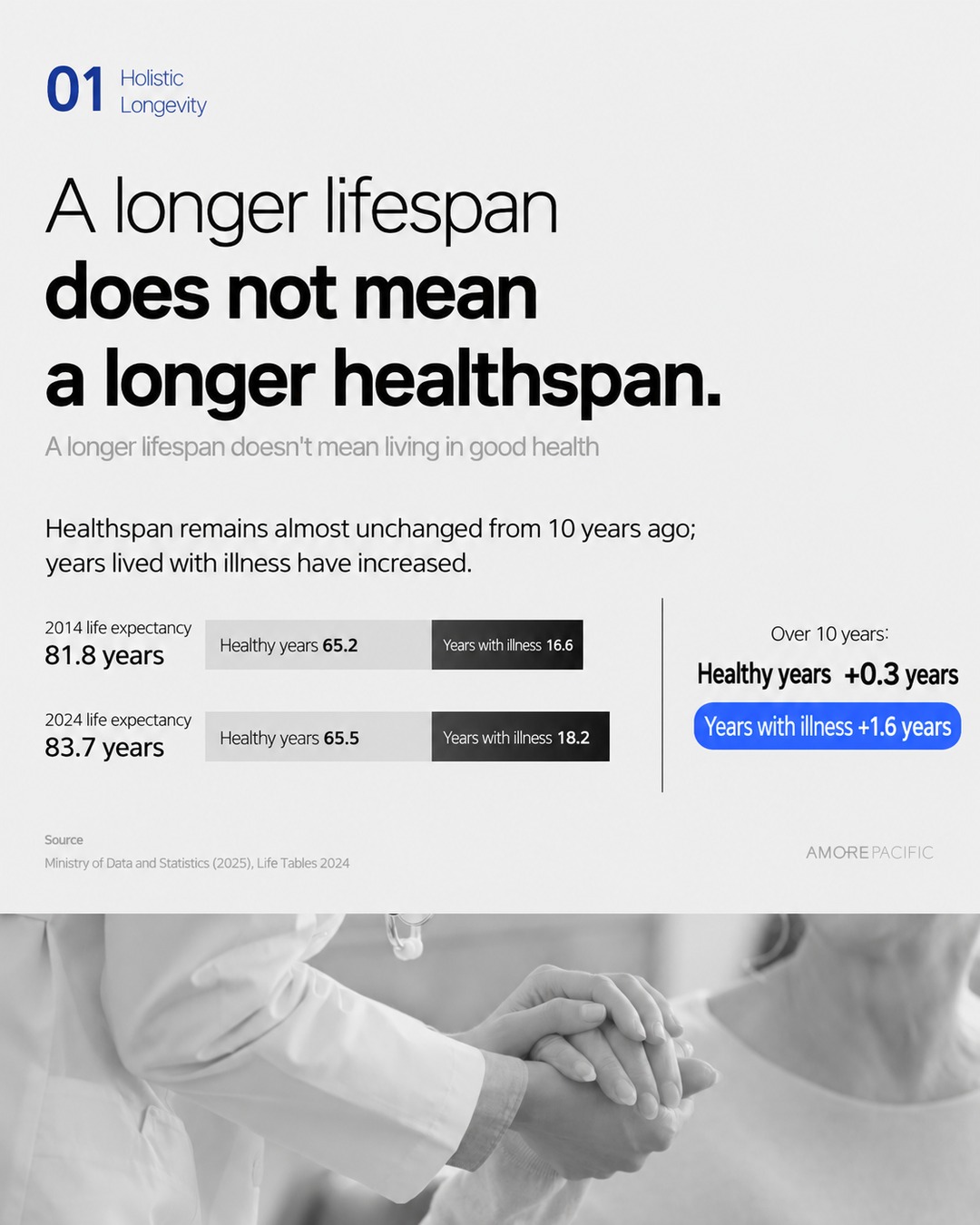
<Figure 2. Korea’s life expectancy has risen, but so has the time spent in poor health>
The years spent in poor health are lengthening along with life expectancy largely because medicine has so far focused on ‘treating people after they get sick.’ But health in later life isn’t determined overnight. It is the product of lifestyle habits such as smoking, exercise, diet, and sleep, along with access to healthcare, housing, and even income level, all built up over many years. Hospital treatment can save a life in a moment of crisis, but it can’t instantly restore muscle strength, memory, or even social connections that have already declined. That is why longevity today is moving beyond simply living longer, toward extending healthspan in step with the added years.
#What People Are Returning To
Q3. As interest in extending healthspan grows, have people changed what they actually pay attention to?
Yes, noticeably. These days, more people ask about their daily habits, with questions like ‘Should sleep come before supplements?’ and ‘How should I make sure I’m getting enough protein?’ People who once looked into a single product for a fix are now turning back to everyday habits. In the past, caring for the skin you can see and looking after your health on the inside were separate things. Now there’s a clear trend toward seeing the two as one. The desire to take care of the outside and the inside together has grown. What’s interesting is that this interest is heading toward the most fundamental things rather than new technologies or ingredients. What do we eat, how much do we sleep, how do we recover? Long-standing topics such as diet and nutrition, sleep, and recovery are coming back into focus.
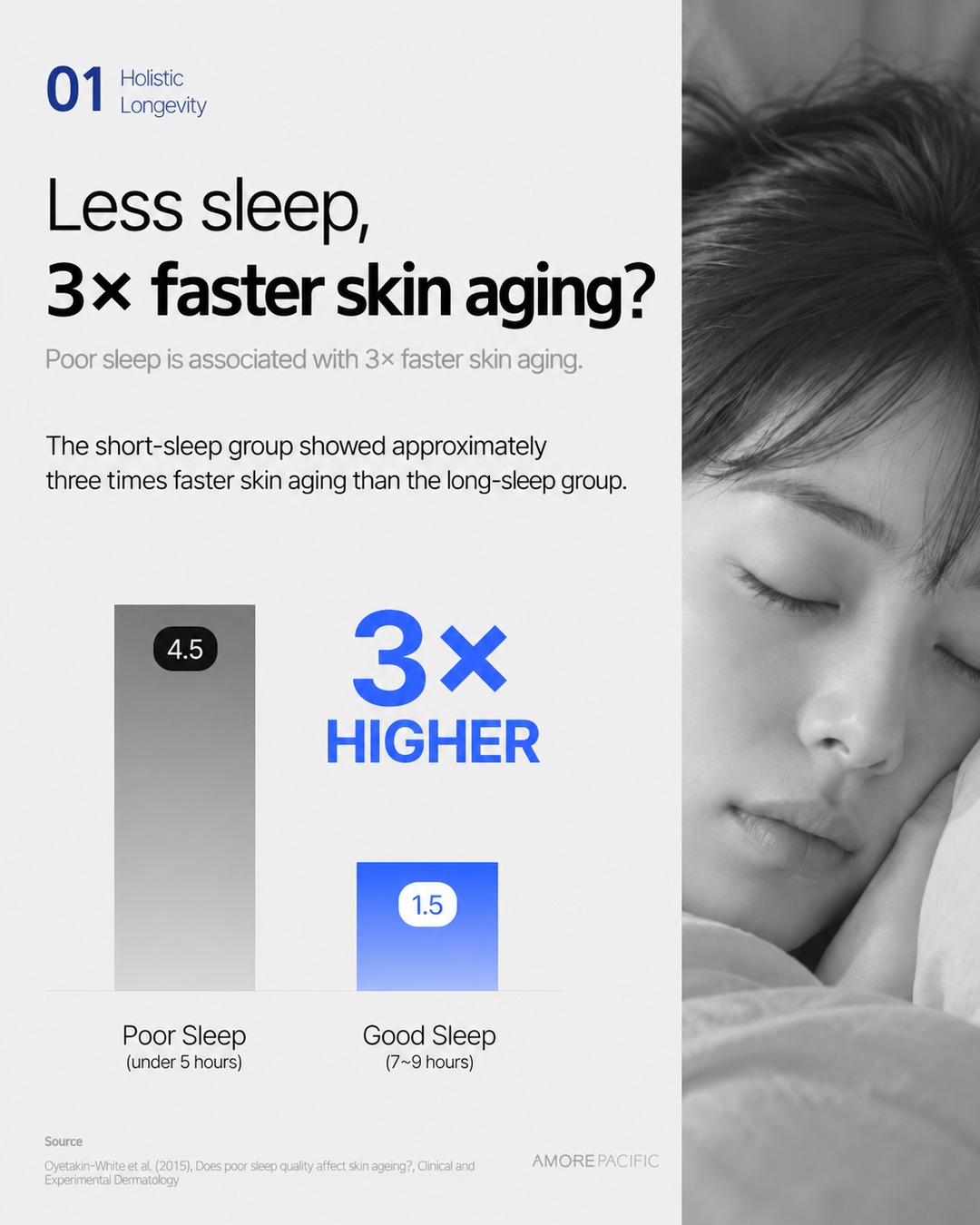
<Figure 3. Skin aged about 3 times faster in the group that slept less than 5 hours than in the group that slept a full 7 to 9 hours>
Why is this happening? Because, as we saw earlier, people have started to sense that lifespans have grown while healthy years haven’t kept pace. Once you realize that no special procedure or single product will solve it, you end up coming back to daily habits. That’s also why this report plans to cover diet and nutrition, sleep, and recovery one at a time in the issues ahead.
#Longevity Expands, from Skin to Hair
Q4. Lately we’re also seeing terms like ‘skin longevity’ and ‘hair longevity.’ Is longevity being divided into separate fields?
If longevity’s core is ‘healthspan,’ that concept applies just as much to skin and hair as to the body as a whole. Skin longevity is about how long the skin can maintain its ability to repair itself and stay in balance. Hair longevity is about how long you can maintain the scalp environment, along with the thickness and density of your hair. The perspective is shifting away from erasing a single wrinkle or covering a single gray hair, toward extending the ‘healthspan’ of skin and hair. The recent rapid rise of these terms in K-Beauty also means people now see their skin and hair not as ‘things to fix’ but as ‘things to keep healthy for a long time.’
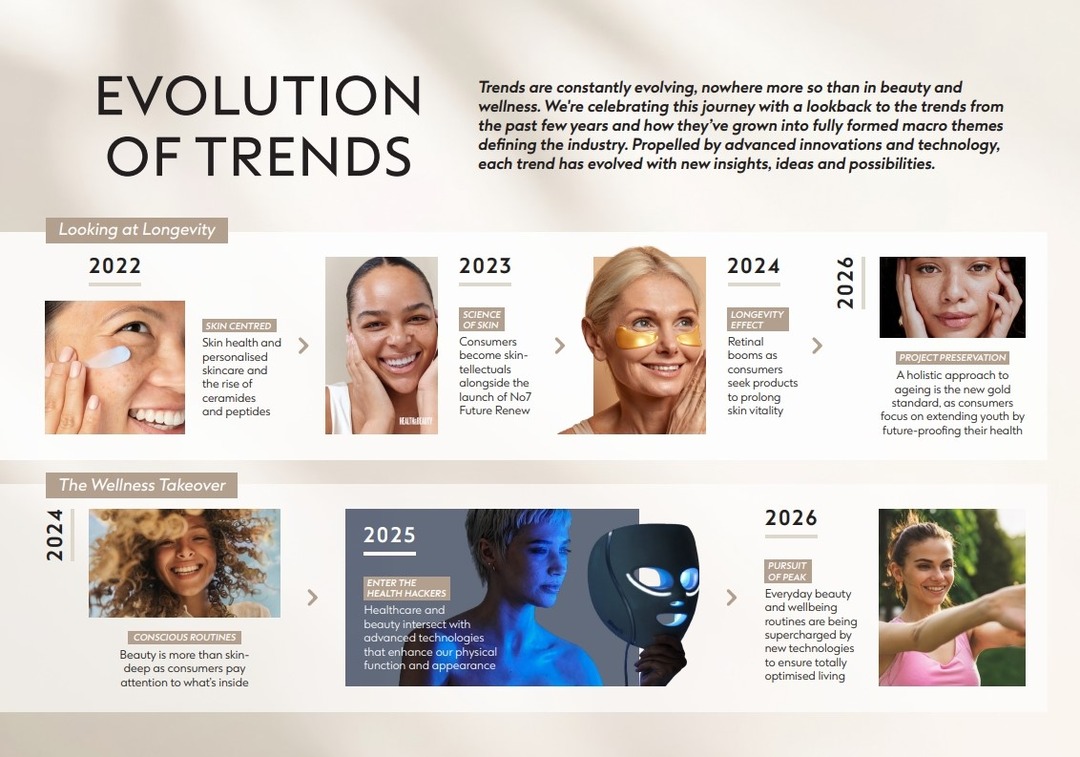
<Figure 4. An excerpt from the Boots Beauty & Wellness Trends Report 2026.
Views on longevity have shifted from ‘skin-focused care’ to ‘maintaining good health over the long term’>
Q5. So for skin longevity, isn’t it enough just to take good care of your skin?
That doesn’t really work. Skin and hair are where the body’s condition shows first. Whenever I write about weight-loss diets or eating plans as a food writer, I can count on reader responses like ‘I lost weight fast and now my hair is falling out’ or ‘I changed my diet and my skin changed.’ People already know from their own bodies that what they eat shows up in their skin and hair.
Research backs this up. If your skin looks dull the morning after a bad night’s sleep, it isn’t all in your head. A study comparing 60 healthy adult women found that 72 hours after the skin barrier was damaged, the group with good sleep quality showed 30% greater recovery than the group that slept poorly. It was a small study, so we should be cautious about generalization, but the result shows that sleep plays a role in skin recovery.
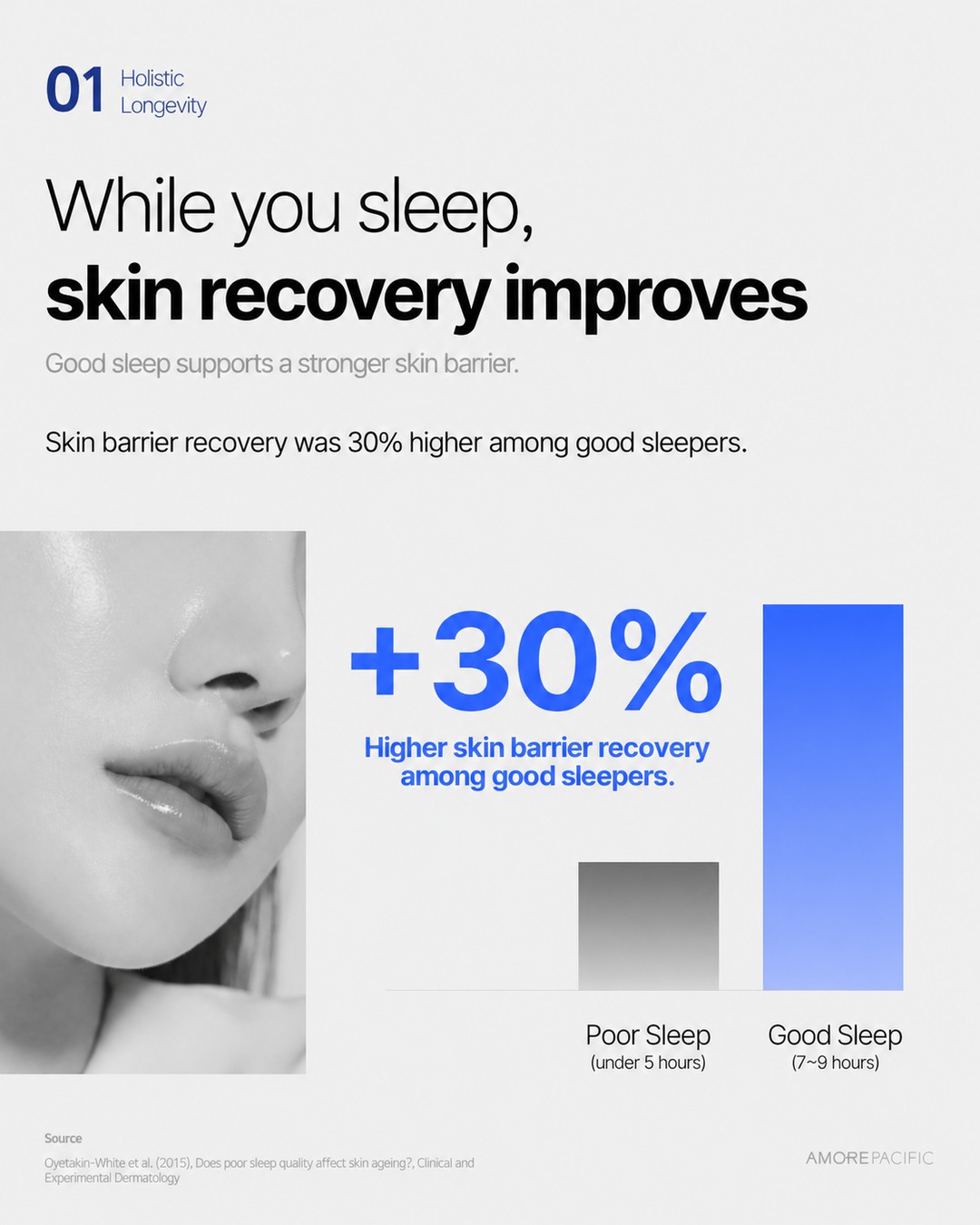
<Figure 5. Skin barrier recovery in the group that slept a full 7 to 9 hours was 30% higher than in the group that slept less than 5 hours>
The same goes for what we eat. A severe protein deficiency or rapid weight loss can increase hair shedding two to three months later. The follicle cells that produce hair divide rapidly, which makes them sensitive to nutritional status. Blood sugar is no different. When blood sugar stays high for a long time, a change called glycation can build up in the collagen that supports skin elasticity. As muscle mass and activity levels drop, the body’s ability to process glucose after meals can also decline.
What we eat, how we sleep, and how we move all show up in our skin and hair over time. That is why you can’t care for skin by focusing on skin alone. Muscle, metabolism, and sleep influence one another, creating virtuous or vicious cycles together, and skin and hair are where the results show on the outside.
#So, What Is ‘Holistic Longevity’
Q6. How will this view of the body as one connected whole change the way we manage our health?
Rather than tracking a single number such as blood pressure or blood sugar in isolation, health management will shift toward looking at multiple indicators together. Some factors, such as ‘chronic inflammation,’ affect the whole body rather than signaling one specific disease. That is also why, in 2023, aging researchers worldwide newly included chronic inflammation among the 12 Hallmarks of Aging. When inflammation levels stay chronically high, blood sugar can become harder to control, sleep quality can drop, and the skin’s recovery can slow as well. In this way, problems ‘inside the body,’ in metabolism and sleep, ultimately lead to changes ‘outside the body,’ in the skin.
Seen this way, it’s hard to care for beauty by looking at the skin in isolation. In the same spirit, Amorepacific defines holistic longevity as expanding the scope of beauty from skin to hair, inner beauty, and wellness, and taking an integrated view of health and beauty across life as a whole.
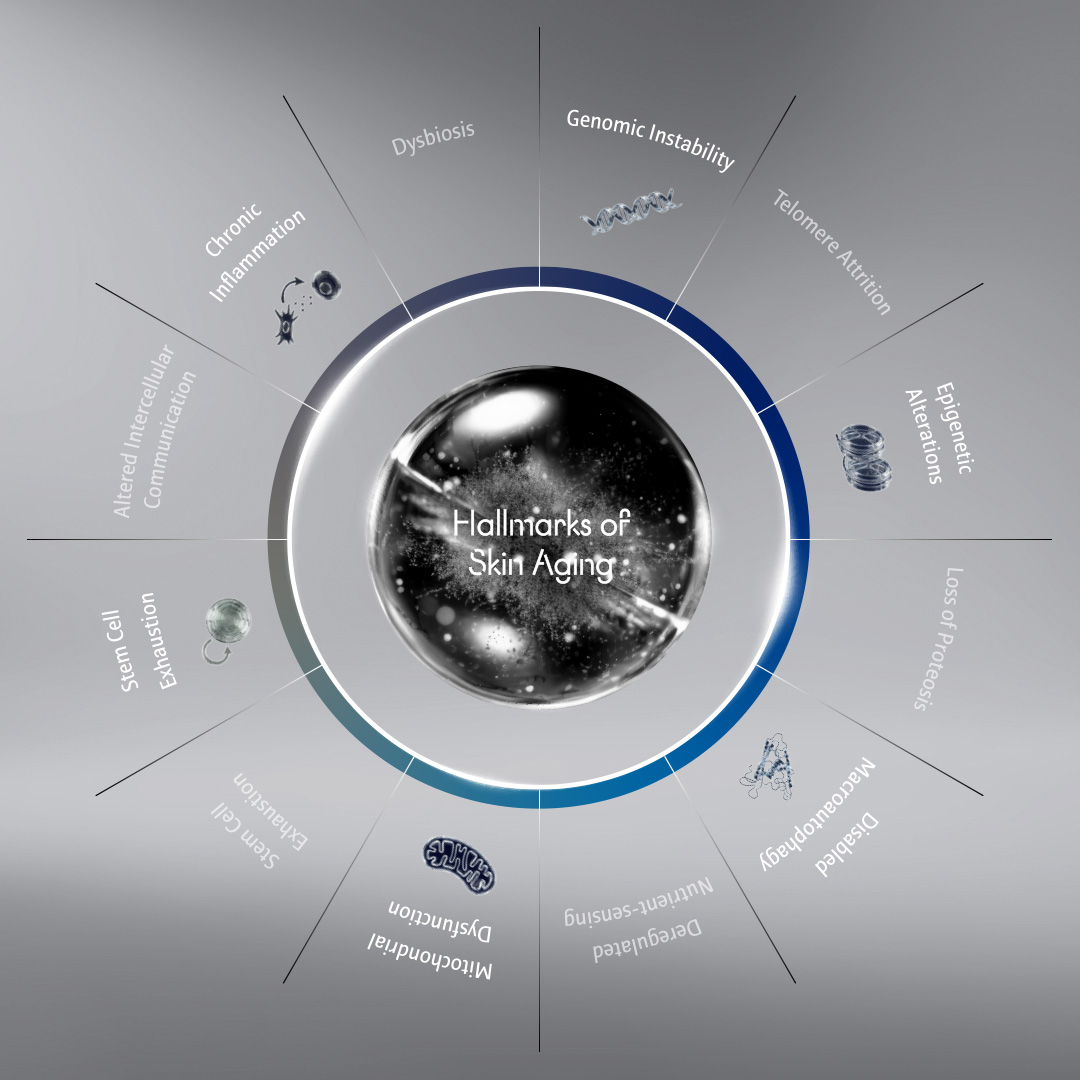
Based on the Hallmarks of Aging, Amorepacific has redefined its own set of root factors of skin aging and is putting Holistic Longevity into practice through that redefinition (Adapted from López-Otín et al., Cell, 2023)
Q7. So does that mean skin aging should also be seen as ‘a result of the whole body’?
Yes. Skin aging can’t be explained by a single cause, either. It results from genetics and the passage of time combined with lifestyle factors such as UV rays, fine dust, smoking, nutrition, stress, and sleep, which accumulate over a lifetime. The ‘exposome’ is the term for all the environmental and lifestyle factors a person is exposed to throughout life, from before birth until death. Recent dermatology has shifted toward viewing skin aging not as the product of one cause, but as the result of the whole exposome built up over a lifetime.
Take the sleep and skin-barrier study we looked at earlier. Comparing 60 healthy adult women, they found that 72 hours after the skin barrier was damaged, the group with good sleep quality showed 30% greater recovery than the group that slept poorly. It was a small observational study, so its results should be generalized with caution, but it shows that skin condition, too, can’t be considered apart from the rest of our lives.
So approaches to skin aging also divide into two. Blocking the exposome that builds up from outside, and responding to the changes taking place within. That’s also why Amorepacific describes the Holistic Longevity Solution™ as working in two directions — Preventive technology that protects the skin from external aggressors, and Active technology that awakens the skin’s own vitality. The aim is not to stop at the visible surface of the skin, but to take a broad view of the many changes in body and mind and find the conditions that allow healthy beauty to last.
#Why Amorepacific Is Focusing on ‘Holistic Longevity’
Q8. Bringing everything together, what should holistic longevity ultimately aim for today?
The goal of longevity isn’t to postpone death at all costs. It’s to delay the point at which illness or declining function starts to limit daily life, and to maximize the time you can spend doing what you want to do. It also doesn’t mean having no illness at all. Even with a chronic condition such as diabetes or arthritis, you can go on living a healthy life if it’s well managed.
Here, ‘continuing to live the life I want’ isn’t just a matter of internal health markers. Changes in skin and appearance are also important, because they affect confidence and social life. So when it comes to managing health, it pays to look beyond test results and watch how your body and skin change over time.
As we’ve seen, our bodies, minds, and lifestyle habits are all connected. Skin is no exception. So Amorepacific is pursuing ‘holistic longevity,’ a direction that goes beyond caring for the skin’s surface to embrace hair, inner beauty, and wellness. It strives for beauty that endures, unchanged, even as time goes by, and a life in which everyone shines, healthier and more confident, in every moment. This is why Amorepacific is focusing on the Holistic Longevity Solution now.
Sources
Figure 1: United Nations (2024), World Population Prospects 2024
Figure 2: Ministry of Data and Statistics (2025), 2024 Life Tables for Korea
Figures 3 and 5: Oyetakin-White et al. (2015), Does poor sleep quality affect skin ageing?, Clinical and Experimental Dermatology
Figure 4: Boots (2026), The Boots Beauty & Wellness Trends Report 2026
Amorepacific Speaks Through Science
The Longevity Trend Report is a specialist trend publication, published every other month, that uses scientific evidence to explore longevity. Amid the fast-growing conversation around longevity, we work with experts in each field to put ideas that may have felt a little difficult into clear, simple terms. We also share the latest research and data that support each story. Amorepacific is here to help everyone shine, healthier and more confident, in every moment.
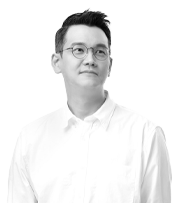 |
Jaehoon Jeong |
|
|
Pharmacist, Food Writer
 |
|
-
Like
0 -
Recommend
0 -
Thumbs up
0 -
Supporting
0 -
Want follow-up article
0