



Columnist
Heesun Shin Sulwhasoo Global Commercial 2 Team
Editor's Note
It has now been nearly two years since I took on responsibility for the U.S. market at Sulwhasoo. In that time, the U.S. beauty market has evolved far faster than I anticipated. As the retail landscape has been restructured and new commerce platforms like TikTok Shop have emerged, the very way consumers discover and purchase products has fundamentally changed. I’d like to share with colleagues across the organization the changes and insights I’ve experienced directly in the field. Beyond simple market trends, I’ll explore the real shifts playing out on the ground and what they mean for K-Beauty brands. I hope my experience and insights are useful, and that this process deepens my understanding of the U.S. market and helps me grow as a professional.

Source: Google
#INTRO
TikTok Shop has now entered its third year since launching in the United States. In that short time, the platform has gone beyond being just another commerce channel; it is actively reshaping how consumers buy beauty products. As of 2025, total sales volume on the U.S. TikTok Shop stands at approximately $20 billion, representing more than 100% year-over-year growth. The fact that beauty is the largest category within that figure implies that this is not a passing trend but a structural shift.
Looking at the numbers alone, this might seem like simply another fast-growing channel, but the change I feel on the ground is far more fundamental. Consumers no longer come to the platform wondering what to buy. Instead, they discover products while watching content and complete the purchase right then and there, a seamlessly integrated experience. The category that fits this discovery-driven shopping structure best is beauty: skincare and makeup.
None of this originated in the U.S. This model was first validated on China’s Douyin and on TikTok Shop across Southeast Asia before expanding to the American market. In China, growing brands through live commerce had already become an established practice, and across Southeast Asia, beauty brands have similarly built on TikTok Shop as their primary growth platform. And now in the U.S., this model is merging with Amazon’s established intent-based shopping structure, producing a new growth formula: ‘content → purchase → resharing.’
1. When Content Becomes Revenue, and Why Beauty Fits Best
Source: Google
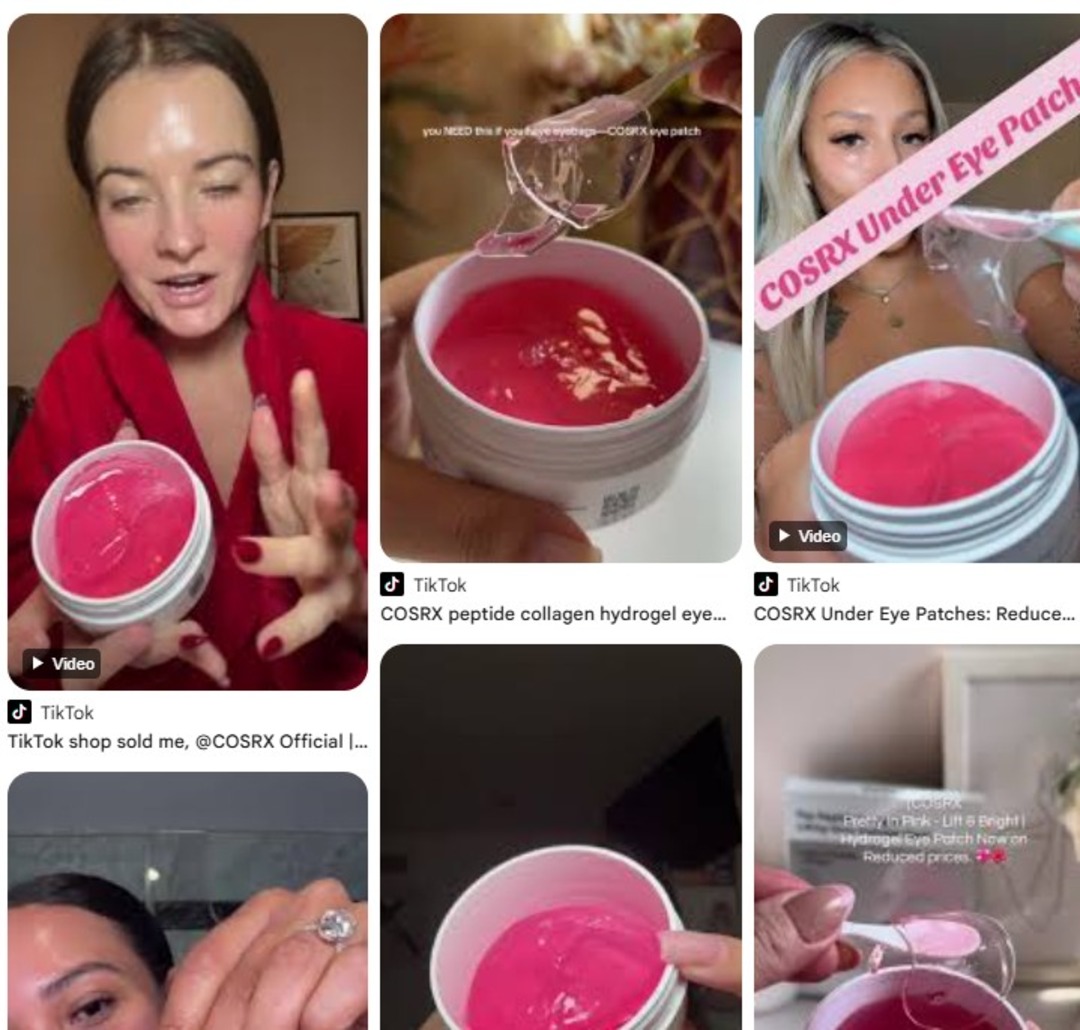
This shift is best illustrated through real examples. TIRTIR’s cushion foundation went viral on TikTok after a single creator’s review video, and even before the brand had listed on TikTok Shop, Amazon sales surged dramatically. Consumers who purchased the product then created their own review videos; other consumers who watched those videos, in turn, bought the product, and this cycle was repeated, forming a self-sustaining sales loop. The same pattern played out with COSRX’s The Peptide Collagen Hydrogel Eye Patch. After TikTok Shop advertising began, the product’s Amazon ranking climbed. When a particular affiliate video broke through, additional content followed, and sales expanded from there. Nooni’s lip oil is another clear example: Amazon sales rose alongside TikTok advertising.
Source: TikTok
LANEIGE follows a similar pattern. Lip Sleeping Mask, already well established globally, went viral again on TikTok. Content framing it as a ‘lip care routine essential’ and a ‘before-bed must-have’ drove simultaneous sales growth on TikTok Shop and Amazon.
Source: TikTok
2. Why TikTok Matters for Heritage Brands: Redefining Branding and Education
What is striking here is that this structure does not exclusively favor new brands. In fact, traditional beauty brands, often called heritage brands, have been actively embracing TikTok and redefining themselves through it.
Where brands once delivered their messages one-directionally, with consumers learning about products through in-store explanations or advertising, TikTok has shifted that center of gravity to content. Creators use the products, explain the ingredients, and demonstrate how to apply them, making ‘education’ happen organically. In this process, the brand is no longer the one doing the explaining; it becomes a presence understood within the content.
Concrete examples make this shift even clearer. CeraVe had long established itself as a derma brand, but on TikTok, consumer education took on an entirely new form, with creators repeatedly explaining concepts such as the skin barrier, ceramides, and the cleansing routine. The brand’s association with dermatologist creators, the so-called ‘DermTok’ community, reinforced product credibility while spreading its message faster and more broadly than ever before.
Looking at Clinique under the Estée Lauder Group, legacy assets like ‘allergy tested’ and ‘skin-type-specific routines’ are being reinterpreted as short-form video content on TikTok. What was once explained by a salesperson on the shop floor is now unpacked by creators through content, allowing consumers to arrive at their own understanding naturally. It is precisely at this point that the product credentials and stories of heritage brands become an even more powerful asset.
3. Why K-Beauty Has the Advantage, and What the Numbers Show
Within this structure, K-Beauty occupies a highly advantageous position. K-Beauty and Korean skincare are among the most-searched beauty keywords on TikTok, and related content views spike dramatically during July’s Prime Day and November’s BFCM (Black Friday and Cyber Monday). In practice, many Korean brands have recorded hundreds of percent sales growth on U.S. TikTok Shop.
What matters here is not simply that more brands have entered the space: the scale of revenue itself is growing. Products already validated globally, like the LANEIGE Lip Sleeping Mask set, which has ranked among the top listings in TikTok Shop’s skincare category, are delivering strong results on TikTok as well. The engine behind this growth is the hero product. For Medicube, a significant portion of its lineup is built around hero products, which account for the bulk of its revenue. TIRTIR similarly led with its signature products, cushion foundation and fixer, before expanding into bundles. What matters is not how many products you have, but how quickly you can build that ‘one product that sells.’
4. Bundle Strategy: Far More Important Than You’d Think
Once a hero product is established, the next move most brands make is into bundles. rom&nd grew quickly by moving beyond straightforward lip product sales to building volume lip bundles tailored to U.S. trends; Dr. Melaxin expanded its revenue by constructing a range of bundles centered on Fill Shot. Medicube similarly grew by raising average order value (AOV) through a bundle-first strategy. The reason this structure works is straightforward. Because consumers on TikTok make purchase decisions while watching content, bundles simplify the buying decision. At the same time, affiliates are incentivized to promote bundles more aggressively, since bundles generate higher commissions. Bundles are not simply a promotional tactic: they are a core mechanism for amplifying revenue.
5. Affiliates: The Engine of It All
Source: Nearstream
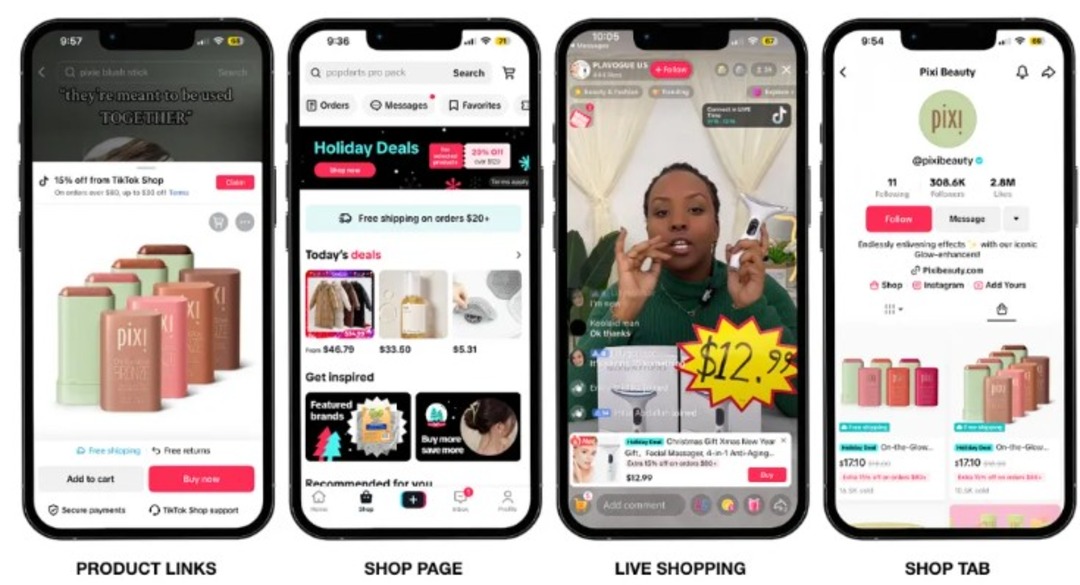
If there is one element that matters most in TikTok Shop, it is, without question, the affiliate. In this model, rather than brands running ads directly, creators independently introduce products and earn a commission on sales generated through their content. For the brand, it means gaining a vast pool of simultaneous sellers and content creators; for the creator, it means content translates directly into income. In practice, for many brands, the majority of revenue is generated through affiliate content.
MISSHA is the defining example. Initial momentum was driven by content featuring Cardi B, but the real growth came from the subsequent affiliate expansion. Top affiliates produced content one after another; everyday users then reproduced it, and as this snowball effect took hold, sales surged. On the ground, top-performing brands generate dozens of affiliate content pieces per day; the count reaches hundreds at peak. In the end, content on TikTok functions not as mere branding but as a ‘revenue-generating machine.’
6. Live Shopping, Advertising, and the Accelerators
The mechanisms that accelerate this structure further are live shopping and advertising. A significant share of TikTok Shop users have made purchases through live shopping, which delivers higher conversion rates and higher AOV than standard video content. Some brands have generated billions of won in sales from a single live session. Both Medicube and Dr. Melaxin have been boosting their results by focusing their live sessions on bundle products. Advertising plays an equally important role. TikTok Shop advertising amplifies not only paid reach but also organic and affiliate content, boosting overall revenue. Leading brands reinvest a significant portion of their revenue in advertising, accelerating growth.
#OUTRO
TikTok Shop is not simply a sales channel. It is a complete growth structure, one in which products are discovered through content, spread through affiliates, and amplified through live shopping and advertising. And this structure extends to Amazon and brand-owned online stores, pulling up revenue across the board. The more important question for beauty brands today may well be this: not whether to be on TikTok, but how quickly to enter this ecosystem and how to use TikTok to full effect. Many K-Beauty brands are already growing fast, riding this shift. And that difference in speed may prove to be the single most important variable determining where a brand stands in the U.S. market five or ten years from now.
 |
Heesun Shin |
|
|
Amorepacific
GTM Manager for the Sulwhasoo U.S. market
 |
|
-
Like
1 -
Recommend
0 -
Thumbs up
0 -
Supporting
0 -
Want follow-up article
0