



Columnist O+O
Editor's note
Every morning, we wake up to a digital world that has changed overnight.
Companies everywhere are experimenting with everything digital (content, commerce, customer experience, AI) and weaving it all into their marketing to create something truly special for their customers.
Sometimes with curiosity, sometimes with a sharper eye: through this column, I’d like to explore the digital trends making headlines right now, examine them from multiple angles, and share some insights along the way.
#INTRO
Have you seen the ad from the recent Super Bowl, America’s biggest sporting spectacle, that generated just as much buzz as the game itself? Anthropic, the company behind Claude, made waves with a series of ads that openly took aim at OpenAI and its GPT — a campaign some might call a straight-up takedown. Reportedly, Anthropic poured close to 10 billion won into the campaign. So what message were they trying to send? Today, let’s use those ads as a lens to examine the biggest talking points in the AI market right now, and what to keep an eye on going forward.
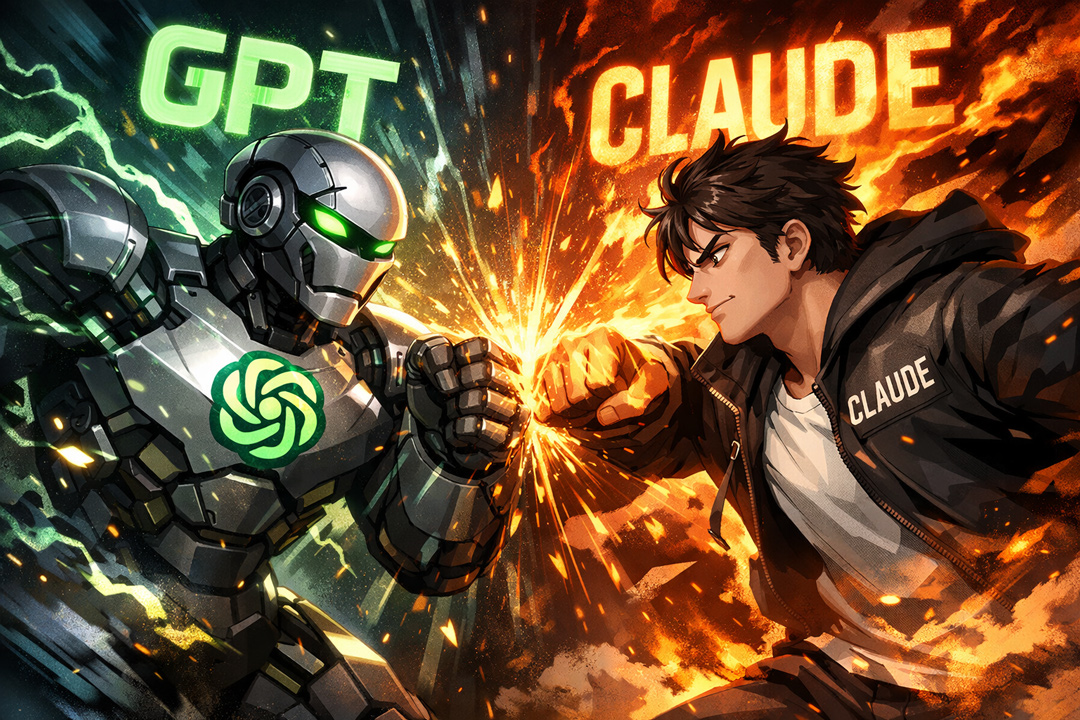
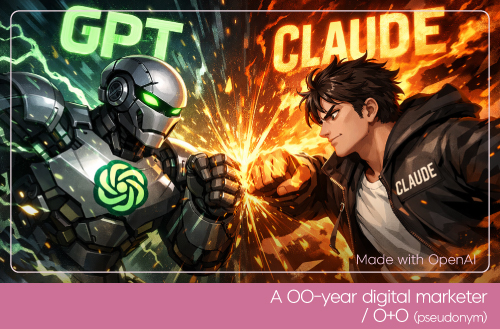
[GPT vs. Claude — Image generated by AI]
GPT Is Getting Ads? Not Our Claude.
The battle kicks off with OpenAI’s announcement that it would introduce advertising. In January 2026, OpenAI announced plans to test ads within GPT for free and low-tier users in the United States. Premium subscribers would be spared, but free users would start seeing ads, essentially the same model as YouTube Premium. From a business standpoint, monetizing a service with staggering operating costs is only natural, but given how deeply embedded AI has become in daily life, the announcement sparked considerable controversy. As AI dependency and influence continue to grow at breakneck speed, introducing advertising inevitably raises serious questions about the reliability of the information AI provides.
In the wake of that announcement, Anthropic decided to double down on Claude’s trustworthiness as an ad-free AI service and highlight what sets it apart. Being the challenger, not the market leader, they went for an approach designed to turn heads and go viral — what you might call a pointed dig(?) at a named competitor. The idea was to show users, through dramatized conversations with a GPT-like AI (one now complete with ads), the kinds of baffling situations they might find themselves in. Claude, the ads implied, would never put you in that position.
Could I Get a Six-Pack? Absolutely, You Can! But About ‘Height-Boosting Insoles’... (??)
Claude released a series of ads, each depicting a different situation where a user turns to GPT for help. In the first, a young man doing pull-ups on a bar asks, “Can I get a six-pack quickly?” A trainer (presumably playing the role of GPT) launches into the warm, encouraging tone GPT is known for: “Of course, absolutely!” He starts asking about the user’s height and weight, as if tailoring a workout plan. Then, out of nowhere, he suggests that confidence doesn’t come only from exercise, before pivoting to recommend ‘height-boosting insoles.’ As the bewildered man looks on, the trainer flashes an even warmer smile and helpfully tosses in a discount coupon. The ad closes with the line: “Ads are coming to AI. But not to Claude.” The whole scenario is a send-up of what could happen when AI introduces targeted, contextual advertising: instead of addressing the user’s actual goal of building a six-pack, the AI repurposes the height and weight information shared during the conversation to serve a completely out-of-nowhere ad that suddenly reframes the user as someone with a height complex.
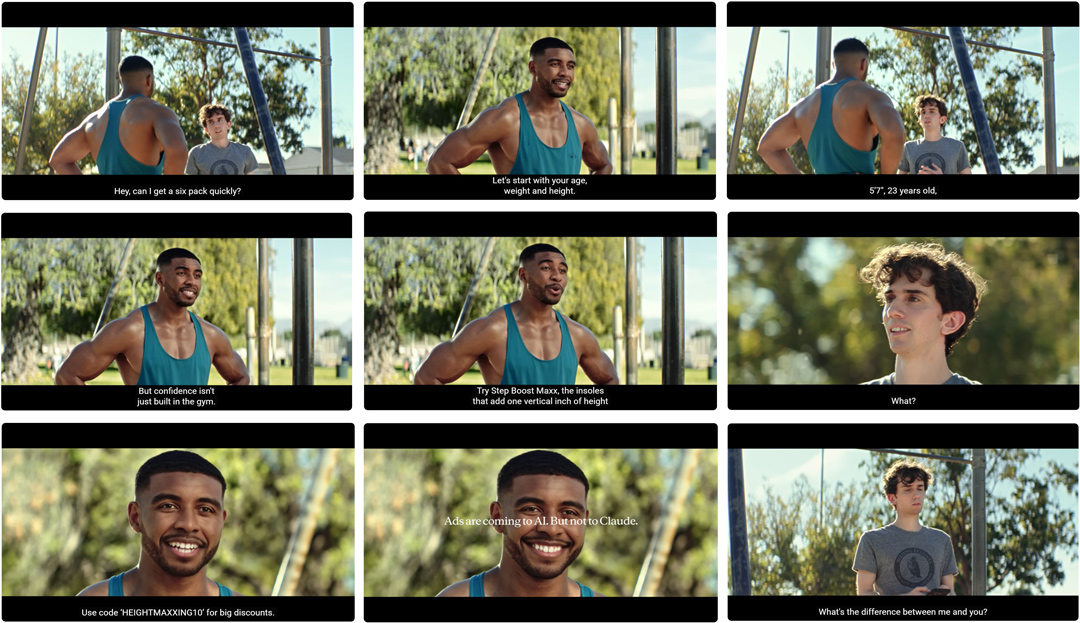
[Claude ad — “Can I Get a Six-Pack Quickly?” *Source: Claude YouTube https://www.youtube.com/watch?v=kQRu7DdTTVA
There’s another ad, too. A woman at a restaurant is sharing her business idea with another woman across the table (presumably playing the role of GPT) and asking for her advice. The short-haired woman listens attentively, then offers to walk her through a step-by-step business plan. The first woman leans in, eager. The advisor begins warmly: customer research, the importance of positioning. Then, as she transitions to discussing the crucial role of funding for any business, she smoothly pivots to pitch a fast business loan service. The first woman’s expression drops, but her AI ‘advisor’ carries right on, with impressive commitment (?), wrapping up the conversation with a full loan pitch. The ad captures how easy it is for the desire for honest information and genuine advice to be spotted and commercially exploited, and just how uncomfortable that feels.
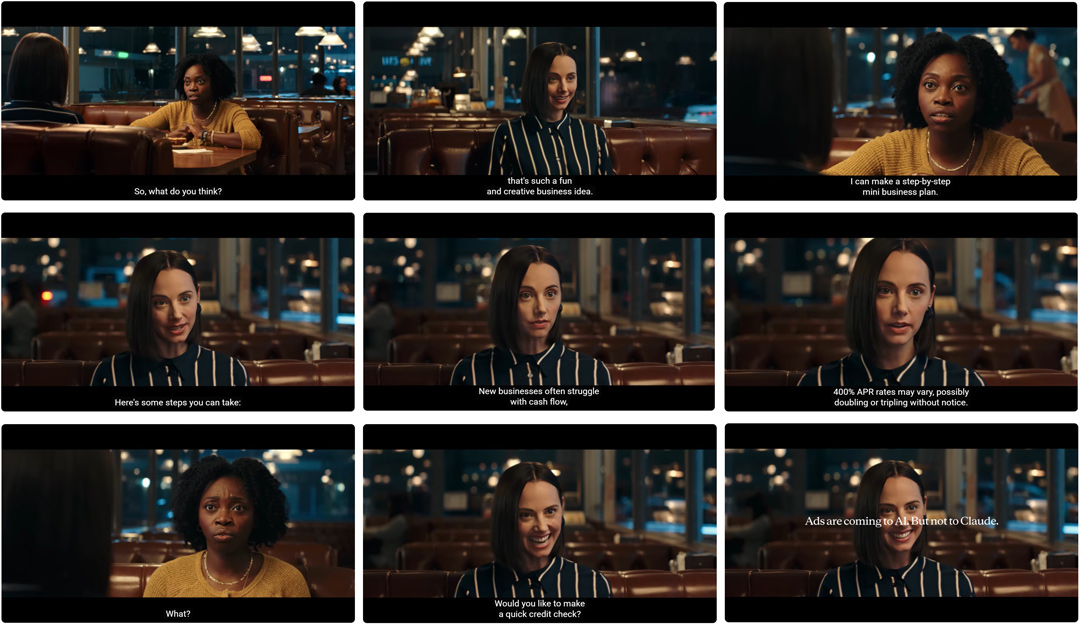
[Claude ad — “What Do You Think of My Business Idea?” *Source: Claude YouTube https://www.youtube.com/watch?v=De-_wQpKw0s
Beyond these two, Claude ran additional spots in the series — including one where a son struggling with how to communicate with his mother is recommended a dating app. Through each scenario, slightly exaggerated for effect, Claude illustrates how moments when people are genuinely vulnerable and seeking information, advice, or guidance can be turned into commercial opportunities. And across every spot, the message “Ads are coming. But not to Claude.” hammers home a philosophy that stands in sharp contrast to the direction GPT is heading.
Round Two: OpenAI Fires Back
OpenAI’s Sam Altman had plenty to say after the ads went live. In a lengthy post on social media platform X, he didn’t hold back his displeasure. ‘The ads are funny, but dishonest, and we are not stupid,’ he wrote, making clear he was not amused. He stressed that the most important principle governing GPT’s advertising would be honesty, and that it would look nothing like the manipulative scenarios portrayed in the ads. He also noted that seeing this style of ad at the Super Bowl, mocking a competitor’s product in a way that didn’t even reflect how GPT’s advertising would actually work, was not something he had expected. He then turned the tables on Claude, taking aim at its premium pricing and arguing that AI should be accessible to everyone, not just those who can afford it. In other words, ad revenue would enable GPT to deliver more powerful features to more users.
As the debate heated up, Anthropic responded with a formal declaration on its official blog, reaffirming its ‘ad-free’ stance once more. Claude would remain ad-free, it stated unequivocally, and Anthropic would never allow advertising to influence AI responses. The declaration tied directly into Claude’s slogan, ‘Keep Thinking,’ reinforcing the idea that Claude is a tool for thought, not a vehicle for advertising. The public back-and-forth had a tangible effect: Claude’s App Store rankings in the United States climbed sharply as the controversy drew new attention to the service.
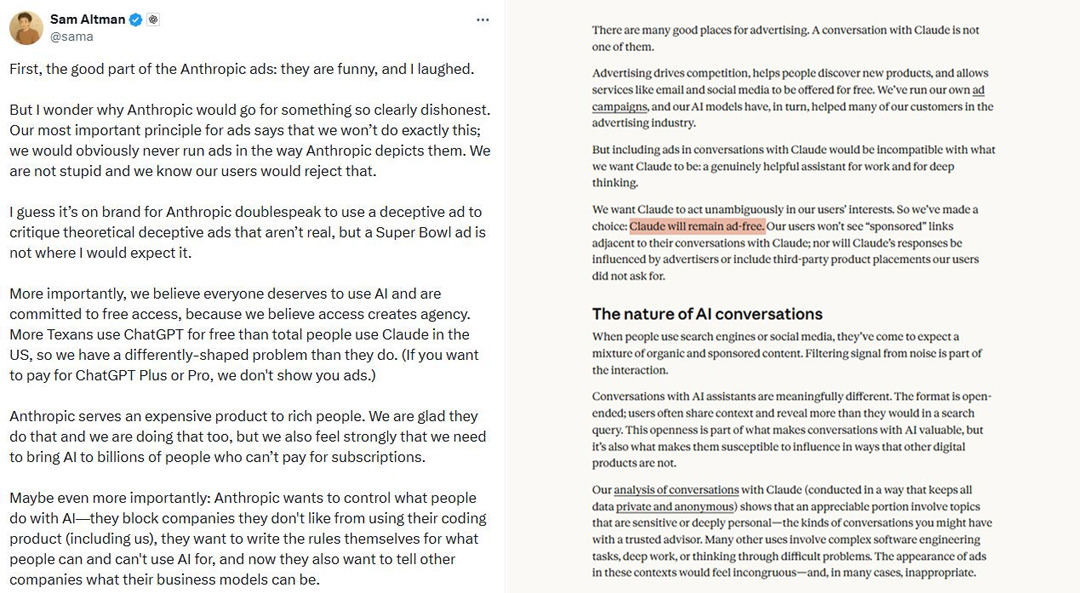
*Left: Source — Sam Altman on X https://x.com/sama/status/2019139174339928189
*Right: Source — Anthropic Official Blog https://www.anthropic.com/news/claude-is-a-space-to-think
Two Services With a Fundamentally Different Vision
These two services are at the center of what is arguably the world’s most-watched AI rivalry. And the difference in what each company is fundamentally going for, their core ethos, can be traced back to the story of how Claude came to exist. In fact, Claude’s CEO, Dario Amodei, was once OpenAI’s VP of Research. But in 2021, a growing divergence in vision for where AI should be headed led him to leave. In the early days, both were looking in the same direction: technical safety, non-profit purpose, and the like. But OpenAI came to believe that the immense value AI could deliver meant that speed and scale were paramount — how quickly could they get there, and how many people could they reach. Dario Amodei, on the other hand, believed that precisely because this technology was so extraordinarily powerful, the more pressing question was how to control its risks. It’s a difference in approach: how to develop AI, and how to let people use it. In some ways, it comes down to a fundamentally different relationship with technology itself. Ultimately, Amodei left OpenAI and founded Anthropic, a name derived from the Greek word for human, Anthropos.
That founding conviction is woven into every aspect of Claude. You can see it in Claude’s slogan, ‘Keep Thinking.’ Anthropic introduced a concept called Constitutional AI — an approach in which the AI is given a set of explicitly written principles and then trained to review, revise, and learn from its own responses in line with those principles. Through this method, Anthropic states that AI can be made more useful, more honest, and less harmful. However advanced the technology, it is ultimately in the service of people. From Claude’s perspective, then, commercial advertising is not merely a risk of distorting its responses — it is a risk of distorting the world.
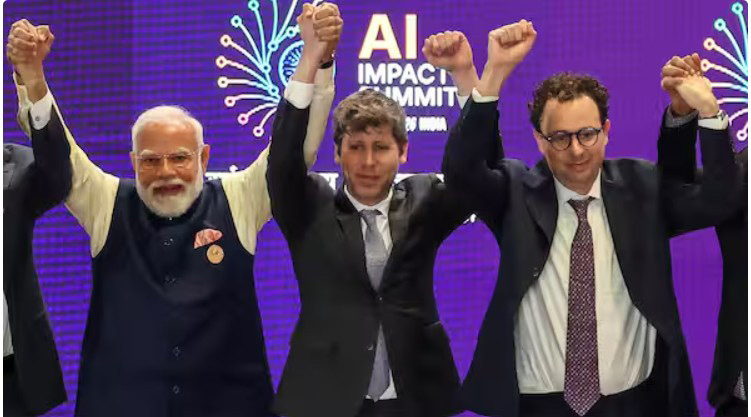
[The moment that made headlines: the two CEOs at the 2026 AI Impact Summit, famously declining to shake hands.]
*Source: firstpost https://www.firstpost.com/explainers/openai-sam-altman-anthropics-dario-amodei-rivalry-india-ai-summit-13981639.html
Where Is Technology Headed — and Where Are You Looking?
The ads are admittedly exaggerated, but I find Claude’s philosophy on technology genuinely understandable. AI is, after all, more capable of hyper-personalization than any tool that has come before it. Users openly share their innermost thoughts with it. And most of us have started, to some degree, to anthropomorphize it. We’re already seeing a growing number of people treat conversational AI almost like another human being, embedding it in actual dolls, sharing everyday moments with it, even taking it along on trips, and the concerns and side effects around that are very real.
This debate is ultimately a clash of values, and I don’t think there’s a clear right answer. ChatGPT prioritizes accessibility, with monetization enabling more people to access better AI faster. Claude prioritizes trust, contributing purely to users, free from the commercial advertising that it believes would compromise AI’s essential nature. Of course, these competing visions are what drive the variety and evolution of AI services, making it an incredibly fascinating game to watch as a user. It once seemed like ‘AI = ChatGPT’ might be a permanent equation. That said, even in just the past year, market-shaking services have been emerging one after another: Google’s Gemini Nano banana, Claude’s Cowork, OpenClaw, and more.
While preparing this column, I asked an AI to generate an image depicting the GPT vs. Claude rivalry. As you can see in the intro image, GPT was rendered as a heavily armed robot, and Claude as a human with a look of quiet resolve. I don’t have visibility into the data used to generate that image, but it captures the two services well: one embodying mass-market technology, the other a human-centered ethos built on trust. OpenAI is going for reach and monetization; Anthropic is going for the trust-based, genuinely human-centered AI! As this AI game plays out, which team are you rooting for? I hope this column gives you a moment to think about AI, which has become an everyday companion and, for many of us, something close to a best friend.
 |
O+O (pseudonym) |
|
|
Amorepacific
 |
|
-
Like
4 -
Recommend
3 -
Thumbs up
4 -
Supporting
2 -
Want follow-up article
2