


Less Plastic, We Are Fantastic
FANTASTIC CREW is Amorepacific’s plastic-reduction campaign, working toward a culture where we use less plastic and collect it properly so it stays in use longer instead of being discarded. Season 1 connected plastic-reduction practices with a variety of hobbies people enjoy in the city, suggesting environmental habits anyone can keep up in everyday life. Season 2 takes those practices out into nature.
With ‘FANTASTIC CREW in NATURE’ as the concept, six action crews are out collecting plastic themselves in places all over the country, including the sea, the mountains, and the city. We hope to spread a culture of plastic reduction far and wide by sharing how each crew does its work and the stories behind it. Here is the first story.
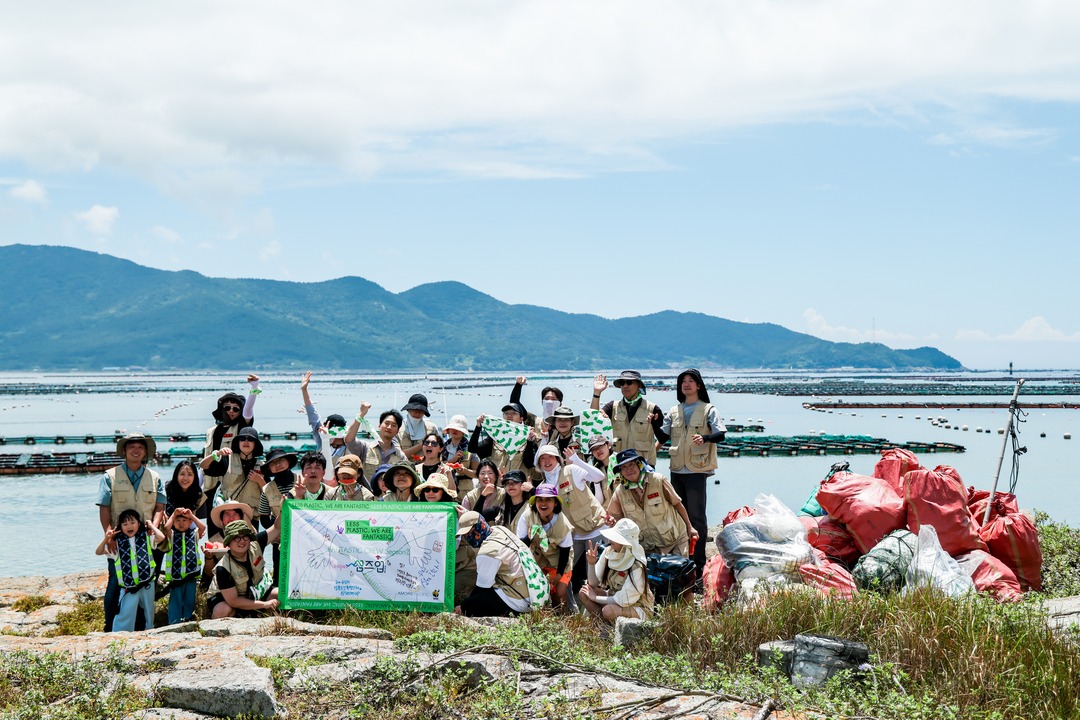
Tell us about SEOMSUP, the group that roams the islands and the sea.
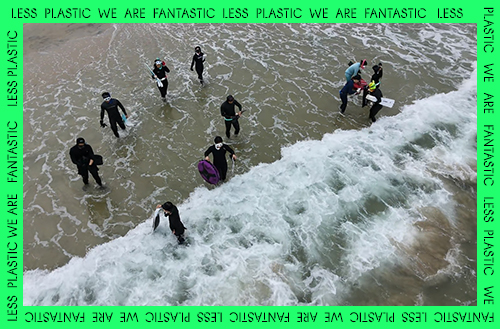
SEOMSUP is a nonprofit environmental organization devoted to island plogging. Together with members of the public, we head out to islands and the sea to collect marine debris and to record and survey conditions on site. We started in 2016 and are now an incorporated nonprofit association, working regularly on inhabited and uninhabited islands across the country. We don’t stop at simply collecting trash. We record the plastic, polystyrene foam, discarded fishing gear, rope, marine debris from other countries, and other waste that washes in at each location. We also return to the same areas several times to observe how the marine environment is changing. Our goal is to create sustainable change by working with a wide range of partners, including citizens, local residents, public institutions, and companies, to visit islands, record what we find, and return.
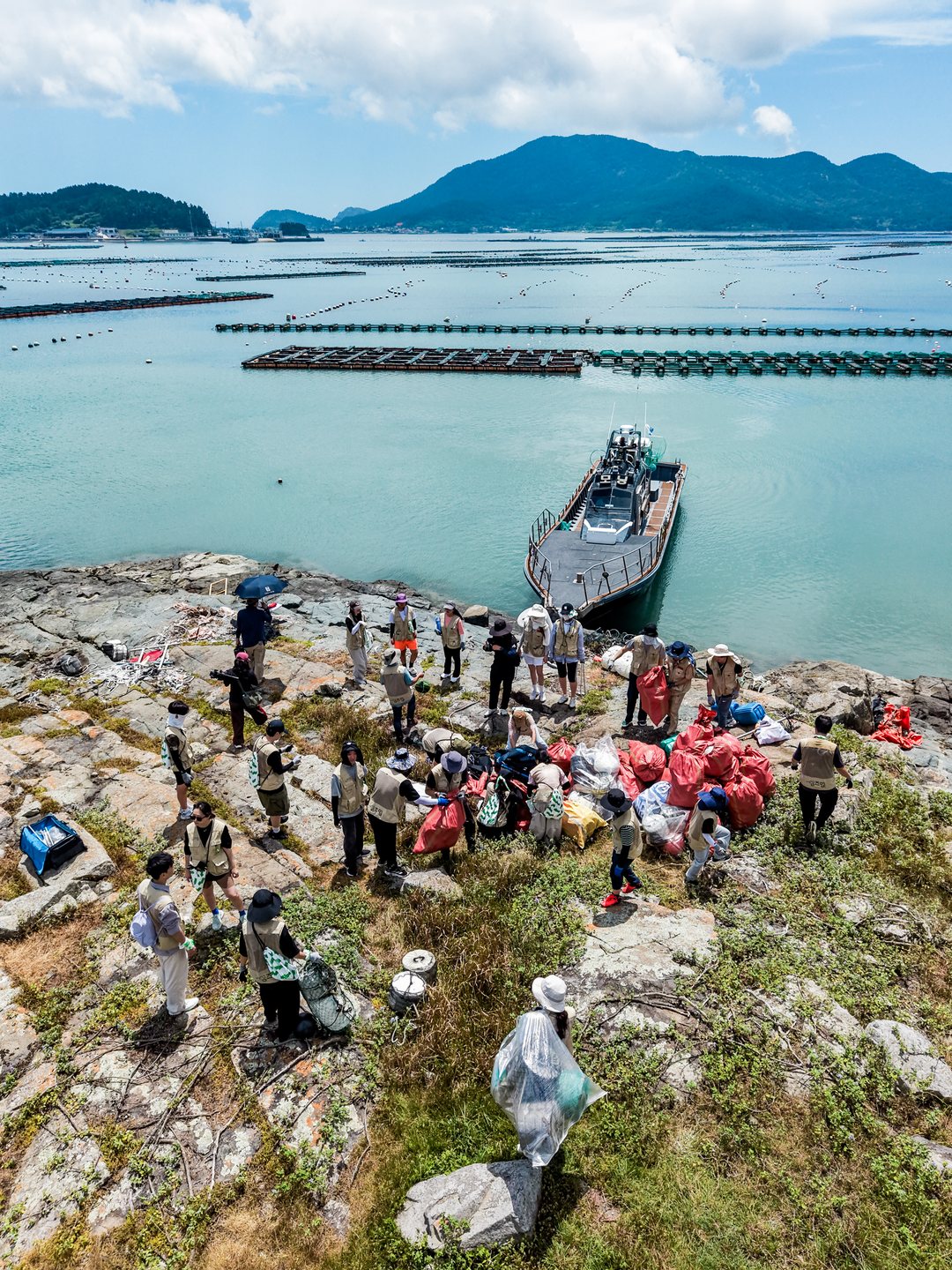
Q1. When did you first become interested in plastic reduction?
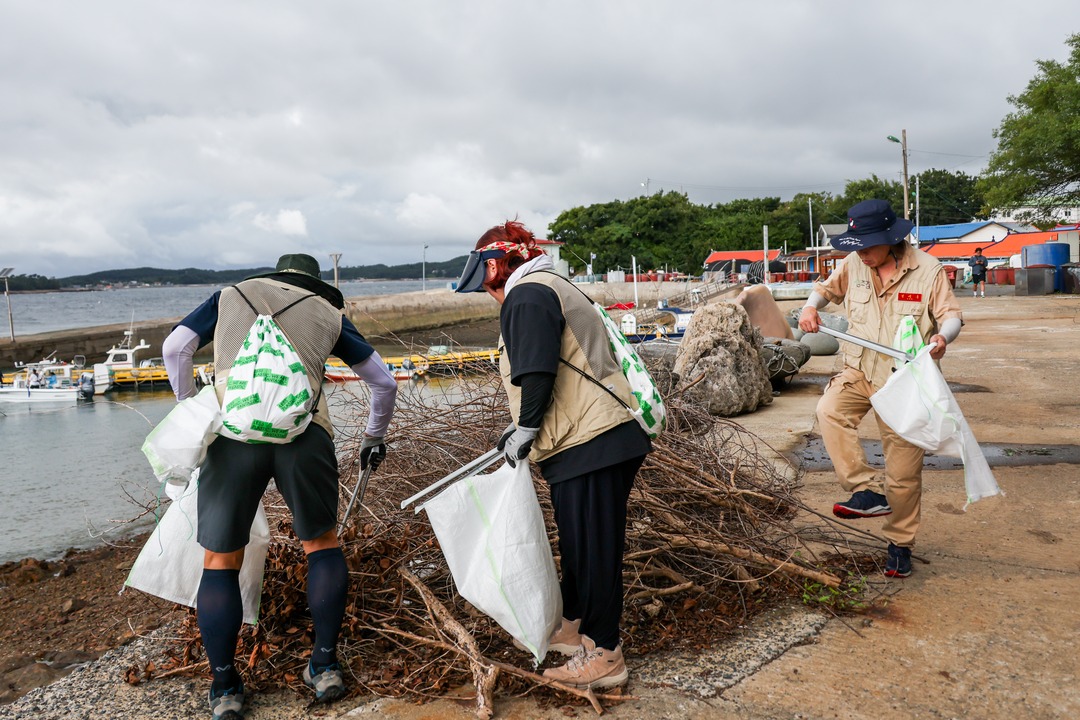
In our many years of working on islands, plastic has been one of the things we’ve come across most often. From a distance, the islands and beaches look clean and beautiful, but once you reach the shoreline, you often find polystyrene foam buoys, PET bottles, plastic fragments of every kind, discarded fishing gear, household plastic waste, and more piled up all over.
What people throw away on the spot doesn’t fully explain marine debris. Some of it is carried in from far away by winds and tides, and some breaks down into small fragments after long exposure to sunlight and waves. Once you start collecting plastic on site, you really start to understand that plastic isn’t just an aesthetic concern but a problem tied to the entire marine ecosystem.
Collecting the plastic that’s already in the sea is necessary too, but ultimately we have to cut down on the plastic we use and discard unnecessarily, so that less of it ends up there in the first place. For SEOMSUP, reducing plastic is an effort to look a little further back at what causes the marine debris we keep encountering in the field.
Q2. Why did you decide to join FANTASTIC CREW with Amorepacific?
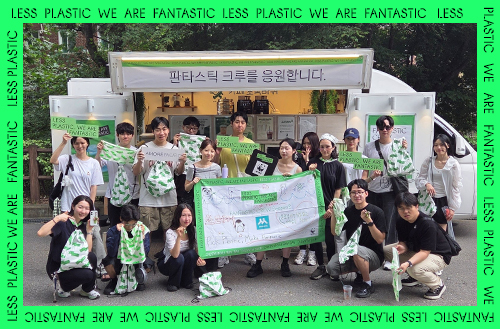
Above all, we felt that Amorepacific’s ‘Less Plastic, We Are Fantastic’ message would be a perfect fit with the work SEOMSUP had been doing on the ground. We’d already been heading out to islands with members of the public in the third week of every month to collect and survey marine debris ourselves. What made it feel like a good opportunity was that we didn’t need to plan a new event for the collaboration; we could talk about the plastic problem with more people through activities we’d been running for years. We concluded that a company’s environmental message, combined with a civic group’s field experience, could give participants a chance to see the problem for themselves and take action, so we joined FANTASTIC CREW Season 2.
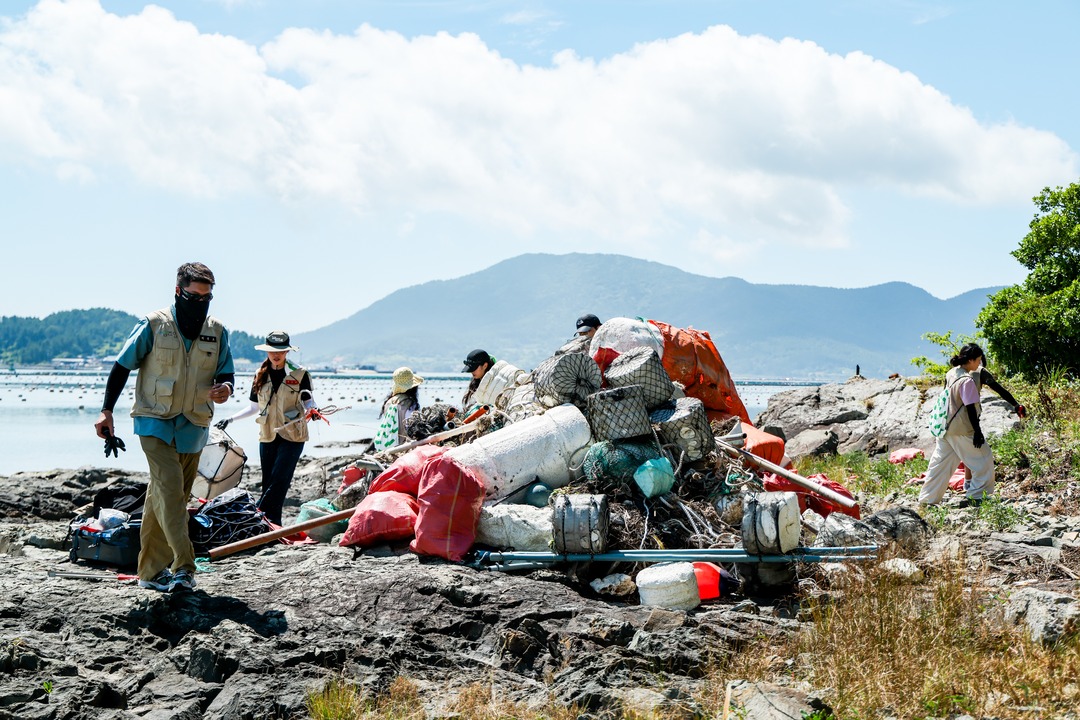
Q3. If there’s a moment from your time with FANTASTIC CREW that stands out most, tell us about it.
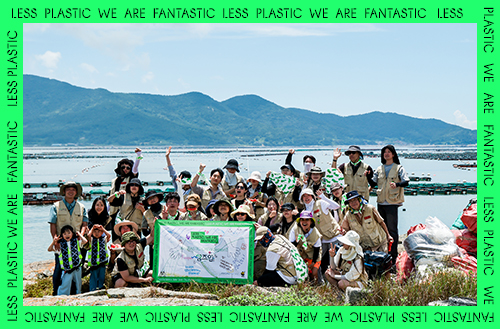
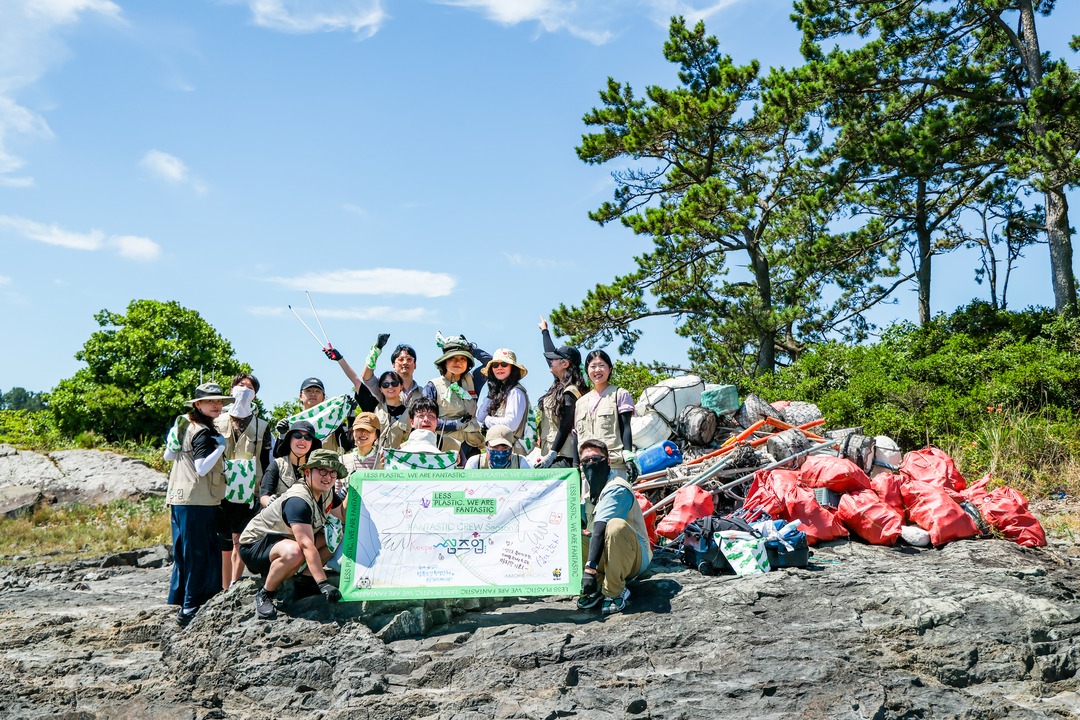
At our 76th regular cleanup, also our first outing as FANTASTIC CREW, we were able to look around the site and clear marine debris in relatively stable conditions. What stood out in particular was seeing long-time participants, people who had joined SEOMSUP activities 10 or more times, working alongside newcomers. As we watched those who had stayed with us for years naturally help new participants and pass on how things are done in the field, it struck us all over again that, in the end, what sustained effort truly leaves behind is people.
By contrast, our next outing took place in very harsh weather. We’d planned to split into two teams to clean up uninhabited islands, but the wind and waves out there made it a real struggle. Team A kept a close eye on conditions and did what it could on the island we had planned to visit. Rather than force a landing, Team B moved to a nearby inhabited island to get out of the worsening weather, and cleaned up the shoreline there. The relief that every participant came back safely outweighed any disappointment that things hadn’t gone to plan. It reminded us once again that good volunteering means reading conditions on site accurately and knowing when to stop.
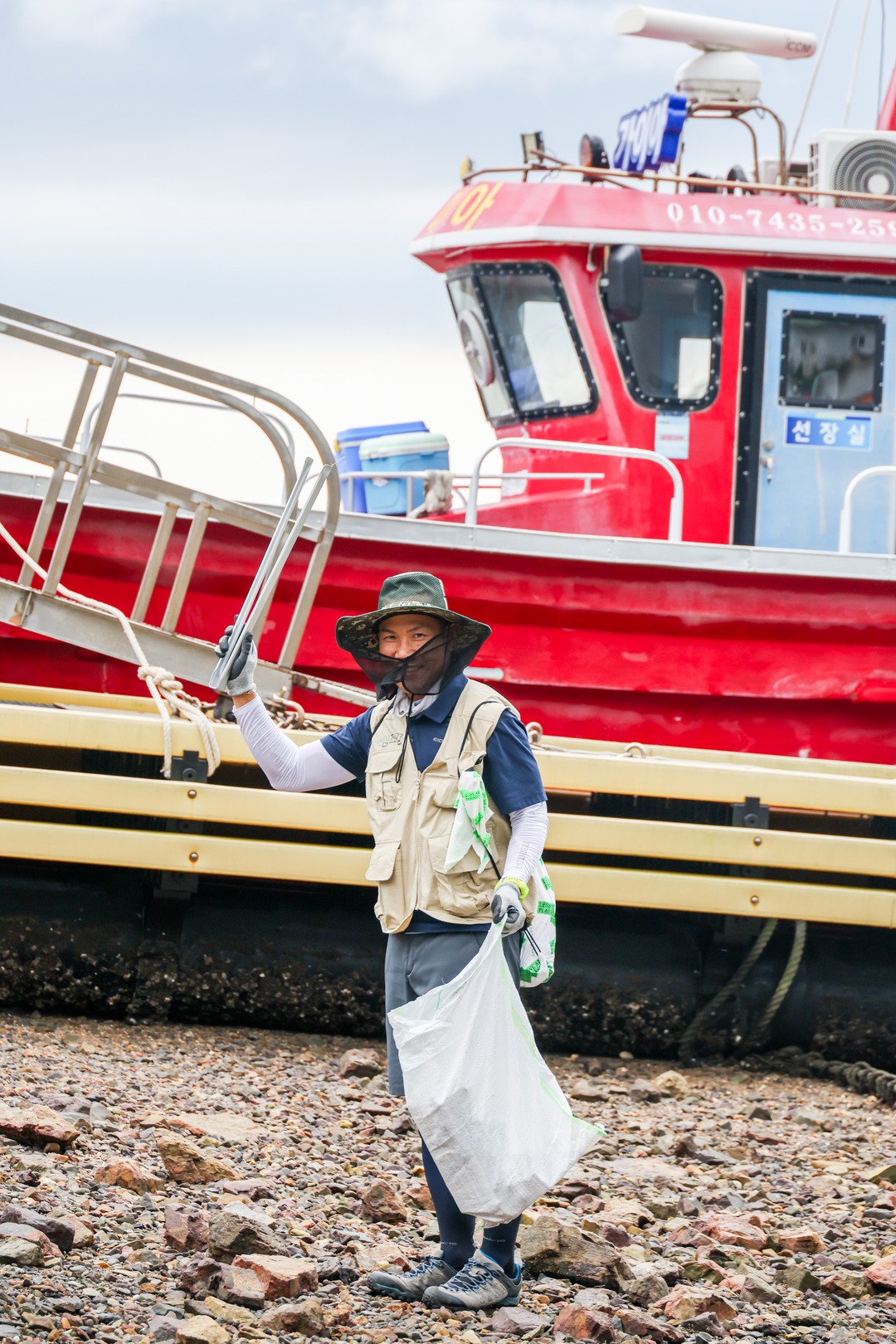
Q4. Has FANTASTIC CREW brought about any changes within SEOMSUP?
Our focus has usually been on collecting marine debris and checking what kinds there are and how much. These activities also led us to pay fresh attention to how the plastic we collect in the field ties into a product’s entire life cycle, from production and distribution to consumption and disposal. It makes a big difference whether you see the same piece of trash simply as ‘something to be cleared away’ or look at it and ask, ‘How did it end up all the way out here?’ If we had to name one big change FANTASTIC CREW has brought us, it would be the chance to talk about the plastic problem from many different angles, with lots of people, right there in the field.
Q5. What are some ways to reduce plastic in everyday life?
SEOMSUP doesn’t believe plastic reduction starts with grand gestures. What matters, in our view, are the things everyone already knows to do but finds hard to stick with, like using a tumbler or your own water bottle, bringing a shopping bag or reusable bag, and saying no to unnecessary single-use items such as straws. When you shop, you can also think twice about anything overpackaged, and try to choose products that last over things you use a few times and throw away. The point, we believe, isn’t to become someone who has cut out plastic completely, but to start with whatever you can cut back on, one thing at a time, and keep at it.
That said, working in the field makes it clear that some plastic problems can’t be solved by individual effort alone. Changes in personal habits need to go hand in hand with social change in areas such as production and packaging methods, waste management systems, and the plastic problems that arise in fishing and the marine industries.
Q6. What efforts are needed to bring about social change?
We think plastic reduction can evolve beyond the simple message ‘Let’s not use it.’ For example, we can sort the plastic found in the field and record it in categories such as PET bottles and packaging, polystyrene foam, discarded fishing gear, rope, and debris thought to have washed in from other regions. By visiting the same area several times, we can also see what kinds of trash keep arriving and how things change with particular seasons or ocean currents. Once this data builds up, we might go beyond the message ‘Let’s reduce plastic’ and ask a concrete question like ‘This type of plastic keeps washing in here, so at what stage could we reduce it?’
We also think there’s value in a citizen-participation program where participants pick a single piece of trash they found themselves and trace it back to where it was made and how it reached the sea. As SEOMSUP sees it, an important direction for plastic reduction is to take collection beyond the experience itself and connect it to questions and data.
Q7. Were there areas where working with Amorepacific created extra synergy?
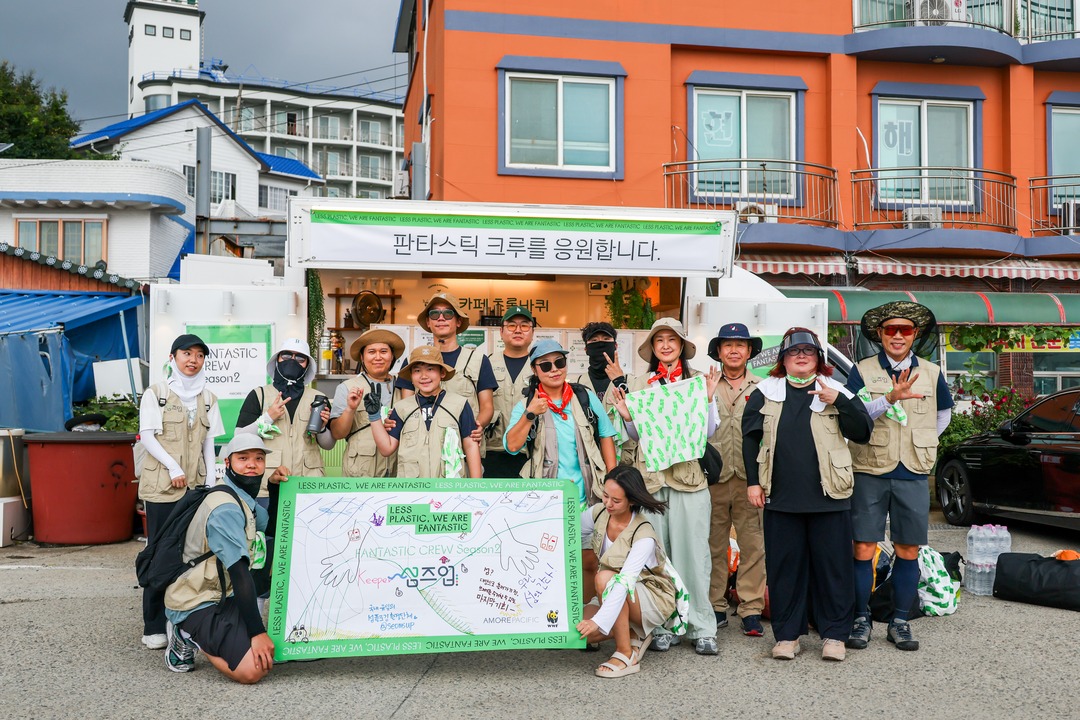
We think Amorepacific’s ability to get a message out and SEOMSUP’s field experience brought out the best in each other. Amorepacific used its ‘Less Plastic, We Are Fantastic’ message to explain why plastic reduction is needed, while we showed vividly how marine debris builds up on islands, including uninhabited ones, and what forms it takes. Between us, we brought the plastic problem to the attention of many more members of the public. If this kind of collaboration continues, we believe the environmental change that companies and civic groups can bring about together could have an even greater impact.
Q8. Is there anything you’d like to leave us with as a member of FANTASTIC CREW?
The sea is changing all the time, right in front of us, but those changes don’t always register with people. Even a beach you’ve cleaned up is often dirty again by the time you go back. That’s why the marine debris problem is difficult to solve in a single outing. Someone has to keep going back to record the changes and turn those records into next steps. And safety has to come first, even in work to protect the environment. We’ll keep visiting sites safely, recording what we find properly, and coming back to the same islands. We hope you’ll follow along.
Q9. Finally, how would you sum up SEOMSUP’s journey with Amorepacific in a single phrase?
A journey of coming face to face with the plastic problem at sea, and starting to make a change. In everyday life, it’s hard to see where the plastic we use finally ends up. On this journey, we saw where it ends up with our own eyes, on islands and at sea, and thought together about what we should cut back on and what we should protect from here on.
Next Crew
FANTASTIC CREW in NATURE. FANTASTIC CREW’s work for nature carries on. Seoul Forest and the city, the mountains and the waters off Jeju, and even beneath the sea’s surface. Follow the stories of all six crews in turn, each working at a different site and cutting down on plastic in its own way. Up next is the story of the youth plogging club SREKKER, a group of people who roam the city picking up healthy change.
Use less plastic. Collect it properly. Reuse it instead of discarding it. So that plastic is no longer left meaninglessly on our planet.
Together, Amorepacific and everyone can make the world even more amazing.
Now, LESS PLASTIC. WE ARE FANTASTIC!
Discover more of the Less Plastic campaign in Amorepacific’s CSR magazine. (Click)
-
Like
3 -
Recommend
1 -
Thumbs up
1 -
Supporting
1 -
Want follow-up article
0