



Editor's Note
At the Amorepacific Foundation, we create content that examines our lives through the lens of “academic research,” particularly in the humanities. Look closely, and even decades-old scholarship connects to questions we face today. I’ll make the humanities accessible: a closer look at ourselves and the world around us.
#INTRO
As someone who makes content myself, if I had to name one of the most popular shows right now, it would have to be girl group RESCENE’s ‘Hello, This Is Woni, Nice to Meet You,’ or ‘Anwonjalbu’ for short.
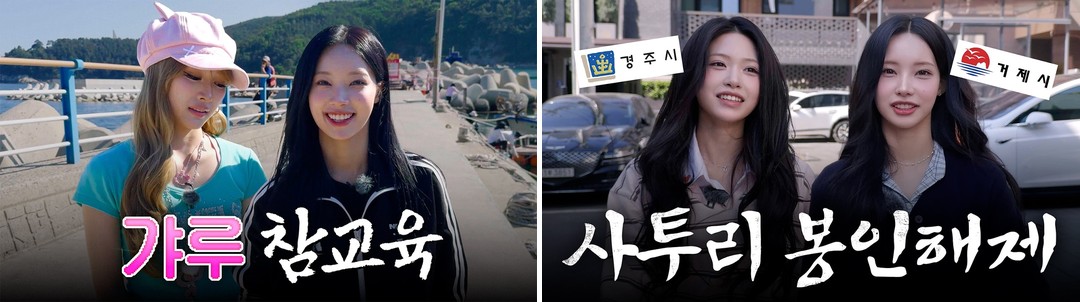
(Source: YouTube, ‘Hello, This Is Woni, Nice to Meet You’)
The show won viewers over in an instant with ‘Geoje, yaho!’ Unlike what we usually see in K-pop girl-group content, it shows the members being uninhibited and candid. They fish in tracksuits, picking up ragworms with their bare hands to bait the hook. Unvarnished moments like these have become not a drawback, but a charm in their own right.
Not only RESCENE, but also NMIXX’s Lily and Haewon, and even HyoRiSoo, a spin-off of sorts from Girls’ Generation. As these examples show, girl-group content in which members candidly reveal their own personality and charm is increasingly catching the public eye. The public is actually taking more interest in each member’s unadorned individuality and natural self than in a perfectly polished image.

(Source: YouTube, ‘Hyo’s Level Up’)
So how have the lyrics they sing changed? In fact, look at K-pop girl-group lyrics over the years, and you’ll find that everything from the female speaker’s attitude toward love to the way she expresses herself and sees life has changed little by little.
First-Generation Girl Groups (Late 1990s Onward)
The first girl groups of the 1990s, such as Fin.K.L and S.E.S., came with an air of mystique and a fairy-like image, and their lyrics most often told stories of love.
Nearly 80% of first-generation girl-group songs have the word ‘love’ in their lyrics.
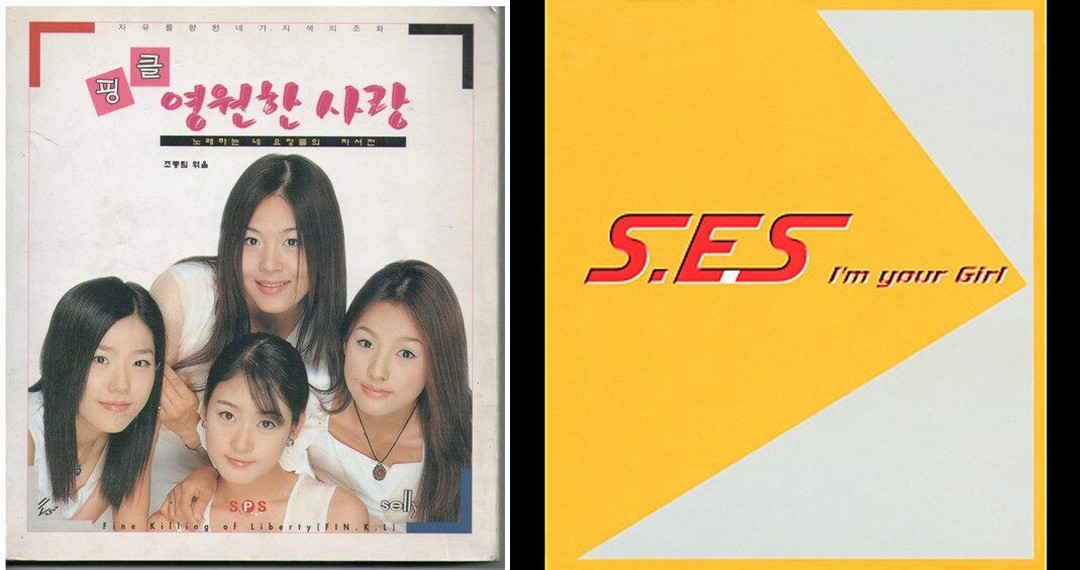
(Left: Fin.K.L Eternal Love - (Autobiography of the Four Singing Fairies) / Right: S.E.S. - I’m Your Girl album)
Here, the speaker’s attitude toward love is worth a closer look. Looking at the first-person pronouns that refer to the speaker herself (‘나’, ‘내’) and the second-person pronouns that refer to the listener (‘너’, ‘니’), we find that in the lyrics of the time, the speaker often longs for the listener, the object of her love, rather than being the one who chooses it. Think of lyrics in which she waits for the other person to come back, or vows to give everything for them.
Please always stay by my side, I want to entrust my dreams only to you (Fin.K.L - Eternal Love)
I want to live only for you~ (S.E.S. - I’m Your Girl)
Second- and Third-Generation Girl Groups (2000s Onward)
Girls’ Generation, Wonder Girls, and others mark the start of the second generation, and with them, girl-group lyrics begin to change little by little. Songs about love drop to about 40%, and more and more female speakers confidently reveal their own charms and thoughts.
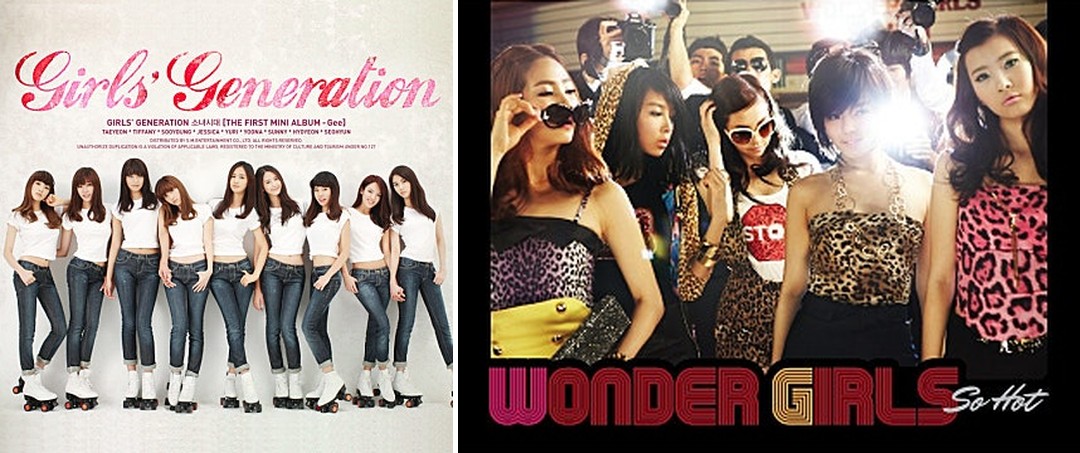
(Left: Girls’ Generation Gee mini album / Right: Wonder Girls So Hot album)
First-generation lyrics stood out for promises to become the other person’s lover. In the second and third generations, by contrast, the speaker increasingly shows off her own charms and takes the upper hand in the relationship rather than waiting to win their heart.
I’m gonna have you, I will (Brown Eyed Girls - Abracadabra)
I live just fine without a man (miss A - I Don’t Need a Man)
I am the best (2NE1 - I Am the Best)
As in the first generation, positive expressions of admiration for the other person still appear frequently. The difference, however, is that the speaker praises the listener from a position of confidence in her own worth.
There are so many men who want no one but me, yet I’m more concerned about the messages you secretly type (Girl’s Day - Expectation)
I’m not an easy girl, what’s your phone number? Make some time for me (4Minute - What’s Your Name?)
By the third generation, the ways speakers described themselves had also become broader and more varied. Second-generation lyrics frequently expressed a positive self-image and confidence, but most did so by highlighting the speaker’s physical beauty or charm. Third-generation lyrics, by comparison, explored a wider range of subjects through which speakers could express themselves.
In this way, girl-group songs that once focused mainly on ‘love’ gradually came to feature speakers with more varied attitudes and to explore a wider range of themes. Looking at the occurrence of the word ‘love’ in first- through third-generation girl-group lyrics, we can see how its presence narrowed, as shown below.
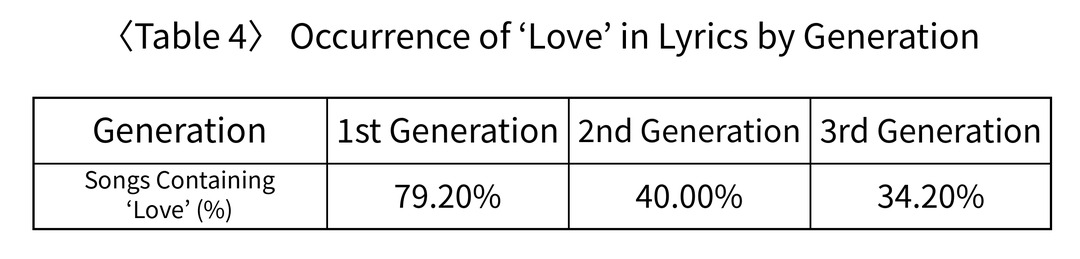
(Source: Shinhye Nam (2023), “A Linguistic Exploration of Changes in the Agency of Female Speakers in Korean Girl-Group Lyrics”)
As the third generation arrives, voices also emerge that emphasize the speaker’s own abilities, choices, and independent life. Interestingly, the word ‘we’ in third-generation lyrics means something a little different from what it meant in the first generation. In the first generation, ‘we’ mostly meant the speaker and her lover; in the third generation, it can also describe moments enjoyed with friends or experiences they share. The female speaker was beginning to describe herself through a wider range of relationships, reaching beyond romantic partners.
Hey ocean, come play with us (TWICE - Dance the Night Away)
That’s our genius power (Red Velvet - Power Up)
Of course, not every lyric changed in the same direction. Some lyrics also show the speaker waiting for the one she loves, or wanting to give her love one-sidedly. Overall, though, the female speaker was gradually moving away from describing herself only through her relationship with the other person and toward speaking her own mind.
Fourth-Generation Girl Groups (2020s Onward)
So what about today, as girl groups move past the fourth generation and race toward the fifth? Of the 66 girl-group songs that reached the upper ranks of Korea’s music streaming charts from May 2021 to June 2026, 24 were about romance, and 42 were on non-romantic themes. That means about 63.6% of them deal with subjects other than romance.
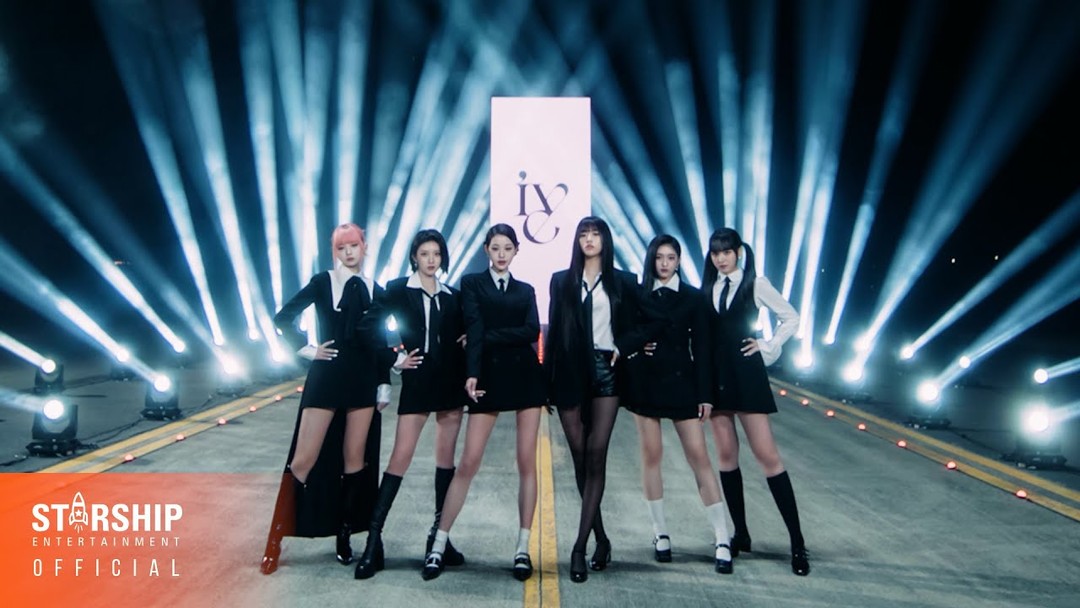
(Source: IVE - I AM MV)
Open a different door, there’s no need to follow; you go your way, I go mine (IVE - I AM)
I’m on the next level (aespa - Next Level)
I run toward the rough road stretching out far ahead (NMIXX - DASH)
In fourth-generation lyrics, we see a speaker who affirms herself just as she is and takes the lead in shaping her own life.
Building her own world doesn’t stop at a solitary achievement, either. What sets these songs apart is that some also sing of solidarity, a call to live with this confidence together.
Without asking each other why, there are times when we need one another
Because I know what that kind of feeling is like so well
Rather than a relationship that wishes for eternity, I want to understand you right now
We will always be the rebels
(IVE - REBEL HEART)
In this way, the female speaker in fourth-generation girl-group songs appears not only as an agent who starts a romance and chooses her relationships, but also as someone who establishes her own identity and spreads it to others.
#OUTRO
Thirty years ago, the female speaker in these lyrics expressed her feelings with love at the center. Today, she confidently shows off her charms, talks about herself on a range of subjects beyond love, and speaks up to define for herself who she is.
As the ways we express ourselves grow more varied, we also find ourselves rethinking what beauty means. In the past, beauty was defined mainly by outward features, such as a high-bridged nose, big eyes, and fair skin. These days, though, when people are asked ‘What do you think beauty is?’ the most common answer is ‘being yourself.’ Not fitting yourself to a standard someone else has set, but discovering the charm that is yours alone and showing it honestly. I believe we are gradually moving toward a society that respects each person’s own kind of beauty.
From RESCENE showing their unvarnished charm in unfiltered regional dialect to girl-group lyrics that tell their own stories, each one has a charm all its own that no single standard can explain.
Discovering who you truly are, and loving it. I suspect that’s where beauty begins today.
Which girl group’s songs do you relate to most?
You can watch a video version of this content on the Amorepacific Foundation’s Instagram.
*This column draws on Taeryong Kim (2026), ‘A Study on Patterns of Performed Subjectivity in the Lyrics of Fourth-Generation K-pop Girl Groups,’ and Shinhye Nam (2023), ‘A Linguistic Exploration of Changes in the Subjectivity of Female Speakers in Korean Girl-Group Lyrics,’ a result of research supported by the Amorepacific Foundation.
 |
Seung Eun Oh |
|
|
Amorepacific Foundation
A collector of experiences and knowledge who makes content
 |
|
-
Like
1 -
Recommend
1 -
Thumbs up
1 -
Supporting
0 -
Want follow-up article
0