

#Beauty Insight
With the Age of Physical AI Right Around the Corner: Will the Job of ‘Makeup Artist’ Still Hold Up?
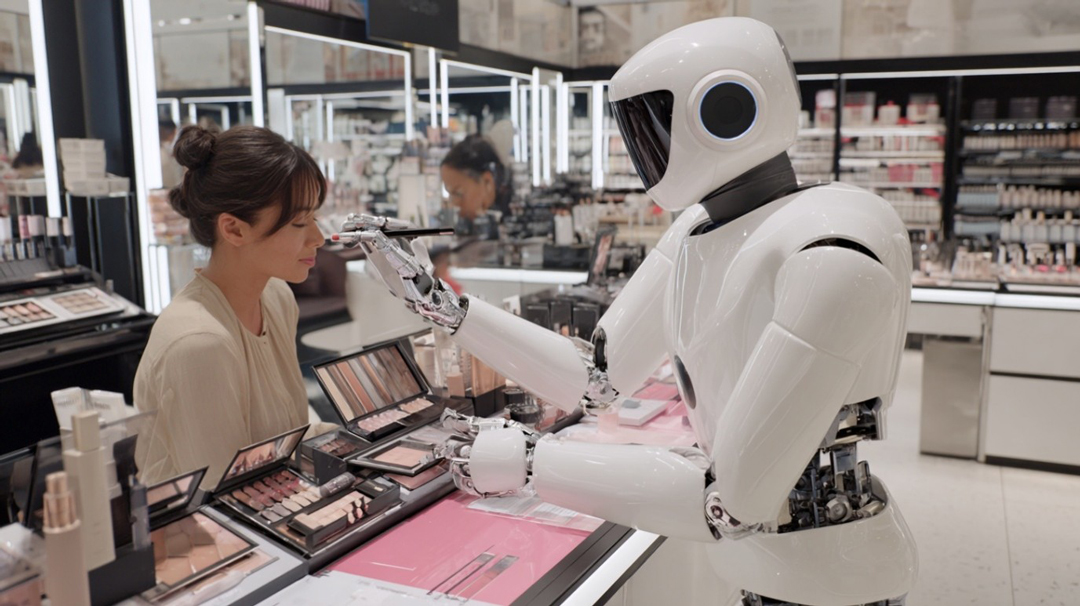
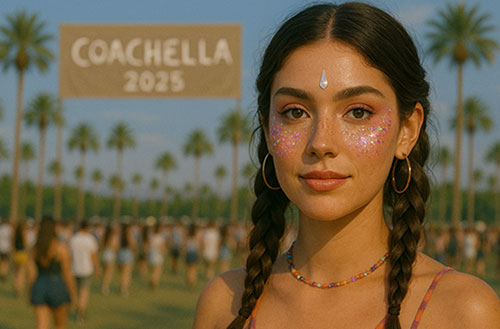
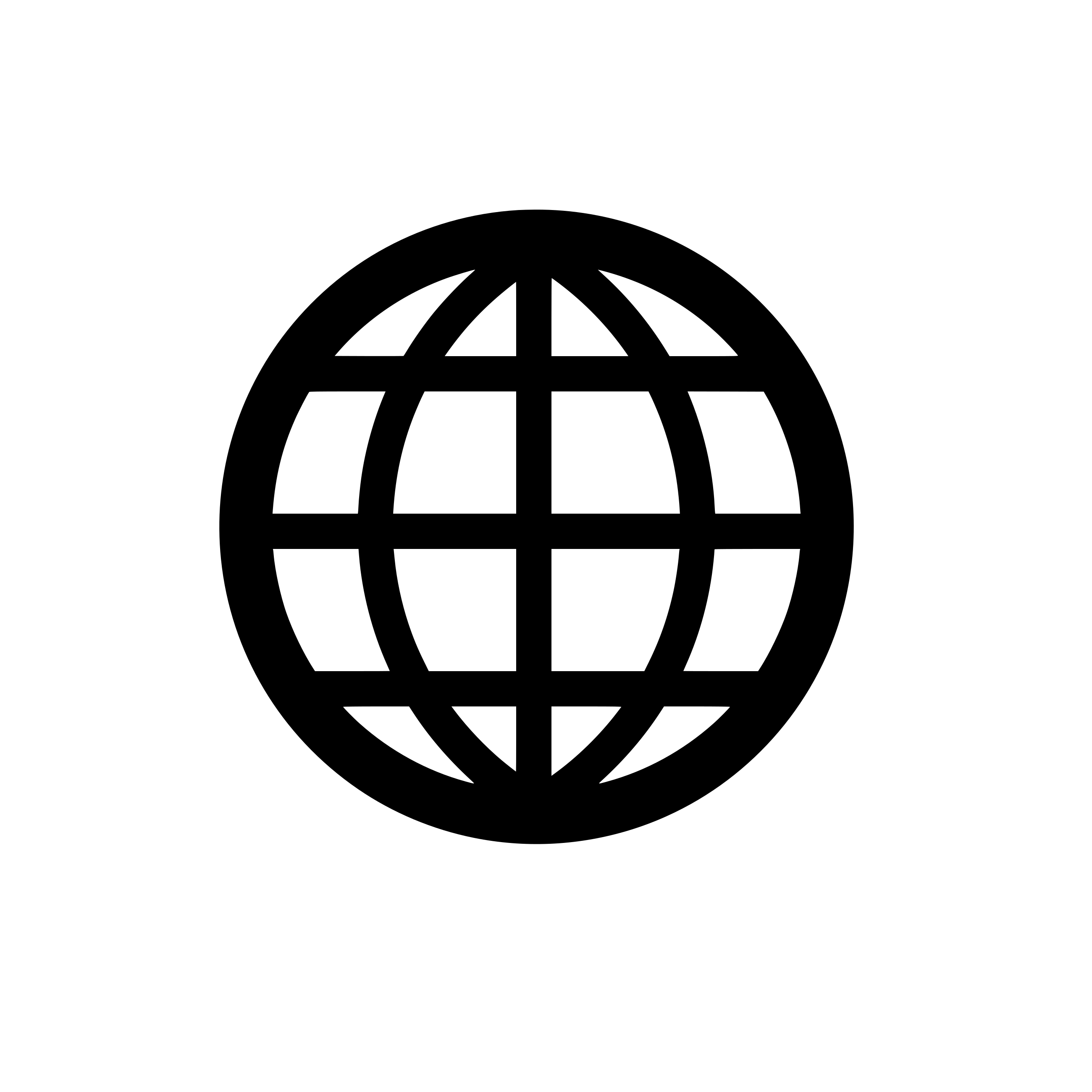
Source: AI-generated image. Created by: Minkyung Cha
#INTRO
Ever since generative AI emerged, countless articles and pieces of content have asked the question: “What jobs will disappear because of AI?” Headlines like ‘Top 10 Jobs That Will Be Replaced by AI’ in particular draw a great deal of attention. AI is no longer a distant, futuristic technology. It has arrived right in front of us, directly affecting our work and livelihoods. So naturally, we find ourselves asking: “Will the work I do still be needed in ten or twenty years?”
1. Jensen Huang, CEO of NVIDIA, Visits Korea
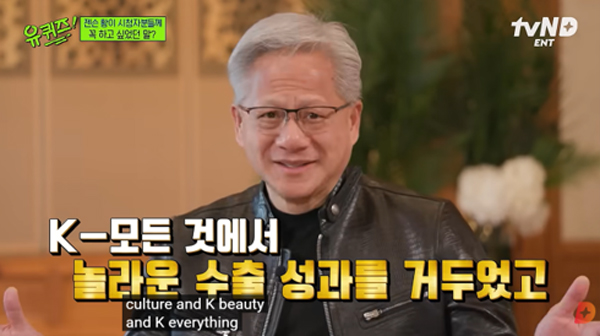
One of the names we’ve heard most often over the past few months is, without question, Jensen Huang, CEO of NVIDIA. Between the news of his visit to Korea and NVIDIA’s stock price movement, AI has become a concern not only for the IT industry but also for society as a whole.
Just looking around at the people closest to me, I notice conversations about stocks and AI have become as routine as asking how someone’s doing. As the semiconductor industry, which is driving the global AI market, grows more important, I find myself feeling a renewed sense of pride that Korean companies are making their mark on the global stage. “Why is a beauty company suddenly talking about semiconductors?” you might wonder. However, when you consider that advances in AI technology are reshaping our work environment and the very structure of our industry, it’s a stretch to call this someone else’s story.
It struck me, out of nowhere: if Amorepacific occupies a position similar to Hyundai, Samsung, or SK hynix, then who plays the role of NVIDIA for us? Sephora? Or perhaps BASF, the global cosmetic ingredient company? As generative AI becomes mainstream and the possibility of transformation is being raised across industries, I want us to think together about whether our profession can truly survive before physical AI fully enters our everyday lives.
2. Will the Job of Makeup Artist Still Hold Up?
Will my own profession as a makeup artist be replaced by AI in the near future? Here is the answer I got when I asked AI.

<ChatGPT’s Response>
Gratefully(?), it says this is “difficult to fully replace.” Perhaps that’s because this work, at its core, involves handling another person’s face. Makeup is a fairly delicate domain: you assess the condition of someone’s skin, adjust the pressure and angle of your hand, and tailor the look to the contours of their face.
On the other hand, this also sounds like it could be partially replaced. Various makeup-related technologies are indeed advancing rapidly and becoming increasingly sophisticated. So will we eventually live in an age in which you simply put your face into a machine and your makeup is finished automatically? One possibility leads to the next, and the imagination doesn’t stop. I think we’ve reached a point where, in a beauty industry that values emotion and aesthetics, we need to move beyond imagining and seriously consider how AI should be used.
When I imagined what it would be like if a robotic artist did my makeup once the age of physical AI arrives, I found myself worrying about the process rather than the finished result: questions like “What if it misjudges the pressure and I end up with a bruise around my eye on an important day?” or “Would it be slower than a person, or faster?” This is probably because I still unconsciously trust people more.
It’s said that AI will eliminate the need for middle management, and that organizations of the future will take on an hourglass-shaped cluster structure — so what, then, is the essential difference between humans and AI? In other words, it leaves me wondering: why do some people become replaceable by AI, while others remain essential?
3. How Are AI and Humans Different in Performing Work?
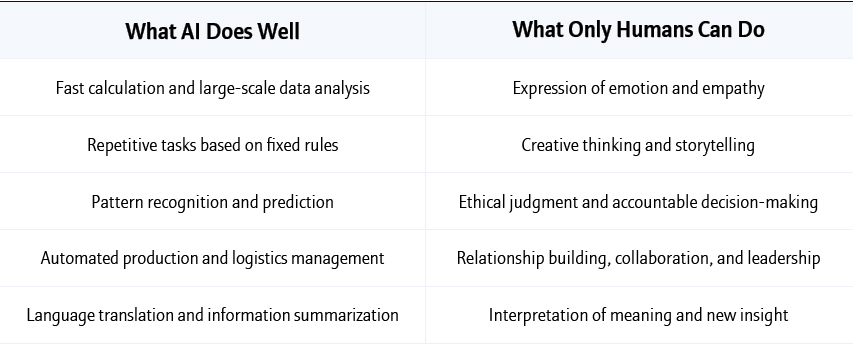
<Promising Jobs vs. Jobs at Risk in the Age of AI: What Four Capabilities Does Our Child Need?> Source: KB Think
According to one report, the ‘expression of emotion and empathy’ that arises through human interaction is something only people, not AI, can do. I believe that as humanity grows increasingly lonely, channels that offer emotional care will become all the more important within the beauty industry.
I recently attended an AI-related lecture for Amorepacific employees, and one point left a strong impression on me. No matter how far AI advances, what matters most is still the essence of the thing itself. Working as a brand artist, I often get requests from customers to “make it look natural.” However, countless meanings are hidden within that one phrase. For one person, “natural” might mean looking youthful; for another, it might mean something closer to a semi-smoky look. That’s why an artist typically considers not only the customer’s words but also their expression, mood, and circumstances to arrive at the best possible result.
In other words, interpreting psychology and context is a human task. AI can read and analyze data, but it still cannot fully grasp the psychological cues and subtle emotions hidden within someone’s words. For that reason, I believe that the human-exclusive abilities of creative execution, emotional connection, cultural interpretation, and even understanding individual taste will only become increasingly significant.
4. If You’re Curious How AI Will Affect Your Job
There are things we’d rather not say to other people, but when we want an answer from someone, haven’t we all, at least once, turned to ChatGPT for advice? I, too, have asked it a deeply personal, emotional question. Honestly, at first I assumed I’d get some predictable, generic answer. However, contrary to my expectations, it offered advice the way an old friend of twenty years might. It made me think that AI might soon go beyond providing information and start caring for our emotions as well.
If AI can already offer words that comfort the human heart, how much further will the technology advance, and how dramatically will the job market be upended? If you’re someone who, like me, has wondered “Will my job still hold up in the future?”, there’s a site I’d like to recommend. It’s a site that predicts how AI will affect different jobs: the closer your score is to 100, the higher the likelihood that your job will disappear or be replaced, so it might be fun to give it a try.
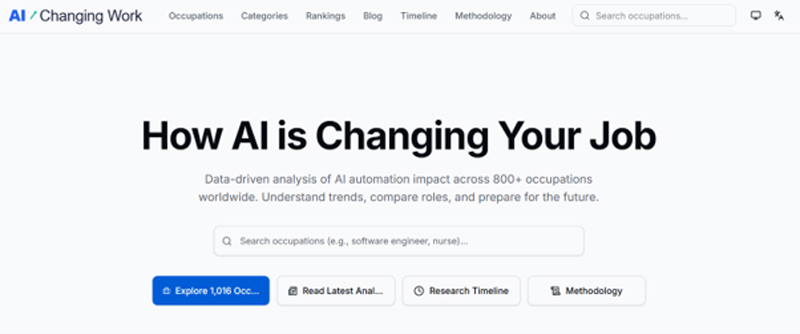
<A Site That Analyzes How AI Is Changing Jobs>
5. Can AI Predict the Future?
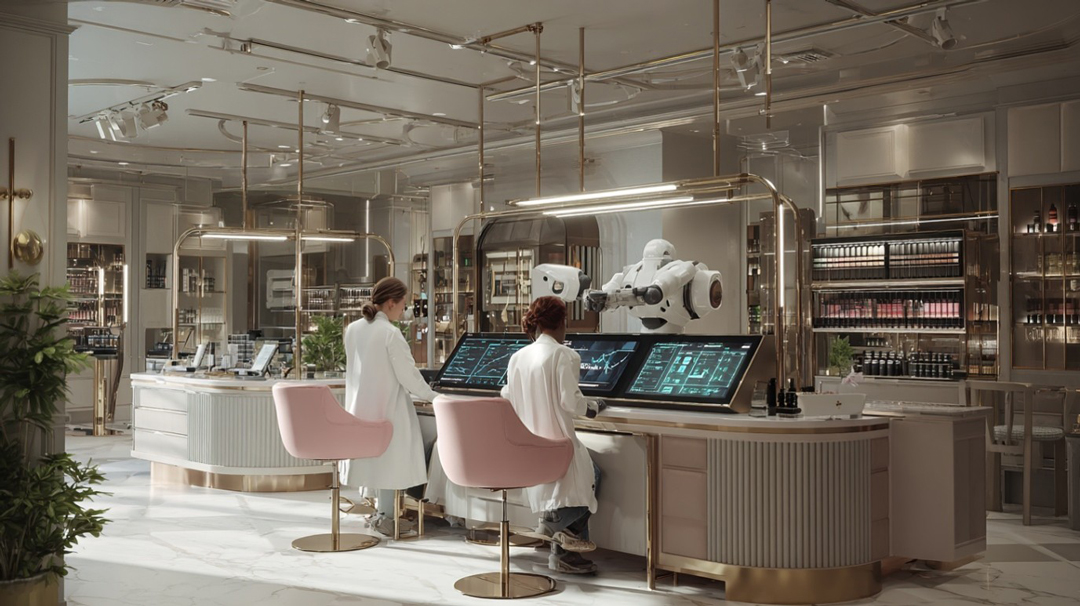
<A Future Beauty Store, as Predicted by AI> Source: AI-generated image. Created by: Minkyung Cha
I’d like to share one result: a question I crafted with ChatGPT, then visualized using Midjourney. It shows a view of a future beauty store that feels a little like something out of Star Wars, as if a research lab and a retail store had been merged into one. According to this AI-predicted vision, artists appear set to need not only the service and consultation skills they’ve always relied on but also the ability to interpret data and make use of AI.
Looked at differently, couldn’t it be that the more AI advances, the more expansive the role of the person becomes? If everyone can handle the technology at a similar level, then what will set people apart is not the technology itself but the ‘customer experience’ delivered through it. In this sense, as the intermediary connecting technology and customers, I want to believe that the role of a makeup artist will still belong to people. Helping customers understand their own skin based on AI analysis, and guiding them toward discovering the beauty that suits them.
I wrote this column, inevitably, from my own professional perspective as a makeup artist. That being said, I’d like all of us in the beauty industry to think together about what new roles we’ll need to take on in the future. After all, this isn’t really something you can ask AI, is it?
 |
Min-kyung Cha |
|
|
Amorepacific
  |
|
-
Like
0 -
Recommend
0 -
Thumbs up
0 -
Supporting
0 -
Want follow-up article
0