



Columnist
Yoonji Lee HERA BM Team
Editor's Note
I joined the company as an entry-level BM, and somehow I’ve now been doing the same job for 12 years. They say that doing one thing for 10 years or more makes you an expert. If that’s true, can I now say I know at least a little about being a BM?
Put a new product in front of me, and I still wrestle with it; sometimes I doubt my own choices. I thought everything would get a little clearer as experience piled up, but if anything, I have more questions I can’t easily answer.
This piece is neither a manual for the BM profession nor a guidebook to becoming a good BM. It’s simply a deeply personal record of how my thinking has changed over years of doing one job, and of what I’ve come to value. Perhaps someone in the same job will find themselves nodding along.
INTRO: A Role That Seems Defined but Isn’t

<Source: AI-generated image>
What does a BM do?
Surprisingly, this question is hard to answer concisely. There’s a definition of the role, but anyone who’s actually done this job knows how much it doesn’t cover.
You analyze the market and customers, and plan products. You develop formulas and think through packaging and communication. You review pricing and profitability, keep production on schedule, and after launch, dig into the sales results while working out the next strategy.
Every one of these tasks matters. Some people call the BM a product’s ‘mom’. The idea, I suppose, is that a BM watches the whole process, from a product’s birth to its growth, more closely than anyone else.
However, every mom is different. Just as every home has its own atmosphere and every parent has their own philosophy of raising a child, each BM’s own style comes through in how they see and shape products, depending on their strengths and temperament.
On top of that, the market is changing fast. New channels and markets are opening up, and kinds of work that didn’t exist before are emerging. Sometimes a way of working that felt familiar only yesterday is no longer the right answer today.
So beyond performing an assigned role well, a BM often faces moments when they have to redefine that role as circumstances change. In other words, the role is defined, but there’s no right answer for how to carry it out.
That’s why, even 12 years in, this job still feels new and, at times, difficult.
01. Every BM Has a Weapon of Their Own
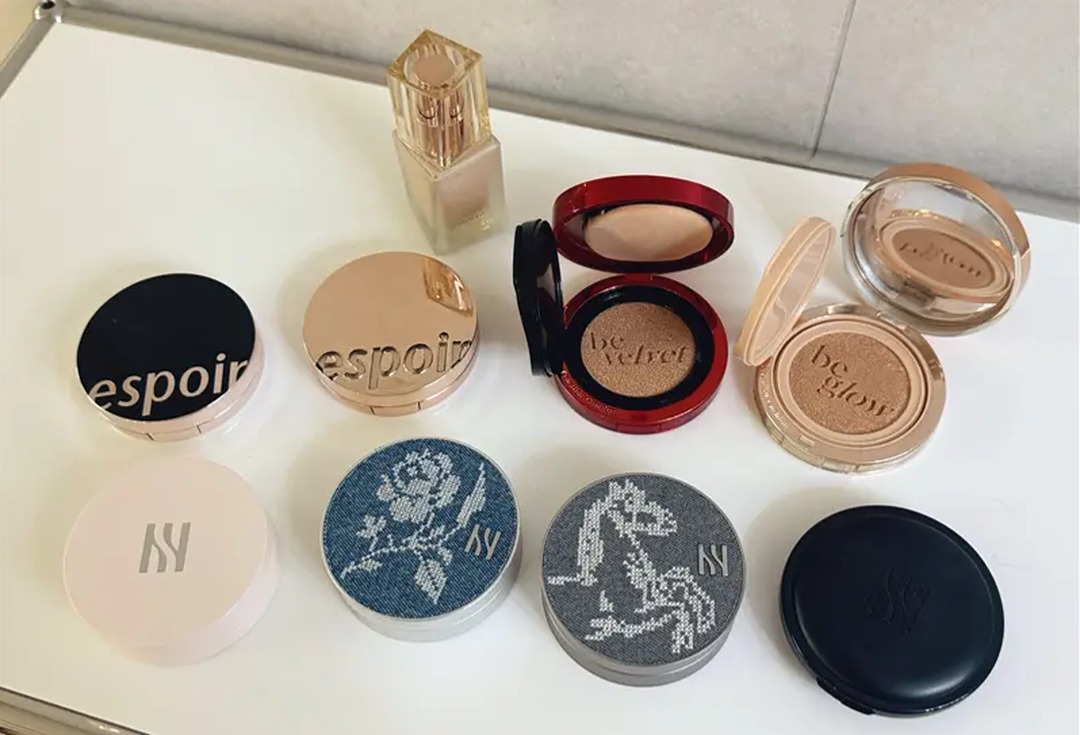
<Cushion products I’ve personally developed over the years> Source: Author’s own photo
There’s something I’ve long been curious about. What kind of person is a ‘good BM’?
If a product I planned sells well, does that make me a good BM? Strong performance matters, of course. But can that alone fully capture what a person is capable of?
Most of what a BM does can be learned and mastered. Yet working alongside many BMs, I’ve noticed each one shines brightest at a different moment.
Some read trends faster than anyone. Some spot market shifts in the numbers, while others instinctively sense needs that consumers haven’t yet put into words.
Some have an endless stream of ideas, and others have an uncanny knack for knowing which of countless ideas to drop.
The longer I watch, the more interesting I find the different ways each of them puts their strengths to work.
That’s why I now think it’s hard to settle on a single picture of what a good BM looks like. You need instinct, and you need an analytical mind. Sometimes a gift for putting a product’s appeal into words matters too. All of these are things a BM needs, but it’s probably impossible to excel equally at all of them. What matters is knowing what you’re good at and working that strength into products in your own way.
I believe a product carries something of its maker’s style, too.
Sometimes, in a single line of a proposal or a small detail of the product, you can see choices that feel true to the person who made it. Every so often, someone will say, “Somehow, this product just felt like that person made it.” That might be a rather wonderful compliment for a product planner.
Of course, your own style shouldn’t harden into stubbornness. After all, a product isn’t there to prove the taste of the product planner behind it, but to be chosen by customers. Striking a balance between your own instincts and market appeal is a question I’m still working through.
02. You Can’t Make Anything Alone
<Source: Author’s own photo>
There’s no product a BM can make on their own.
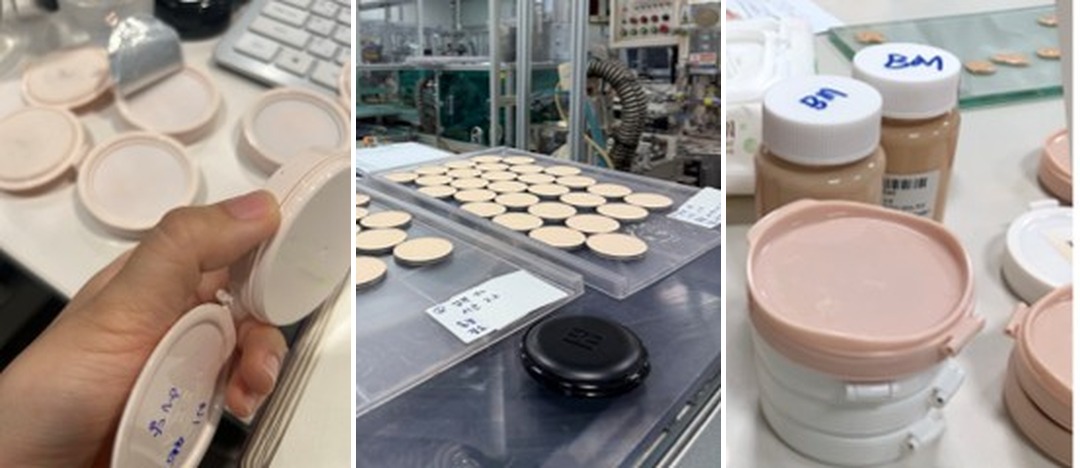
Before an idea becomes a real product and reaches a customer’s hands, it passes through far more hands than you’d think. Fleshing out the plan, developing the formula, completing the product design, ensuring stable quality and production, and finally bringing it to market.
That process involves so many people with different kinds of expertise, and each of them values something different. The hard part is that, from their own point of view, no one is saying anything wrong.
Quality matters most to some, design polish to others, and schedule, cost, and market competitiveness to others still. Everyone speaks from where they sit, hoping the product will succeed, but they don’t always point in the same direction.
Caught between them, a BM keeps asking, listening, persuading, and at times giving way. In effect, the BM acts as a translator, bringing different languages around to a single direction.
I used to think what mattered was having a good answer myself. There was also a time when I believed doing this job well meant setting a clearer direction than anyone and pushing my ideas through.
I see it a little differently now. Sometimes a colleague has an answer I hadn’t thought of, and sometimes an opinion I initially opposed ends up making the product better.
A good BM isn’t someone who comes up with the right answer alone. They’re closer to someone who weaves many people’s good answers into a better result.
Seen that way, I’ve come to think that, in the end, one of the most important skills a BM needs is the ability to communicate with people. Understanding different ideas and values and guiding them in a single direction is probably the skill that, the longer you do this job, proves the hardest and needs constant refining.
03. No Batter Hits a Home Run Every Time at the Plate

<Source: Author’s own photo>
Successful products naturally draw the spotlight. However, what makes a product planner stronger may be the products that didn’t turn out as hoped, more than the ones that did well.
Bringing a single product into the world takes a long time and a great deal of thought. But the longer I do this job, the more clearly I understand one thing.
That results aren’t necessarily proportional to effort.
Put in similar time and effort, and one product catches on quickly the moment it hits the market while another barely moves. Sometimes a product you agonized over harder and poured more time into isn’t chosen as often as you’d hoped.
At first, that mismatch was hard to accept. What had I misjudged? Would things have turned out differently if I’d done a little better?
Looking back, I think what scared me more than failure itself was what other people would think. The anxiety of not having proven myself with good results. I was treating the product’s report card as if it were my own.
But no batter in the world hits a home run every time at the plate. For a product to succeed, countless conditions that go beyond the product planner’s efforts have to fall into place. The thought and commitment of the colleagues who worked on it, the market’s flow and timing, and even customers’ minds, which change by the moment.
Come to think of it, when I tried to explain a product’s success or failure entirely by my own ability, I may also have put myself too much at the center. Just as I can’t take all the credit when a product succeeds, I can’t shoulder the full weight of a failure alone either.
Of course, that doesn’t mean my responsibility for the results gets any lighter. It still matters to dig all the way into why something didn’t work and to go back over the choices I could have made differently. But I try not to equate the results with my own worth. After all, taking a failure as a personal defeat and keeping it as experience for the next choice are two entirely different things.
These days, I think knowing how to fail well is also one of the skills a BM needs.
04. Why I Keep Doing This Job
Through all that uncertainty, making countless choices and sometimes facing results different from what I’d expected, I’ve kept doing this job for 12 years.
Why am I still a BM?
Looking back, I think the greatest appeal of this job lies in seeing an idea that existed only in my head become a single product I can hold in my hand, and then seeing that product become part of someone’s everyday life. The moment something I offered becomes someone’s choice. Twelve years on, that joy, at least, still feels new.
At first, what mattered most was that a product I’d made did well. Over time, though, I find myself thinking more about the role that product plays within the brand and, beyond that, the value the brand leaves with its customers.
From making a single bestseller to building a brand that customers have reason to keep choosing for years to come. In that way, the meaning of what I do has been changing little by little, too.
They say everyone leaves something behind in the world, in their own way. Some write, some make music, and some create new technologies or services.
What I do is make products.
If a product I planned makes someone’s day a little more satisfying, I think that alone is quite meaningful.
Of course, I don’t work with such grand thoughts in mind every time. Most days, I’m pressed by the schedule right in front of me and the problems I need to solve. I spend a long time agonizing over even a small decision, and sometimes I fret too much over little things.
Yet when I see all those choices add up to the brand’s growth, and to more customers in wider markets trusting and choosing it, I rediscover why I keep doing this job.
I don’t know how long I’ll be doing this job. But someday, when I look back, I hope I can say that I wrestled with a lot, that it was hard at times, but that it was every bit as enjoyable. That it was work well worth pouring so much of my youth into.
And I hope that, over all that time, I’ll have been someone who left behind not only a few good products, but also something good for the people I worked with.
 |
Yoonji Lee |
|
|
Amorepacific
12-Year Makeup Brand Manager
 |
|
-
Like
0 -
Recommend
0 -
Thumbs up
0 -
Supporting
0 -
Want follow-up article
0