



A small moment of rest, found in everyday life, is where wellness begins, restoring balance to body and mind. Each month, the AMOREPACIFIC STORIES main page, together with a new artist, spotlights moments of rest and beauty that begin with a single artwork. As you take in the artwork and the story behind it, set aside the pace of everyday life for a little while and recharge your inspiration for a wellness lifestyle of your own.
#Theme
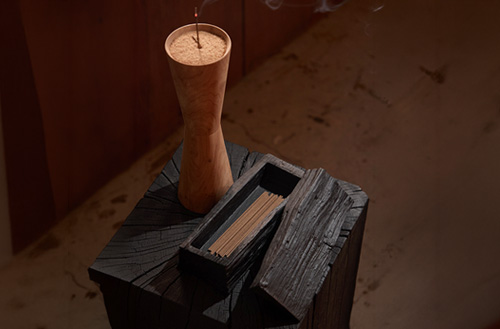
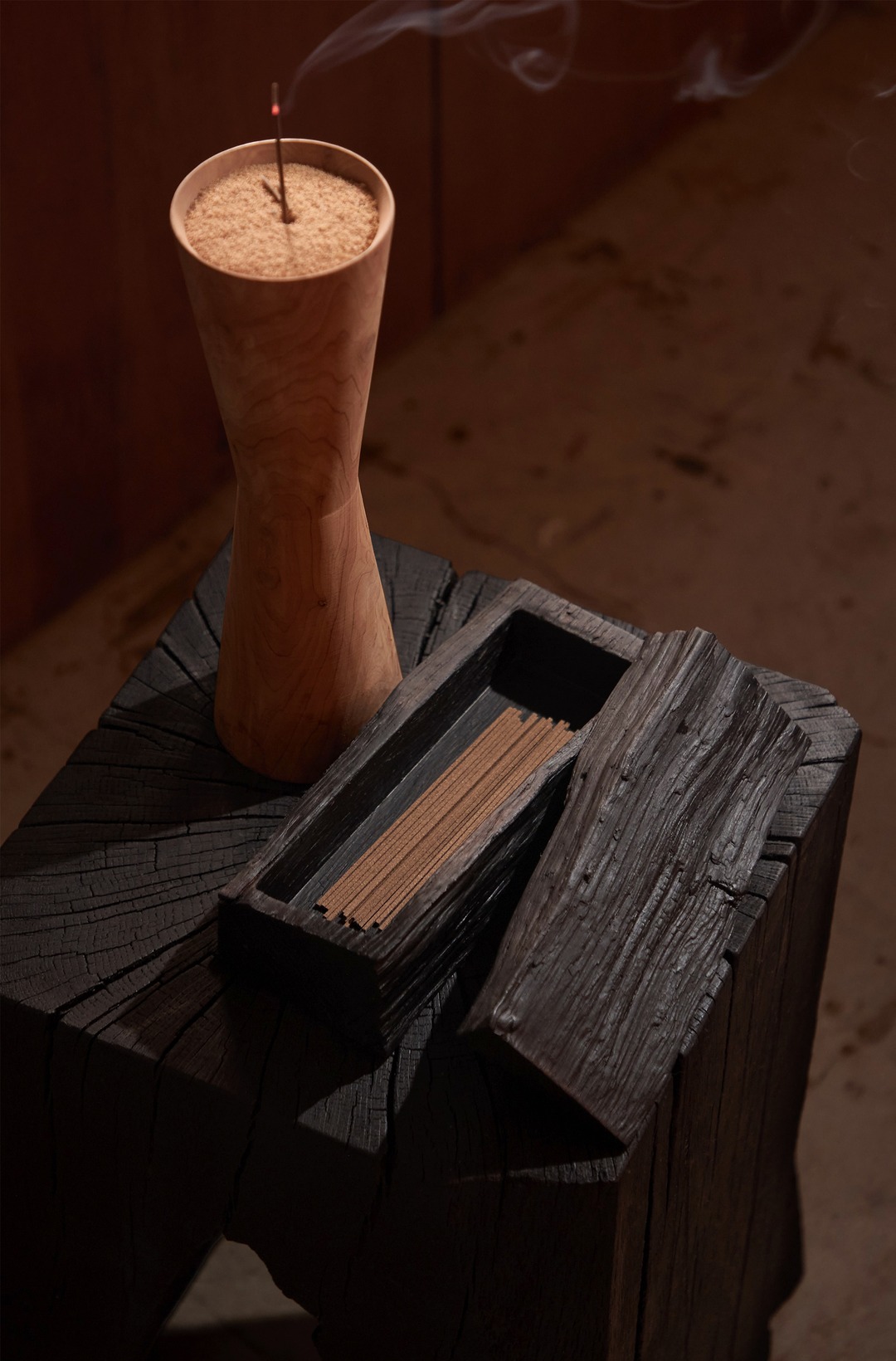
Jungjoo Im’s Incense Case took shape as he accepted the wood as it is, its inherent qualities and the directions in which it splits. Could accepting something in its original form be much like recognizing and accepting ourselves as we are? With Incense Case, crafted to bring out every line of the wood’s grain, step into a moment of wellness in everyday life that reminds you how precious things are — just as they are.
#Artist
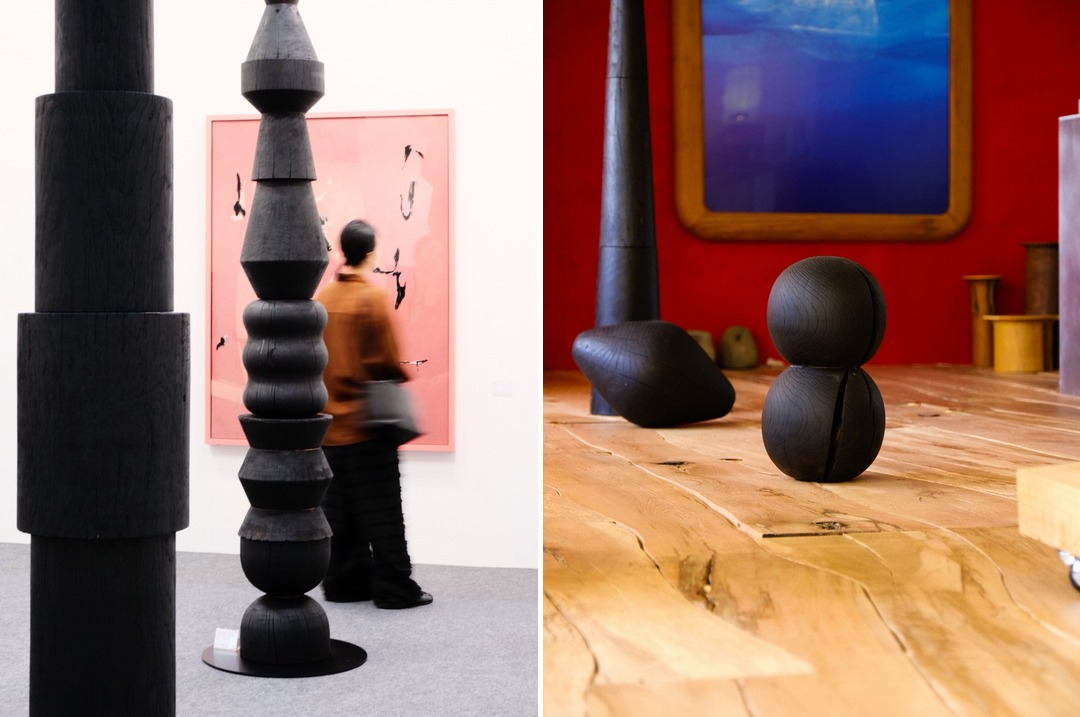
Hello. I’m Jungjoo Im, an artist who makes sculptural work primarily in wood. I bring the natural forms and grain of wood into my work as they are, and combine the beauty of everyday objects and wood in new ways of my own. I currently run a concept store, ‘Not For Sale’, where I make and present objects that bring out the character of a range of materials.
#Artist Interview
Q. Please introduce the piece you made for this collaboration.
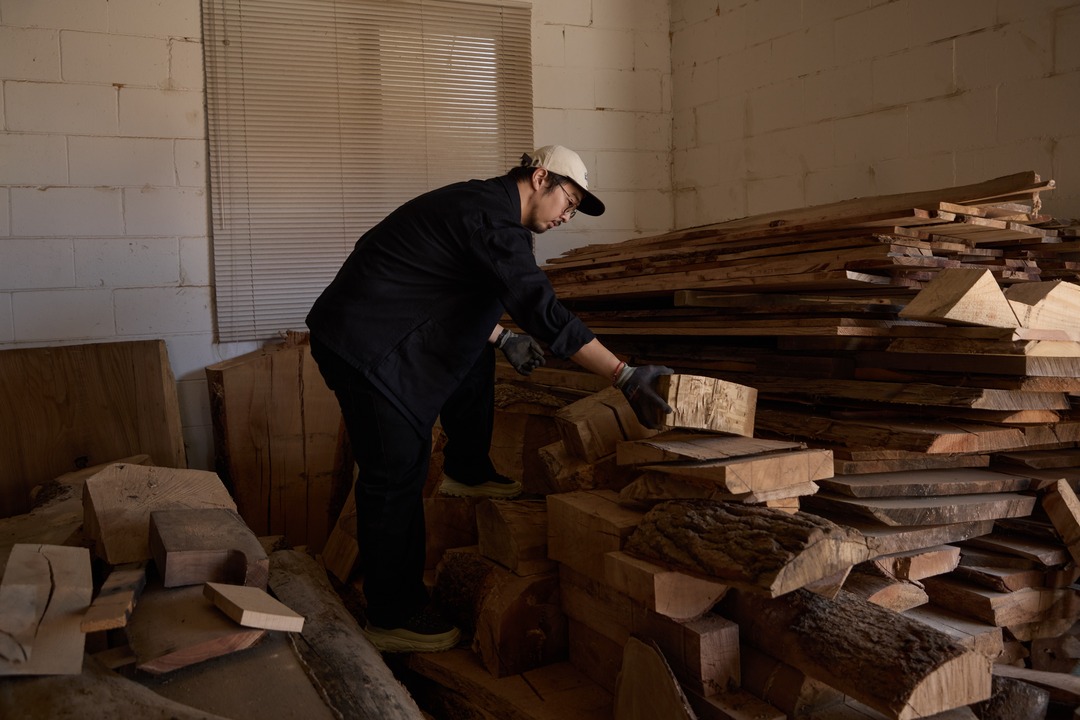
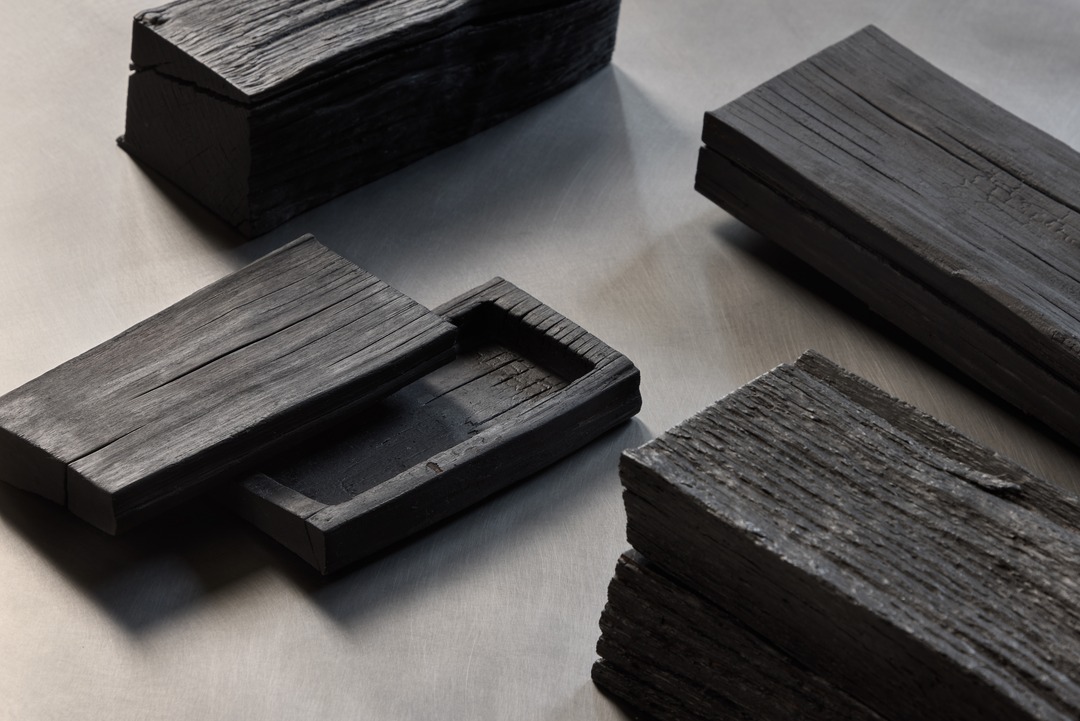
It’s an incense case, a box for keeping incense, and in it I tried to capture the way the wood splits depending on the environment it grew in, leaving it untouched. In the past, I sometimes used wood to make the forms I wanted, but in a body of work I’ve called the ‘Flow’ series, I accept the wood’s original character and form as it is. Things like which way the wood splits, or how its texture varies with where it grew, become important elements of the work in themselves.
Q. Your way of working, accepting wood as it is, is striking.
Yes, with this piece I wanted to show the wood as it is, reflecting the environment it lived through and its own character. We often think of us humans as the ones in charge, handling nature according to our own will or needs, but lately I’ve been thinking that we humans may, in fact, be very fragile in the face of nature. I think accepting nature as it is and humbly acknowledging it can be another way of enjoying it, too.
Q. Has your approach to wood changed over the years you’ve been working with it?
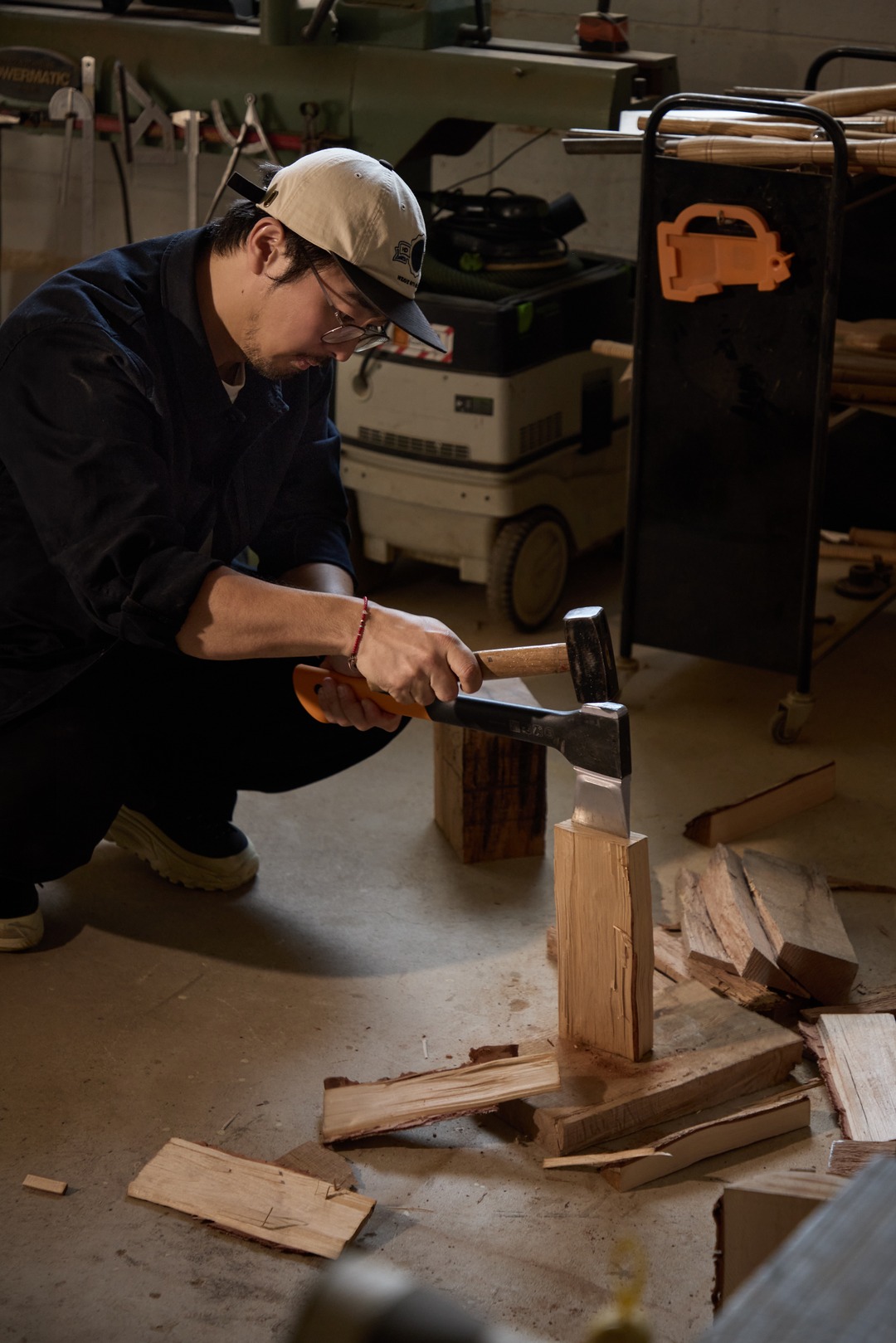
In the past, I’d think of a sculptural form first and then work the wood to fit it, but now I look at the wood first. I study its inherent qualities and then think about what product or form would suit it. Put simply, you could say the order has been reversed. I try to understand the wood’s qualities more fully first, then express my own ideas on top of that.
Q. In this piece, you accept a thing’s form as it is. Is that attitude connected to your everyday life, too? We’re curious what ‘a good everyday life’ looks like to you.
It’s the same in my everyday life. I tend to be grateful for the ordinary moments right in front of me, rather than going out of my way to create something special to enjoy. I’ve found that an ordinary day when nothing happens is the most precious thing. (laughs) Waking up with nothing in particular going on, greeting the morning with my family, brewing a cup of coffee, and getting through the day safe and sound. I try to treasure each and every one of those days.
Q. Then what, to you, is ‘a good object’?
I think ‘a good object’ is simply one you can keep close and use for a long time. We live in a world where we can buy so many things, very easily. But you know how some things end up being used for just a year, while we love and use certain things for years on end. I suppose objects like that come to hold my habits, along with the many years they’ve spent with me. You could say that as time adds up, your relationship with an object deepens too.
Q. In what moments of your everyday life do you usually burn incense?
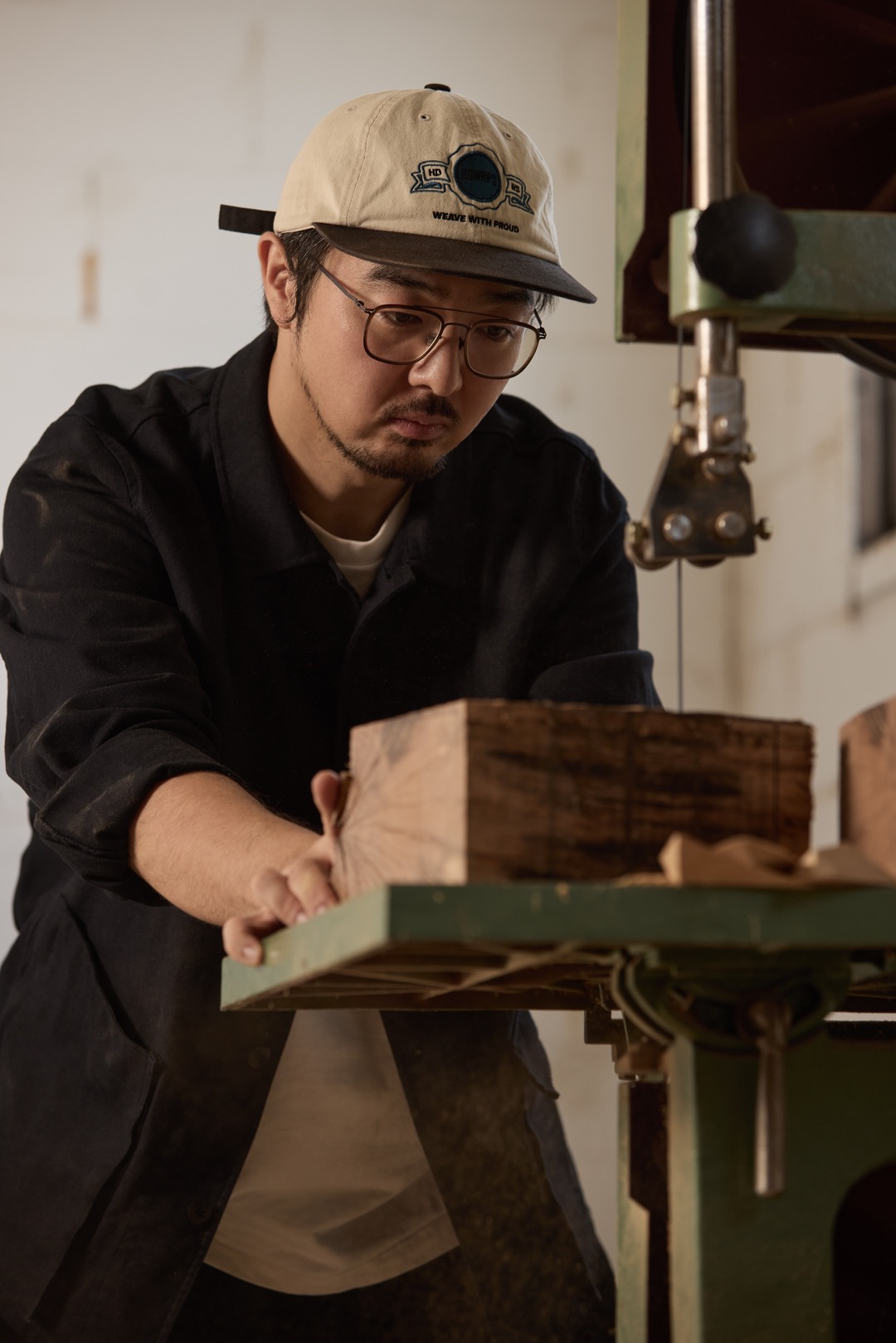
For one thing, in my studio, dust and sawdust mix together and sometimes give off a distinctive musty smell. At times like that, I burn incense to get rid of it. And when I’m absorbed in my work, I sometimes start to feel rushed. If I burn incense at a moment that calls for a pause, it seems to help me briefly catch my breath and find my calm again.
I like using incense at home, too. Coffee in the morning is part of my routine, and on days when I have some time to spare, I sometimes burn incense with my coffee. Incense seems to make an ordinary moment of rest a little deeper and richer. It’s the same rest, but with incense added, it feels like a moment when stepping out of everyday life for a while and focus wholly on myself.
Q. What moment of wellness in everyday life do you hope to share through the incense case?
One thing I’ve always noticed living in Korea is that even when there’s nothing especially pressing, we constantly feel busy, as if something is chasing us. Maybe that’s why time spent doing nothing, just pausing for a while, sometimes feels so precious. Since this piece is an incense case, I wanted to share the value of ‘a sense of ease’ with readers. After all, an incense case also holds the brief time you spend waiting and getting ready before you burn the incense. I hope you’ll get at least a taste of what it’s like to take some time of your own to catch your breath.
Q. Do you have a routine of your own for wellness in everyday life?
Recently I discovered that I’m very sensitive to sound. In my studio, where some of the work involves sawing, I’m surrounded by loud noise all day, so I assumed that, if anything, I’d grown fairly numb to sound. It turned out, though, that unexpected sounds in everyday life were stressing me out. So these days, wherever I am, I either put on music or use noise-canceling earbuds so I can focus completely without being disturbed.
Quiet time when I can get absorbed in something is precious to me. Just by shutting out the sounds around me for a while and focusing on what I need, I find I’m much more at ease. For me, this small routine of cutting down the noise and making sure I have time to focus fully keeps the rhythm of my everyday life in order.
Q. What does ‘My Own Beauty (New Beauty)’ mean to you?
We’re also curious whether your view of ‘my own beauty’ influences your work.
When you’re rushing through life in a busy society, you become conscious of how others see you. Even at important moments, you sometimes put other people’s standards before your own. But I think times like these are exactly when you need to know how to see yourself. What matters, I believe, is the process of getting to know who you are and finding what makes you yourself.
This piece started from the same thought, too. Just as I look for a new form where the wood’s own form meets my ideas, I think of my own beauty as the very process of each of us finding our own inherent form.
Q. Finally, what kind of beauty do you hope people will discover anew in their everyday lives through this piece?
I think we can discover new beauty by looking a little more closely at what’s around us. Just as each piece of wood splits in its own direction depending on the environment it lived in, the objects and everyday moments around us also have their own stories, time, and traces layered into them. Through my work, I hope you’ll take another look at the things close to you and discover the beauty that belongs to each of them, hidden in everyday moments you’d normally passed over.
Own a piece of Jungjoo Im’s artwork, Incense Case.
*The artwork is available for personal use only and is not to be used for commercial purposes.
About the Artist
Jungjoo Im makes sculptural work primarily in wood. He studied product design at Central Saint Martins in London and began working as an artist in earnest after his first exhibition in 2018. His ongoing sculptural experiments build on his observations of form, function, and the way people perceive objects, and alongside exhibiting, he actively collaborates with museums, hotels, and department stores, among other spaces and brands.
-
Like
0 -
Recommend
0 -
Thumbs up
1 -
Supporting
0 -
Want follow-up article
0